Air system · Combat UAV
MQ-9 Reaper
Attack / Reconnaissance
Also known as: Predator B / Guardian / Reaper
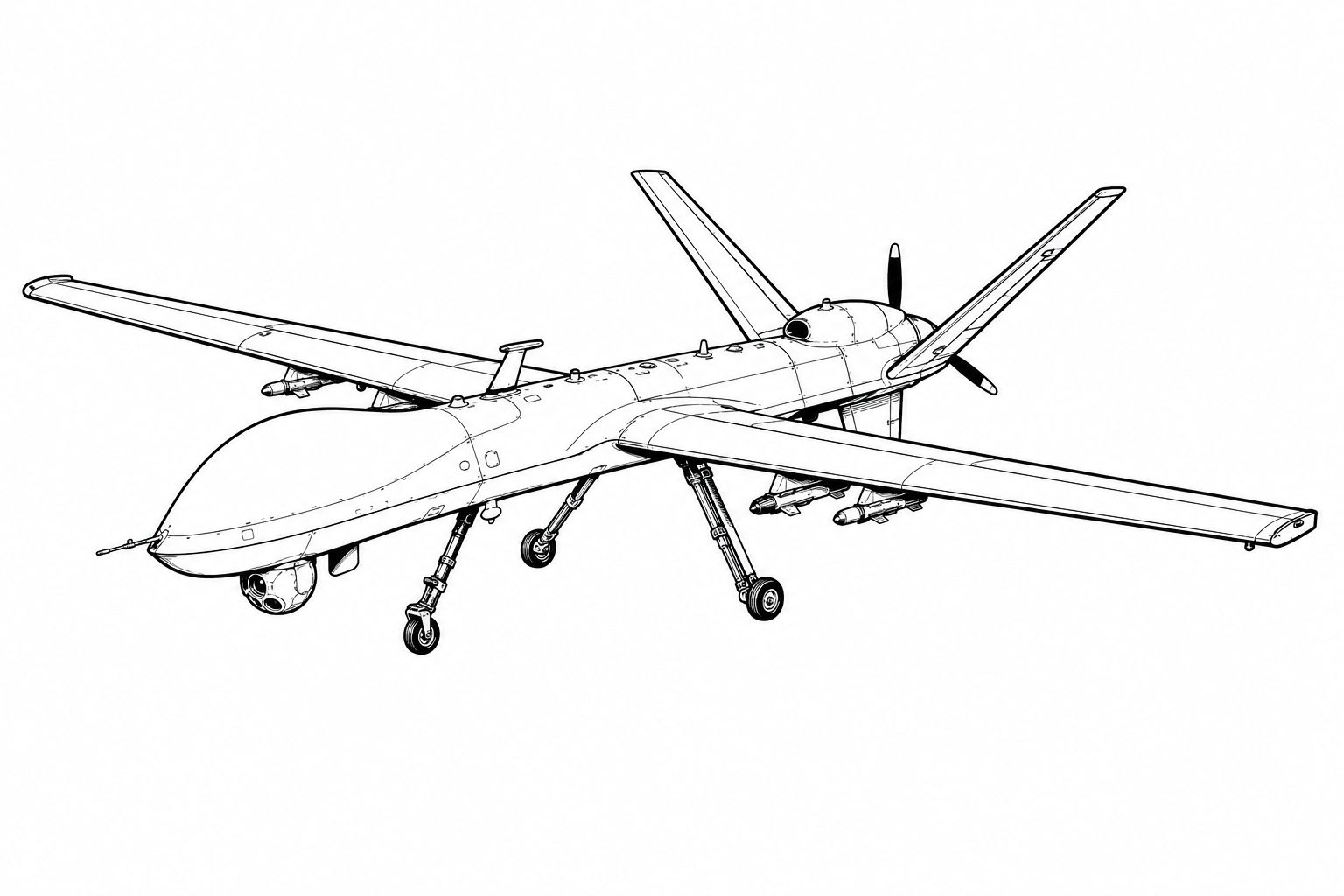
MQ-9 Reaper overview
The MQ-9 Reaper, originally designated Predator B, was developed by General Atomics Aeronautical Systems as a significant evolution of the MQ-1 Predator. First flying in 2001, it entered service with the U.S. Air Force in 2007 and quickly became the cornerstone of American unmanned strike operations. The Reaper has been extensively deployed across the Middle East, Africa, and Central Asia, conducting thousands of precision strikes against high-value targets including senior terrorist leaders, vehicle-borne improvised explosive device networks, and insurgent logistics chains. It has been exported to close allies including the United Kingdom, France, Italy, and Spain, making it the most widely used armed MALE drone in NATO, with operators collectively amassing experience measured in millions of flight hours.
The Reaper's operational versatility stems from its multi-spectral targeting system (MTS-B), which integrates an infrared sensor, color daylight TV camera, image-intensified TV camera, laser rangefinder, and laser designator into a single turret. This sensor suite allows crews to positively identify targets at standoff ranges that eliminate most ground-based air defense threats, then deliver AGM-114 Hellfire missiles, GBU-12 Paveway II laser-guided bombs, or GBU-38 JDAMs with high precision. A single Reaper crew — typically a pilot and a sensor operator working from a ground control station — can sustain 27 hours of persistent overwatch, compressing the kill chain from hours to minutes for time-sensitive targets. This combination of endurance, firepower, and sensor capability has made the Reaper the preferred tool for counterterrorism operations across multiple administrations.
As of 2025–2026, the MQ-9 Reaper continues to receive life-extension upgrades including extended range wing kits that push combat radius past 1,000 nautical miles, integration of the AGM-179 Joint Air-to-Ground Missile, and upgraded Lynx synthetic aperture radar for all-weather surveillance. The USAF has acknowledged beginning the transition planning toward the MQ-Next program — a next-generation platform designed for contested environments where the Reaper's survivability margin is insufficient — but budget constraints and the sheer operational demand for persistent ISR and strike have kept Reapers flying at high tempo. India has received MQ-9B SeaGuardian variants as part of a major security assistance package, and Australia and Belgium continue to expand their Reaper fleets. With over 2.5 million cumulative flight hours across all operators, the MQ-9 has shaped a generation of remotely piloted aircraft doctrine and will remain central to allied air power well into the 2030s.
Armament
AGM-114 Hellfire, GBU-12/38 JDAM, GBU-49
Development and operational timeline
- First flight of Predator B prototype at Palmdale, California
- MQ-9 Reaper achieves initial operational capability with USAF 432nd Wing
- Hellfire strike kills Anwar al-Awlaki in Yemen — defining high-profile Reaper mission
- RAF conducts first UK Reaper strike from home soil via satellite datalink
- MQ-9 Reaper strikes kill IRGC Quds Force commander Qasem Soleimani at Baghdad airport
- MQ-9 reaches 2 million cumulative flight hours across global operators
- India signs $3.99B agreement for 31 MQ-9B armed drones — largest U.S. drone sale in history
- USAF awards contract for Extended Range wing retrofit kits; combat radius extended past 1,000 nm
- MQ-9 fleet surpasses 2.5 million flight hours; USAF begins MQ-Next transition planning while maintaining full Reaper tempo