Air system · UCAV
MQ-20 Avenger
Strike / ISR
Also known as: Predator C / Avenger / Avenger ER
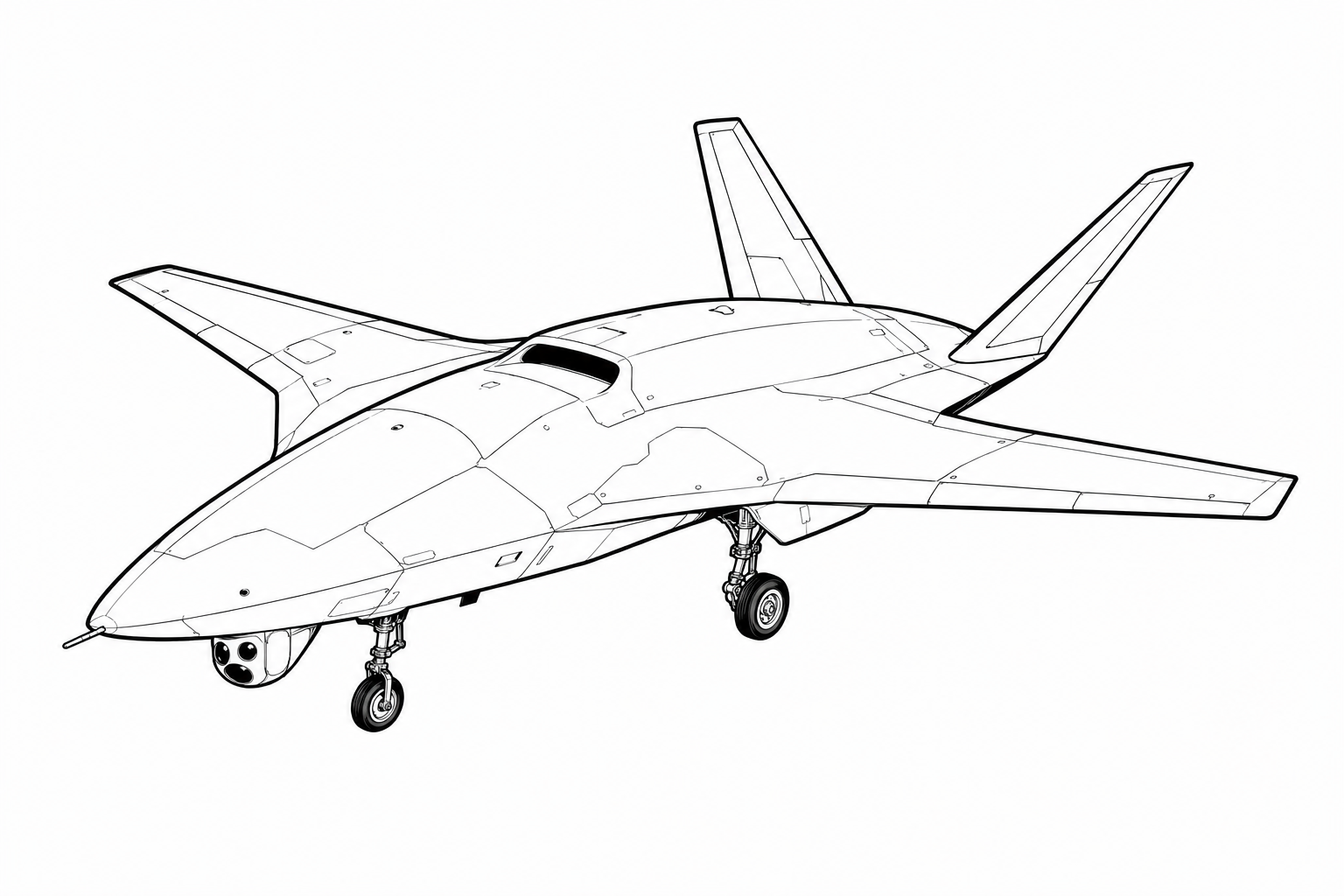
MQ-20 Avenger overview
Last reviewed:
The MQ-20 Avenger is General Atomics' jet-powered unmanned aircraft, originally introduced as Predator C. Its swept wings, internal payload space, and turbofan engine distinguish it from the propeller-driven Predator and Reaper. It was designed to offer greater transit speed and a different signature profile while retaining the endurance needed for sensing and other missions. The designation does not mean it is a mass-fielded replacement for the MQ-9 or an automatically selected future fighter companion.
Manufacturer material describes Avenger flight speeds around or above 400 knots and operation up to 50,000 feet. Endurance claims depend on the configuration: General Atomics has described a progression from about 15 hours to approximately 20 hours with an enlarged-wing improved aircraft. Internal sensors, fuel, and weapons compete for space and weight. Readers should not combine the longest-endurance variant with another version's maximum payload and assume both figures apply to one mission.
Avenger has demonstrated the integration of long-range electro-optical sensors and served as a flexible test aircraft for autonomy. Its internal bay provides a way to carry equipment without relying exclusively on external stores, but that does not establish fighter-like survivability. Public references to low-observable features are not a disclosed radar-cross-section guarantee. A higher-performance unmanned aircraft still relies on communications, maintenance, mission planning, and the surrounding intelligence architecture.
More recently, MQ-20 has become prominent as an autonomy and collaborative-aircraft surrogate. A surrogate lets developers test software, sensors, and human-machine interfaces on an available aircraft before future platforms are ready. This is different from selecting the Avenger itself for an operational Collaborative Combat Aircraft fleet. General Atomics' separate future aircraft programs and the Air Force's procurement decisions should not be merged into the MQ-20's service history.
On September 10, 2026, General Atomics and the Navy's strike-planning program office demonstrated collaborative autonomous mission planning with an MQ-20 test aircraft. The company announced the event on October 5. It described mission context compliant with the Autonomy Government Reference Architecture and its Tactical Autonomy Ecosystem software, with coordination driven by a commander's intent. The exercise involved a simulated battle context; it was not evidence of autonomous weapons employment in combat.
As of October 2026, Avenger's most clearly documented contemporary role is a high-performance development and experimentation platform. The September demonstration is useful evidence of continued progress in planning and autonomy integration, while leaving production quantities, customer-specific capabilities, and future selection decisions partly undisclosed. When comparing MQ-20 with an operational MALE drone or a proposed CCA, readers should ask whether a claimed function was a test, a fielded capability, or simply a development objective.
Armament
Internal/external payload capability; operational loadout is customer-specific
Development and operational timeline
- The Predator C Avenger prototype makes its first flight
- General Atomics publishes early Avenger speed, altitude, and endurance claims
- General Atomics announces flight with the MS-177 long-range sensor and discusses improved-aircraft endurance
- MQ-20 becomes increasingly visible in autonomy and surrogate-aircraft testing
- MQ-20 supports a Navy and General Atomics collaborative autonomous mission-planning demonstration
- General Atomics publishes the September demonstration and describes its planning architecture