Air system · MALE
MQ-1 Predator
Reconnaissance / Light Attack
Also known as: Predator / MQ-1A/B / GNAT-750 derivative
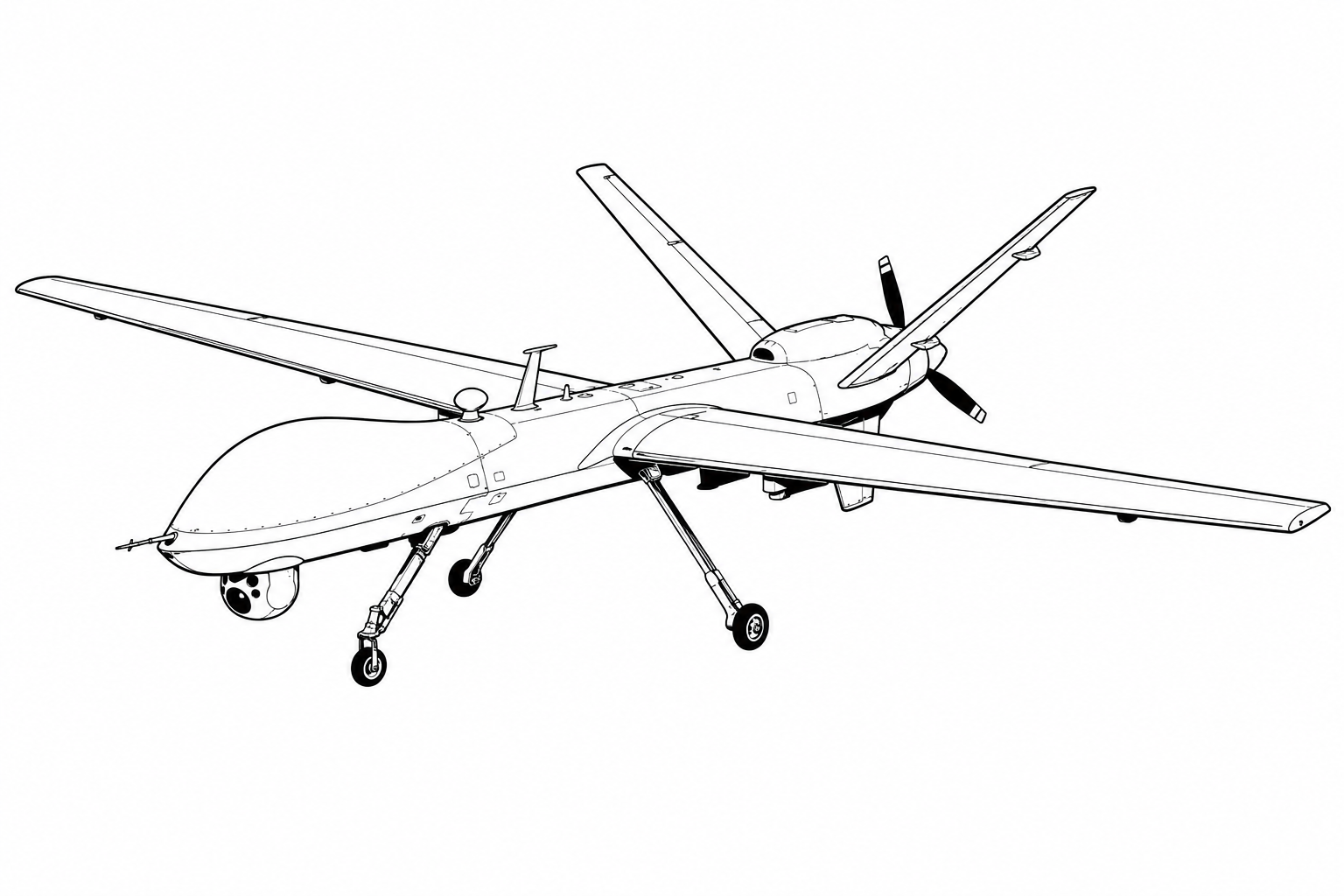
MQ-1 Predator overview
The MQ-1 Predator was developed by General Atomics from the earlier GNAT-750 family and became the best-known early U.S. medium-altitude, long-endurance remotely piloted aircraft. U.S. government histories describe Predator reconnaissance operations in the Balkans and later adoption by the Air Force. Its pusher propeller, inverted-V tail and persistent electro-optical surveillance made it an important predecessor to later armed MALE aircraft, although popular accounts sometimes compress several separate CIA and Air Force development milestones into a single origin story.
The Air Force and General Atomics publicly documented the addition of Hellfire capability and combat operations after 2001. The often-cited October 2001 Afghanistan mission is widely described as the first armed Predator combat strike, while the exact institutional chain of earlier CIA activity is more difficult to verify from public records. The platform's historical importance is defensible without treating every account of a first strike, target or operator as an uncontested official fact.
The U.S. Air Force retired the MQ-1 from active service in 2018 and identified the MQ-9 Reaper as its successor. Defense histories commonly credit the Predator with helping establish persistent remotely piloted ISR doctrine, while operator retirement dates and residual foreign inventories varied. A video showing a preserved or displayed airframe is not evidence of renewed U.S. operational service.
The 2026 status is unchanged in the official public record: MQ-1 is a retired U.S. combat platform, not a current USAF procurement program. No public official announcement reviewed for this profile establishes restarted production or a new active MQ-1 operator. Its current relevance is historical and doctrinal, while the Reaper and newer systems carry forward the operational mission.
Armament
AGM-114 Hellfire (x2)
Development and operational timeline
- U.S. reporting documents GNAT-750-derived Predator reconnaissance activity in the Balkans
- The U.S. Air Force publicly identifies Predator as an operational remotely piloted aircraft program
- General Atomics and U.S. test reporting document an early Hellfire launch from a Predator
- The first armed Predator combat mission in Afghanistan is widely reported after the September 11 attacks
- Public reporting describes a CIA Predator Hellfire strike in Yemen; responsibility and policy details remain matters of official and journalistic record
- The Air Force reports the Predator fleet reaching a major cumulative flight-hour milestone
- The U.S. Air Force retires its last MQ-1 Predator and shifts the mission to MQ-9 Reaper
- Public reporting continues to treat MQ-1 as retired; no authoritative announcement establishes a new active operator
- No official evidence reviewed for this profile indicates renewed MQ-1 production or USAF service; surviving aircraft are historical or display assets