MQ-9 Reaper vs MQ-1 Predator
The MQ-9 Reaper and MQ-1 Predator belong to the same broad General Atomics lineage, but they are not interchangeable aircraft. Predator established persistent armed surveillance; Reaper brought a substantially larger aircraft with greater speed, payload capacity and weapons flexibility. The most useful comparison is the mission and support system, not simply which drone is newer.
Open these drones in the interactive compare tool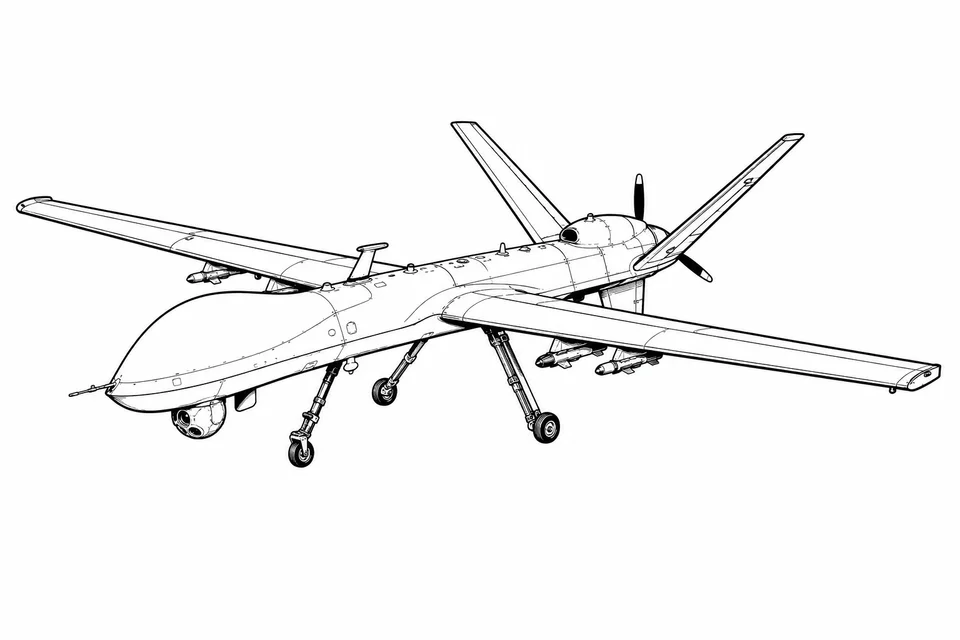
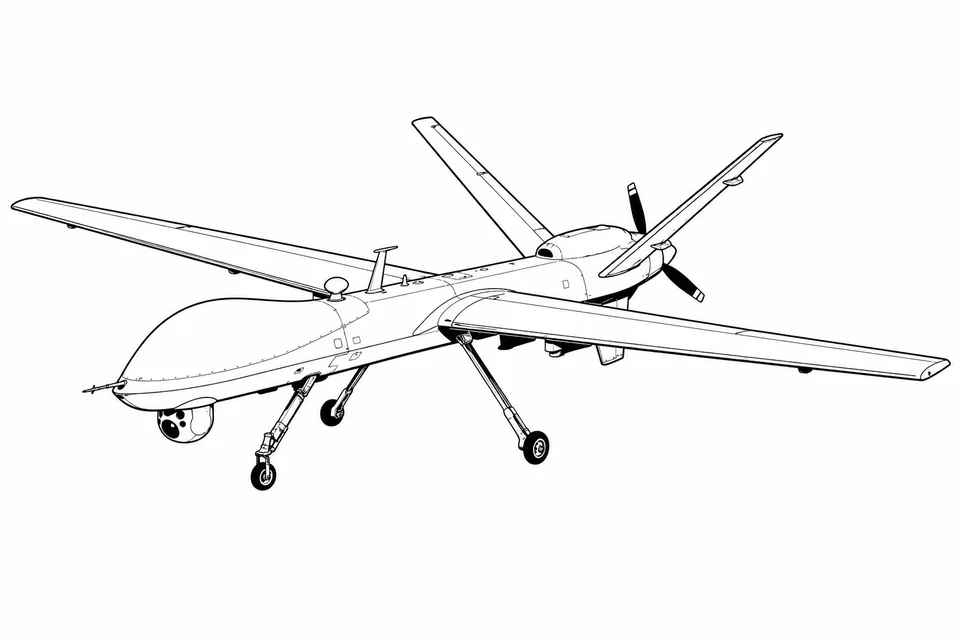
Specifications side by side
| Specification | MQ-9 Reaper | MQ-1 Predator |
|---|---|---|
| Manufacturer | General Atomics | General Atomics |
| Country of origin | USA | USA |
| Mission role | Attack / Reconnaissance | Reconnaissance / Light Attack |
| Year introduced | 2007 | 1995 |
| Length | 11 m | 8.2 m |
| Wingspan | 20 m | 14.8 m |
| Height | 3.8 m | 2.1 m |
| Maximum speed | 482 km/h | 217 km/h |
| Published range | 1,850 km | 1,100 km |
| Endurance | 27 hours | 24 hours |
| Service ceiling | 15,240 m | 7,620 m |
| Payload | 1,746 kg | EO/IR/laser targeting system; weapons configuration varies by variant |
| Weight | 2,223 kg | 1,020 kg |
| Armament | AGM-114 Hellfire, GBU-12/38 JDAM, GBU-49 | Two AGM-114 Hellfire missiles (armed MQ-1B configuration) |
Figures below come from the linked DroneStrike profiles and retain their configuration qualifiers. Maximum speed, range, endurance and payload are separate published figures, not a single achievable mission configuration. Range is not necessarily combat radius or datalink reach. Missing information is not zero, and a larger figure does not establish combat effectiveness.
From persistent observation to a heavier strike platform
The MQ-1 Predator became associated with long-duration observation and, in its armed MQ-1B configuration, precision strikes using Hellfire missiles. Its importance was the ability to maintain a sensor over an area while crews worked remotely. That combination changed how surveillance and targeting could be connected, even though the aircraft itself was relatively slow and lightly armed.
Reaper retained the persistent remotely piloted concept but used a larger turboprop-powered airframe. The U.S. Air Force describes the MQ-9 as a hunter-killer system that also provides intelligence, surveillance and reconnaissance. Its higher performance and larger payload make it more than a renamed Predator.
Weapons and payload need configuration context
The armed Predator is commonly identified with two Hellfire missiles. Reaper supports a broader mix of missiles and guided bombs, subject to operator, clearance and mission configuration. A maximum payload figure should not be read as a standard combat load, and sensor equipment consumes capacity alongside weapons.
For a practical reading of the table, compare the aircraft's role and armament before comparing kilograms. The MQ-1 payload entry describes equipment and variant limitations rather than a directly comparable maximum mass, so calculating a payload ratio from these entries would be misleading.
Endurance is only part of persistence
Published endurance figures describe particular conditions and loads. An aircraft may spend part of that time travelling to and from its operating area, leaving less time on station. Weather, communications, airspace access, maintenance and crew availability also determine how much persistent coverage a force can actually sustain.
Neither aircraft's long endurance implies freedom to operate in defended airspace. Their value is strongly influenced by the surrounding intelligence, communications and protection arrangements. This page does not rank survivability from speed or ceiling alone.
Which aircraft does this comparison favor?
For heavier armed missions and a wider weapons mix, Reaper represents a significant increase in capability over the earlier Predator. For understanding the origins of persistent armed remotely piloted operations, the MQ-1 remains the essential reference point. The Air Force retired its MQ-1 fleet in March 2018; that historical fact should not be mistaken for a claim about every operator or every Predator-family aircraft.
Frequently asked questions
Is MQ-9 Reaper the same drone as MQ-1 Predator?
No. They share a manufacturer and design lineage, but Reaper is a larger, faster aircraft with a different engine and substantially different payload and weapons capacity.
Which carries more weapons, Reaper or Predator?
Reaper offers greater weapons capacity and a broader cleared weapons mix. Exact loads depend on the variant, operator and mission; the armed MQ-1B is associated with two Hellfire missiles.
Is the MQ-1 Predator still used by the U.S. Air Force?
The U.S. Air Force retired the MQ-1 in March 2018. MQ-1C Gray Eagle is a distinct Army aircraft, not the same retired MQ-1 platform.
Sources and further reading
- U.S. Air Force: MQ-9 Reaper fact sheet
- U.S. Air Force: MQ-1B Predator fact sheet
- U.S. Air Force: MQ-1 retirement in March 2018
Specifications are drawn from the linked catalog profiles. Source dates and aircraft configurations may differ; see the individual profiles for their timelines and qualifications.