MQ-1 Predator vs MQ-1C Gray Eagle
The similar MQ-1 and MQ-1C designations can make Predator and Gray Eagle appear to be minor versions of the same aircraft. They are better understood as related but distinct systems: Predator is the earlier armed-surveillance reference, while Gray Eagle was developed around Army reconnaissance, communications-support and attack requirements.
Open these drones in the interactive compare tool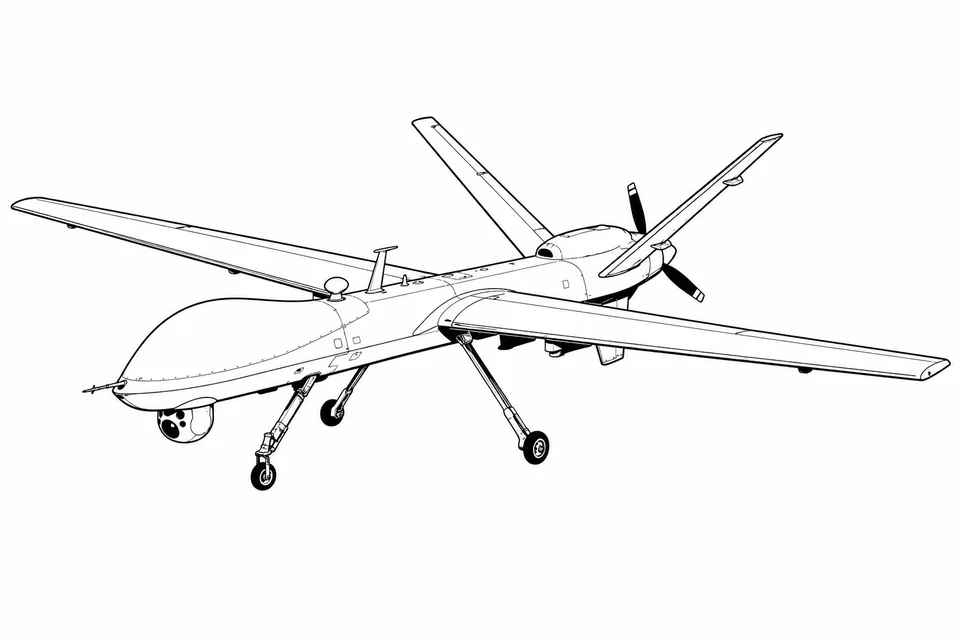
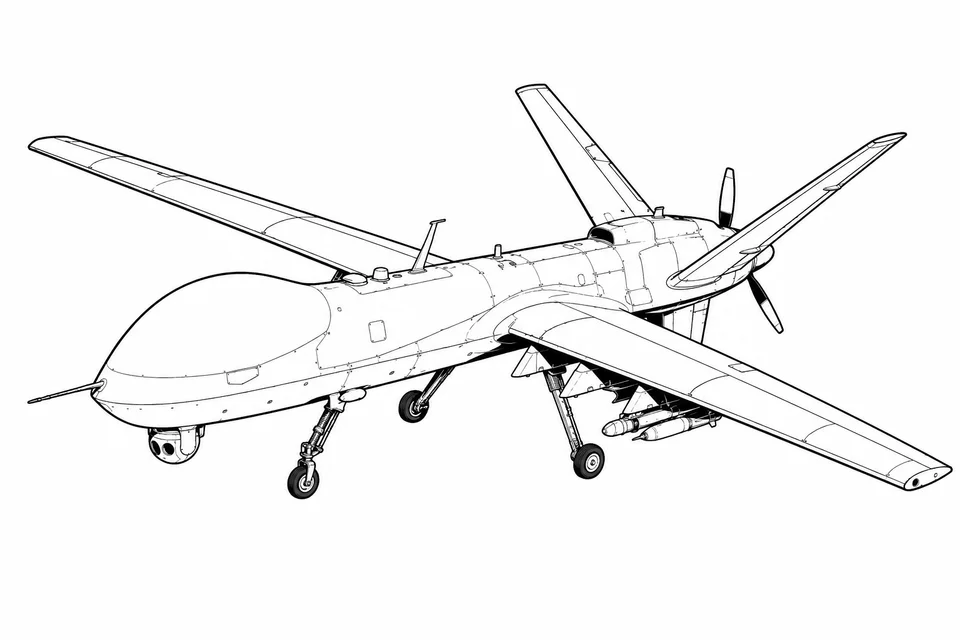
Specifications side by side
| Specification | MQ-1 Predator | MQ-1C Gray Eagle |
|---|---|---|
| Manufacturer | General Atomics | General Atomics |
| Country of origin | USA | USA |
| Mission role | Reconnaissance / Light Attack | Reconnaissance / Attack |
| Year introduced | 1995 | 2009 |
| Length | 8.2 m | 8 m |
| Wingspan | 14.8 m | 17 m |
| Height | 2.1 m | 2.1 m |
| Maximum speed | 217 km/h | Up to 167 KTAS / about 309 km/h (Army baseline figure) |
| Published range | 1,100 km | Mission and communications configuration dependent |
| Endurance | 24 hours | 25 hours (baseline); ER configurations differ |
| Service ceiling | 7,620 m | 29,000 ft / about 8,840 m (Army baseline figure) |
| Payload | EO/IR/laser targeting system; weapons configuration varies by variant | 488 kg combined internal/external (Army baseline figure) |
| Weight | 1,020 kg | 1,633 kg |
| Armament | Two AGM-114 Hellfire missiles (armed MQ-1B configuration) | Up to four AGM-114 Hellfire missiles; mission-dependent |
Figures below come from the linked DroneStrike profiles and retain their configuration qualifiers. Maximum speed, range, endurance and payload are separate published figures, not a single achievable mission configuration. Range is not necessarily combat radius or datalink reach. Missing information is not zero, and a larger figure does not establish combat effectiveness.
Shared family history does not mean identical aircraft
The MQ-1 Predator helped establish persistent remotely piloted observation and armed surveillance. Its familiar layout and association with Hellfire missiles influenced how many readers understand military drones. The armed MQ-1B configuration remains an important historical reference.
Gray Eagle carries the MQ-1C designation but has its own airframe, performance and mission integration. The Army's requirements for sustained support to ground forces help explain the differences. It should not be treated as a simple name change or assumed to share every Predator limitation and specification.
Weapons capacity and payload need careful reading
The familiar armed Predator configuration carries two Hellfire missiles. Baseline Gray Eagle can carry up to four in an appropriate configuration, increasing the weapons options available during a mission. That does not mean every mission uses a full missile load.
The Predator payload entry in this catalog describes sensors and variant-dependent equipment rather than a directly comparable maximum weight. Gray Eagle's published combined internal/external capacity is a different kind of entry. A percentage payload advantage cannot be calculated responsibly from those two text fields.
Baseline figures are more useful than mixed variants
Gray Eagle's baseline Army figures are kept distinct from Extended Range and other upgrades. This matters particularly for endurance: combining the highest figure from a newer variant with the weight or payload of a different baseline version creates an aircraft configuration that the data does not establish.
Both platforms rely on much more than an air vehicle. Sensor operators, communications, ground equipment, maintenance and integration with supported forces influence operational persistence. Nominal endurance does not tell a reader how many hours of useful coverage a particular unit can generate.
Retirement of MQ-1 does not mean retirement of MQ-1C
The U.S. Air Force retired its MQ-1 Predator in March 2018. That date should not be transferred to the Army's MQ-1C Gray Eagle. When checking a news report or a claimed upgrade, confirm the full aircraft designation and service rather than relying on the word Predator alone.
For readers comparing these two systems, the clearest distinction is historical armed-surveillance lineage versus a separate Army reconnaissance and attack platform. The linked profiles provide fuller timelines and explain variant-specific developments without conflating service retirement with the status of an entire aircraft family.
Frequently asked questions
Is MQ-1C Gray Eagle just another name for MQ-1 Predator?
No. They share a design lineage and manufacturer, but Gray Eagle is a distinct Army system with different performance and mission integration.
Did the MQ-1 Predator retirement include Gray Eagle?
No. The March 2018 retirement concerned the U.S. Air Force MQ-1 fleet; it does not establish the retirement of Army MQ-1C Gray Eagle aircraft.
Which carries more Hellfire missiles?
The familiar armed MQ-1B configuration carries two. Baseline MQ-1C Gray Eagle can carry up to four in an appropriate configuration. Actual mission loads vary.
Sources and further reading
- U.S. Air Force: MQ-1B Predator fact sheet
- U.S. Air Force: MQ-1 retirement in March 2018
- U.S. Army: Gray Eagle armed persistence and baseline specifications
Specifications are drawn from the linked catalog profiles. Source dates and aircraft configurations may differ; see the individual profiles for their timelines and qualifications.