MQ-9 Reaper vs MQ-1C Gray Eagle
Reaper and Gray Eagle are both General Atomics armed reconnaissance aircraft, but Reaper is the larger, higher-payload platform while Gray Eagle was developed around U.S. Army requirements. Their shared Predator-family heritage does not make their performance, support arrangements or roles identical.
Open these drones in the interactive compare tool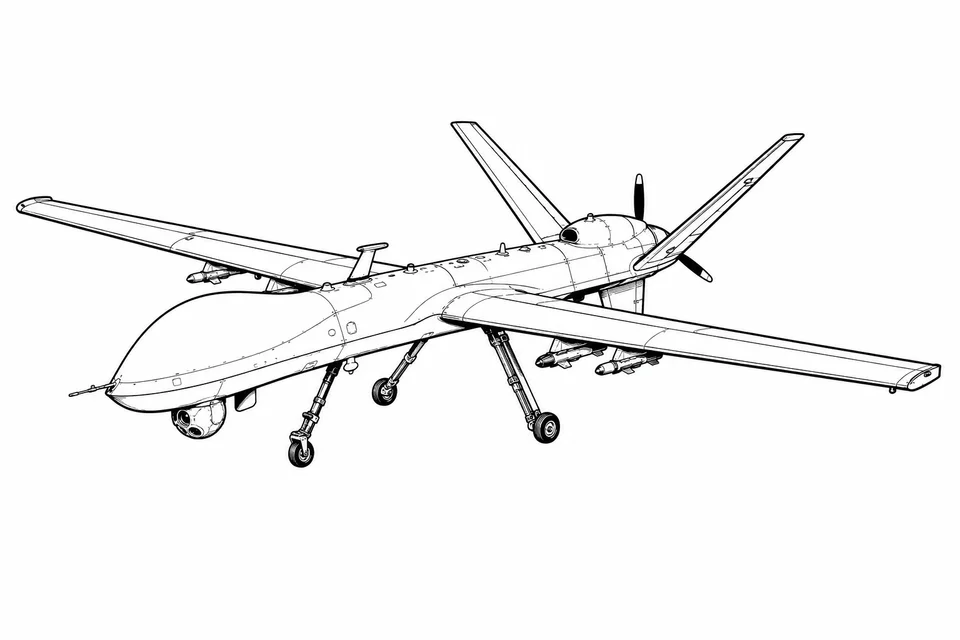
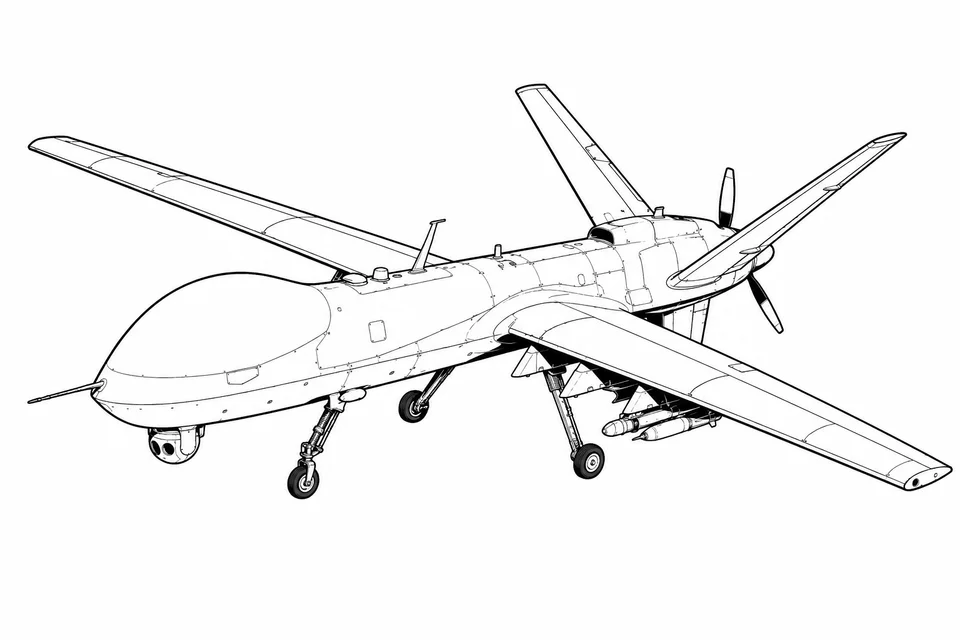
Specifications side by side
| Specification | MQ-9 Reaper | MQ-1C Gray Eagle |
|---|---|---|
| Manufacturer | General Atomics | General Atomics |
| Country of origin | USA | USA |
| Mission role | Attack / Reconnaissance | Reconnaissance / Attack |
| Year introduced | 2007 | 2009 |
| Length | 11 m | 8 m |
| Wingspan | 20 m | 17 m |
| Height | 3.8 m | 2.1 m |
| Maximum speed | 482 km/h | Up to 167 KTAS / about 309 km/h (Army baseline figure) |
| Published range | 1,850 km | Mission and communications configuration dependent |
| Endurance | 27 hours | 25 hours (baseline); ER configurations differ |
| Service ceiling | 15,240 m | 29,000 ft / about 8,840 m (Army baseline figure) |
| Payload | 1,746 kg | 488 kg combined internal/external (Army baseline figure) |
| Weight | 2,223 kg | 1,633 kg |
| Armament | AGM-114 Hellfire, GBU-12/38 JDAM, GBU-49 | Up to four AGM-114 Hellfire missiles; mission-dependent |
Figures below come from the linked DroneStrike profiles and retain their configuration qualifiers. Maximum speed, range, endurance and payload are separate published figures, not a single achievable mission configuration. Range is not necessarily combat radius or datalink reach. Missing information is not zero, and a larger figure does not establish combat effectiveness.
Air Force-oriented Reaper and Army-oriented Gray Eagle
The MQ-9 is associated with persistent ISR and precision attack using a larger turboprop airframe. The MQ-1C was developed for the Army's reconnaissance, surveillance, communications-support and attack needs. This service context helps explain why the systems differ even when both can carry Hellfire missiles.
The MQ-1C is not simply a retired MQ-1 Predator in Army markings. It is a distinct aircraft with its own development and operating context. Keeping the MQ-1, MQ-1C and MQ-9 names separate prevents one of the most common misunderstandings in drone comparisons.
Payload and speed favor different mission options
The published catalog figures place Reaper in a substantially larger payload class and give it a higher maximum speed than baseline Gray Eagle. This can support heavier weapons combinations or additional equipment, but the specific cleared configuration still governs what an operator can actually carry.
Baseline Gray Eagle can carry up to four Hellfire missiles in an appropriate mission configuration. Its payload figure combines internal and external allowances; it should not be read as a weapons-only number. The same caution applies when interpreting Reaper's total payload capacity.
Keep Gray Eagle variants separate
The Gray Eagle profile labels Army baseline figures for speed, endurance, ceiling and payload. Extended Range and newer configurations are discussed separately. Substituting an ER endurance claim into a baseline table would produce a misleading comparison of aircraft that were not configured the same way.
Likewise, manufacturer announcements about additional sensors or electronic-intelligence capability do not prove that every fielded Gray Eagle carries the equipment. Capability, integration and fleet-wide availability are different claims.
Which is the more useful comparison for an Army mission?
Reaper is the natural reference when payload and broader strike flexibility are the central questions. Gray Eagle is the more specific reference when examining an Army-operated reconnaissance and attack system integrated with ground-force needs. These pages explain the trade-offs without inventing a universal winner, a current procurement price or an unsupported claim about either fleet's readiness.
Frequently asked questions
Is Gray Eagle the same aircraft as Reaper?
No. MQ-1C Gray Eagle and MQ-9 Reaper are separate General Atomics aircraft with different airframes, performance figures and service requirements.
Does this page compare Reaper with Gray Eagle Extended Range?
The specification table uses the catalog's explicitly qualified baseline MQ-1C figures. ER and other upgrades should be compared separately, rather than silently replacing baseline values.
Does a larger payload automatically make Reaper the better choice?
No. Payload is important, but service integration, sensor fit, support, communications and the actual mission determine whether the system is suitable.
Sources and further reading
- U.S. Air Force: MQ-9 Reaper fact sheet
- U.S. Army: Gray Eagle armed persistence and baseline specifications
- General Atomics: Gray Eagle Extended Range multi-domain upgrades
Specifications are drawn from the linked catalog profiles. Source dates and aircraft configurations may differ; see the individual profiles for their timelines and qualifications.