Air system · UCAV
MQ-25 Stingray
Carrier-Based Aerial Refueling
Also known as: MQ-25A Stingray / Boeing MQ-25 / Stingray tanker
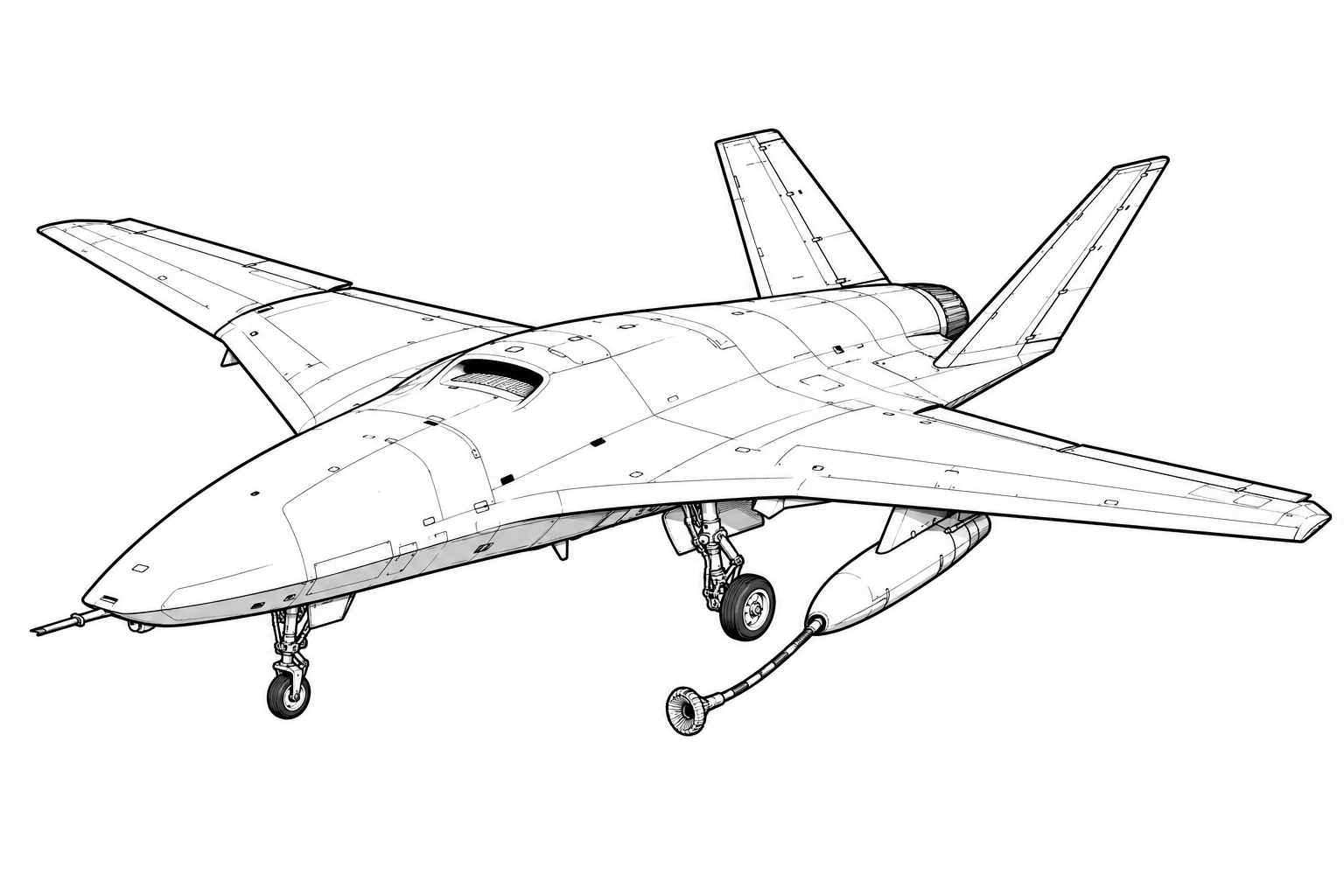
MQ-25 Stingray overview
Last reviewed:
The MQ-25 Stingray is Boeing's carrier-based unmanned aerial refueling aircraft for the U.S. Navy. Its immediate purpose is to reduce the amount of tanker work performed by F/A-18 Super Hornets and extend the reach of the carrier air wing. It is not an unmanned fighter entering service with an established weapons load. The program emerged from earlier carrier-unmanned-aircraft studies, but the Navy selected refueling as the central mission for the production system.
A tanker changes the useful reach of other aircraft by delivering fuel where it is needed, not simply by having a long individual flight range. The commonly cited MQ-25 requirement is delivery of 15,000 pounds of fuel at 500 nautical miles from the carrier. That is a mission-performance requirement, not a statement that the Stingray's maximum range is 500 nautical miles. Actual offload depends on the mission profile, reserves, and operating conditions, so precise cruise or endurance values should not be inferred from the fuel-delivery requirement.
Boeing's T1 demonstrator first flew in September 2019 and subsequently demonstrated aerial refueling with Navy aircraft, including an F/A-18 in June 2021. Carrier-deck handling work also explored moving an unmanned aircraft safely around a crowded flight deck. Demonstrator flight, production-representative aircraft flight, carrier suitability, and operational deployment are distinct stages. Treating an early T1 test as proof of an already fielded squadron conceals much of the integration work still required.
The program reached important new milestones in 2026. Boeing reported that the first Navy MQ-25A engineering-development aircraft flew on April 25, followed by a May 19 announcement of Milestone C approval for low-rate initial production. The production approval advances procurement but is not initial operational capability. Boeing also reported a second test flight in July, reflecting continuing validation of flight controls and aircraft performance rather than a completed carrier deployment.
On October 6, 2026, Boeing described a manned-unmanned-teaming software test during the Emerald Flag exercise at Eglin Air Force Base. The demonstration used open-architecture command-and-control messaging over Link 16 and is intended to support cooperation with crewed aircraft. Boeing explicitly discussed future integration into MQ-25A software. This is a valuable interoperability development, but it should not be described as a capability already available across an operational Stingray fleet.
As of the October 2026 review, Stingray has moved beyond the earlier demonstrator phase into development flight testing and approved low-rate production. Remaining questions include carrier qualification, software integration, delivery schedules, and the date when the Navy will declare an operational capability. Its significance is the potential to release crewed strike aircraft from refueling duties and extend the air wing's options. The timeline records achieved tests and approvals while keeping planned service dates separate from completed events.
Armament
No operational weapons configuration publicly confirmed; primary mission is refueling
Development and operational timeline
- The Navy selects Boeing for the MQ-25 engineering and manufacturing development contract
- Boeing's T1 MQ-25 demonstrator makes its first flight
- T1 demonstrates aerial refueling of a U.S. Navy F/A-18
- The demonstrator takes part in carrier-deck handling assessments aboard USS George H.W. Bush
- Boeing reports taxi testing of the first Navy MQ-25A development aircraft
- The Navy's MQ-25A engineering-development aircraft completes its first flight
- Boeing reports Milestone C approval for low-rate initial production
- Boeing reports a second MQ-25A test flight
- Boeing reports a teaming-software demonstration and describes future MQ-25A integration