Air ·
U.S. Navy Develops GPS-Free Landing Technology for Drones
The U.S. Navy has successfully demonstrated a drone's ability to land on a moving ship without GPS, utilizing advanced onboard sensors and software. This development enhances operational capabilities in contested environments where GPS signals are unreliable or jammed.
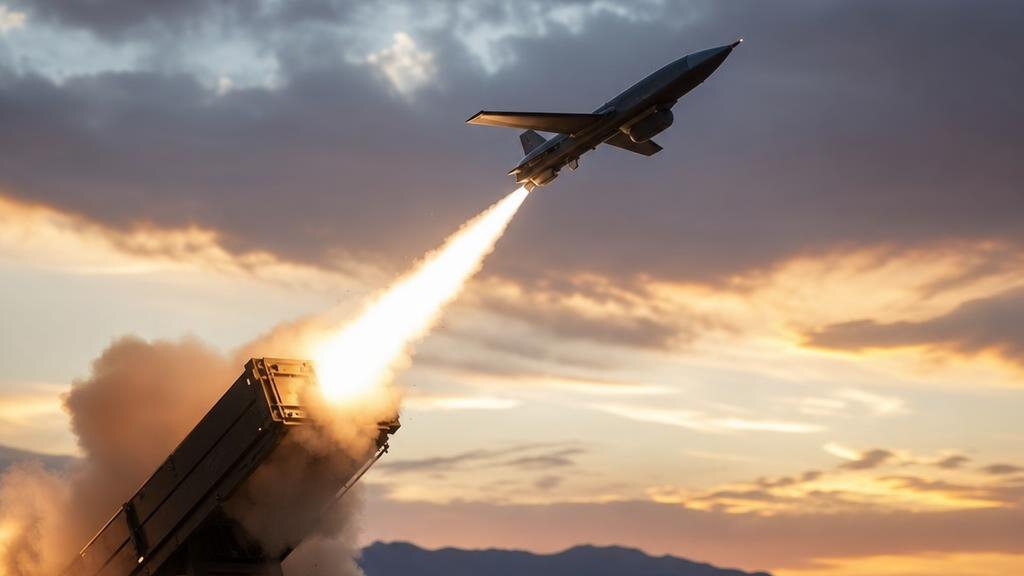
In a significant advancement for naval aviation, the U.S. Navy has successfully tested a drone capable of landing on a moving ship without the aid of GPS. This innovative capability, developed by the Naval Air Warfare Center Aircraft Division (NAWCAD), relies solely on the drone's onboard cameras, motion sensors, and sophisticated software. The successful landing in a GPS-denied environment marks a critical milestone in the Navy's efforts to enhance its unmanned aerial vehicle (UAV) operations, particularly in contested maritime zones.
The ability to land drones on pitching ships without GPS is crucial for modern naval operations. Traditional GPS systems can be easily disrupted by jamming or spoofing, which adversaries may employ to degrade U.S. military effectiveness in conflict scenarios. By developing a system that relies on visual and inertial data, the Navy aims to ensure that its UAVs can continue to operate effectively even when GPS signals are compromised. This capability is particularly relevant as the military increasingly anticipates operating in environments where electronic warfare will be a significant factor.
The technology demonstrated by the Navy allows for landing maneuvers that adapt in real-time to the ship's movement and environmental conditions, potentially increasing the safety and reliability of UAV operations at sea. The onboard systems must process a vast amount of data quickly to make split-second decisions about the drone's descent and landing trajectory. This adaptation is not just a technical achievement; it represents a paradigm shift in how naval forces can deploy unmanned systems in dynamic conditions. Such advancements in autonomy could lead to a new era of naval warfare where unmanned systems play a pivotal role in operational success.
The implications of this technology extend beyond just landing maneuvers. As the Navy continues to integrate unmanned systems into its operational framework, the ability to conduct autonomous operations without reliance on GPS enhances the versatility and resilience of naval forces. This could lead to more effective reconnaissance, surveillance, and combat operations, particularly in areas where traditional navigation aids are vulnerable. The ability to operate without GPS not only enhances mission success rates but also reduces the risk of mission failure due to adversarial interference.
Moreover, the successful implementation of this technology could pave the way for broader applications across various UAV platforms. Currently, the Navy’s focus is on enhancing the operational capabilities of drones like the MQ-25 Stingray, which is designed for aerial refueling but could benefit from similar landing technologies. The ability to autonomously land on ships increases the operational envelope of UAVs, allowing them to perform missions in more diverse and challenging scenarios. This adaptability could also facilitate the integration of UAVs into joint operations with allied forces, enhancing interoperability and collective operational effectiveness.
However, the transition from successful testing to operational deployment presents several challenges. The Navy must ensure that the technology is robust enough to handle the unpredictable nature of maritime environments, which can include high winds, rough seas, and other factors that could affect flight stability. Additionally, integrating this technology into existing naval protocols and training programs will require significant investment and time to ensure that personnel are adequately prepared to operate in GPS-denied scenarios. Training exercises will need to simulate various maritime conditions to ensure that operators can respond effectively to real-world challenges.
As this technology matures, it will also be essential to consider the cybersecurity implications. Autonomous systems, by their nature, are susceptible to hacking and other forms of cyber threats. The Navy will need to implement stringent security measures to protect the integrity of the drone's operating systems and the data it collects during missions. Ensuring that these systems can withstand cyberattacks will be critical for maintaining operational effectiveness and safeguarding sensitive information. The development of robust cybersecurity protocols will be as crucial as the technological advancements themselves, as vulnerabilities could be exploited by adversaries to undermine mission success.
Furthermore, the implications of this technology extend to logistics and supply chain management within naval operations. The ability to deploy UAVs that can autonomously land on ships could revolutionize how supplies and equipment are delivered to naval vessels at sea. This capability could reduce the need for manned resupply missions, minimizing risks to personnel and resources while increasing operational tempo. As the Navy looks to enhance its logistical capabilities, such innovations will be vital in maintaining sustained operations in contested environments.
In conclusion, the U.S. Navy's development of GPS-free landing technology for drones represents a significant step forward in unmanned systems capabilities. As military operations become increasingly complex and contested, innovations like these will play a crucial role in maintaining a technological edge. Continued investment in and refinement of these technologies will be necessary to keep pace with evolving threats and ensure that naval forces can operate effectively in any environment. The advancements in drone technology not only enhance operational capabilities but also signal a broader shift towards greater autonomy in military operations, paving the way for future innovations in naval warfare.