Air ·
US Navy and Boeing Launch Production of MQ-25A Stingray Drones
The U.S. Navy has awarded Boeing a significant contract to commence production of the MQ-25A Stingray, marking a vital advancement in naval unmanned aerial capabilities.
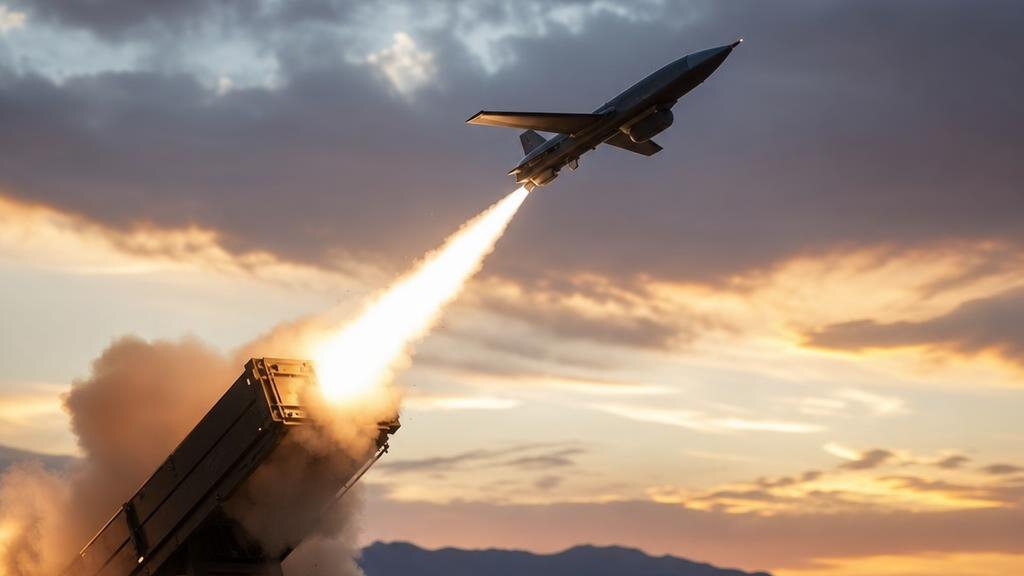
The U.S. Navy has taken a significant step in its unmanned systems evolution by awarding Boeing a $562 million contract for the production of the MQ-25A Stingray. This contract initiates Lot 1 Low Rate Initial Production (LRIP) of the Stingray, a naval drone designed to function as an aerial refueling platform for carrier-based aircraft, enhancing operational flexibility and reach. With the first flight of the MQ-25A expected by the end of 2027, the program is on track to redefine how the Navy integrates unmanned systems into its air operations.
The MQ-25A Stingray is designed to operate from aircraft carriers, providing essential refueling capabilities that extend the range and endurance of various strike aircraft like the F/A-18 Super Hornet and the F-35 Lightning II. Its deployment is expected to streamline carrier operations, allowing for more efficient use of manned aircraft while reducing the risk to pilots during refueling missions. This capability is particularly crucial in modern naval warfare, where operational tempo and the ability to project power over vast distances are paramount.
Boeing’s MQ-25 program is part of a broader trend within the U.S. military to incorporate unmanned systems that can perform complex missions traditionally executed by manned aircraft. The U.S. Navy's focus on the Stingray aligns with its strategy to enhance carrier strike group capabilities, especially in contested environments where air superiority is increasingly challenged by adversaries like China and Russia. Furthermore, the Stingray’s modular design allows for future upgrades and adaptations, keeping the platform relevant as technology evolves.
As the production of the MQ-25A progresses, it will be essential to evaluate its integration with other unmanned systems currently in development, such as the MQ-4C Triton and future loyal wingman concepts. The Navy's investment in the Stingray and its commitment to developing seamless manned-unmanned teaming will shape the future of naval aviation and maintain U.S. dominance at sea. Overall, the MQ-25A represents a key advancement in the Navy’s capabilities, ensuring readiness for future multi-domain operations against sophisticated threats.
With the MQ-25A Stingray entering production, the Navy is not only investing in immediate operational needs but also laying the groundwork for a more integrated and technologically advanced naval force. The successful deployment of the Stingray will likely influence future unmanned aerial vehicle designs and operational strategies, reinforcing the importance of unmanned systems in modern military doctrine.