Air system · HALE
MQ-4C Triton
Maritime Surveillance
Also known as: Triton / BAMS UAS / Broad Area Maritime Surveillance
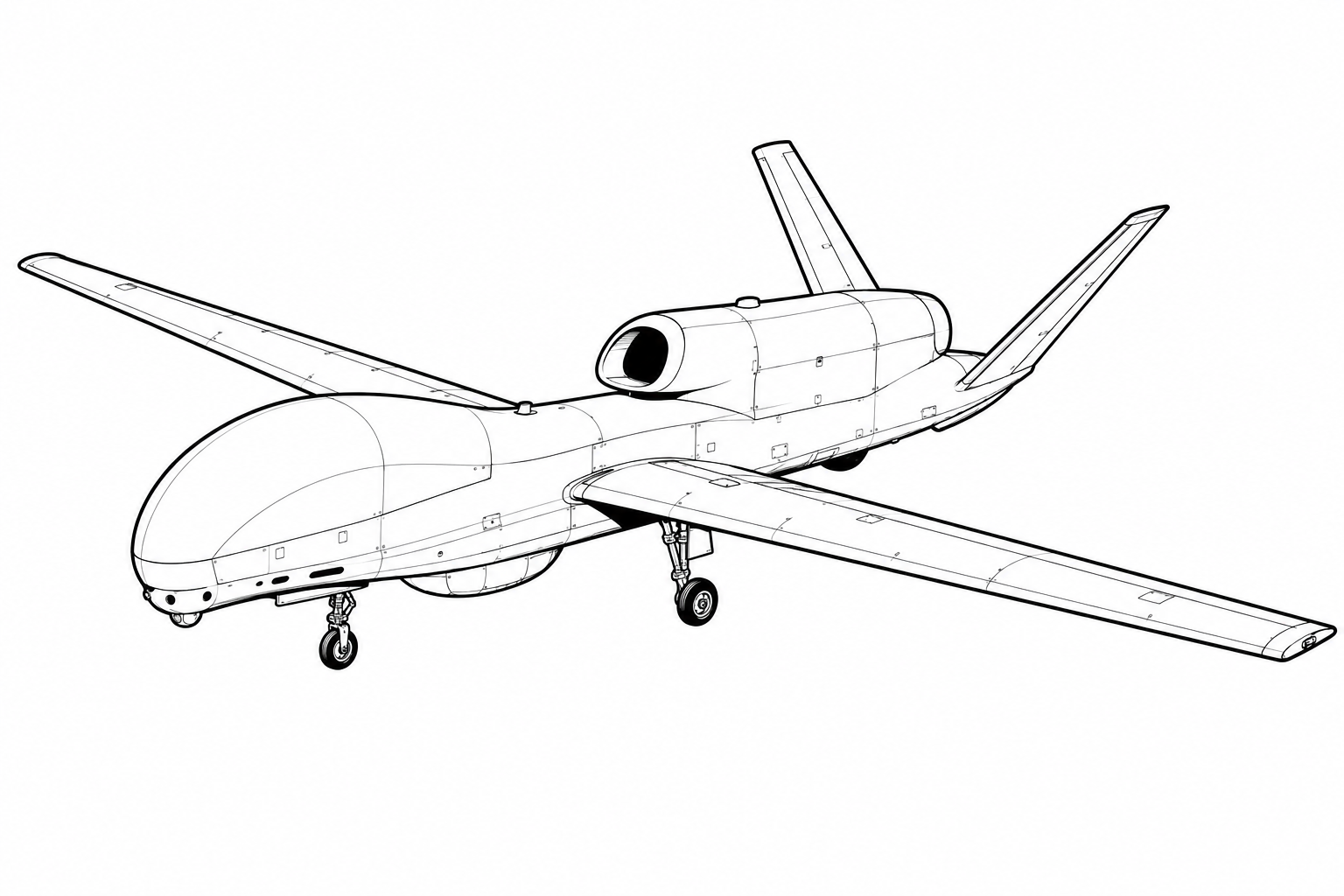
MQ-4C Triton overview
The MQ-4C Triton is a high-altitude, long-endurance unmanned aircraft system developed by Northrop Grumman for the U.S. Navy's Broad Area Maritime Surveillance (BAMS) mission, designed to solve a problem of geographic scale that no previous aircraft could economically address: the sustained, continuous surveillance of millions of square nautical miles of open ocean. The world's oceans cover 139 million square miles, and the U.S. Navy is tasked with monitoring shipping, detecting adversary submarines, tracking surface combatants, and maintaining maritime domain awareness across the Pacific, Atlantic, and Indian Oceans simultaneously. Manned maritime patrol aircraft like the P-8A Poseidon are highly capable but limited to 10-12 hour patrols, requiring constant crew rotation and covering only a fraction of the required area on any given day. The Triton was conceived as a persistent, unblinking complement — flying 24-hour sorties at 60,000 feet that allow a single aircraft to monitor areas the size of the continental United States.
The MQ-4C is built on the RQ-4 Global Hawk airframe but incorporates substantial modifications that distinguish it from the Air Force's land surveillance variant. The wing structure is reinforced to handle the dynamic loads encountered when descending from high altitude to low altitude to investigate surface contacts — a maneuver the land-based Global Hawk was not designed to perform. An anti-icing system treats leading edges during low-altitude flight through clouds and precipitation over the ocean, where weather is less predictable than over land. The primary sensor is the Multi-Function Active Sensor (MFAS) — a 360-degree active electronically scanned array radar that simultaneously provides inverse synthetic aperture radar images of ship targets, tracking of hundreds of surface contacts, and detection of periscopes and small boats. Electro-optical/infrared sensors provide photographic identification of contacts flagged by the radar.
The Triton-P-8 teaming concept divides maritime patrol responsibilities: Triton maintains persistent wide-area track and detects targets of interest, then cues P-8 crews who transit to the contact for close inspection and, if necessary, weapons employment. This division of labor uses each platform where it excels, allowing the manned aircraft to conserve flight hours for the relatively infrequent moments when human judgment and weapons are actually required. As of 2025–2026, the Navy has deployed Tritons to Guam for Pacific surveillance and to Naval Air Station Sigonella in Sicily for Mediterranean and Middle East coverage. Australia confirmed its MQ-4C acquisition in 2023 for Indo-Pacific maritime domain awareness. The fleet is in continuous expansion, with each new aircraft adding roughly 24 hours of persistent surveillance that would otherwise require two or three P-8 sorties.
Armament
None (maritime ISR only)
Development and operational timeline
- MQ-4C Triton completes first flight at Palmdale; BAMS program reaches critical milestone
- Triton completes Multi-Function Active Sensor radar integration and qualification
- First Triton deployed to Guam for initial operational presence in Pacific
- Triton achieves early operational capability; P-8 teaming concept validated in Pacific
- Triton deployed to NAS Sigonella for Mediterranean and Middle East surveillance
- Australia confirms MQ-4C Triton acquisition for ADF Indo-Pacific maritime awareness
- Pacific Triton fleet expanded; coverage extended to South China Sea surveillance tasking
- U.S. and Australian Triton fleets begin coordinated operations for regional maritime picture