Air system · HALE
RQ-4 Global Hawk
Strategic Reconnaissance
Also known as: Global Hawk / BAMS (Broad Area Maritime Surveillance) / Euro Hawk
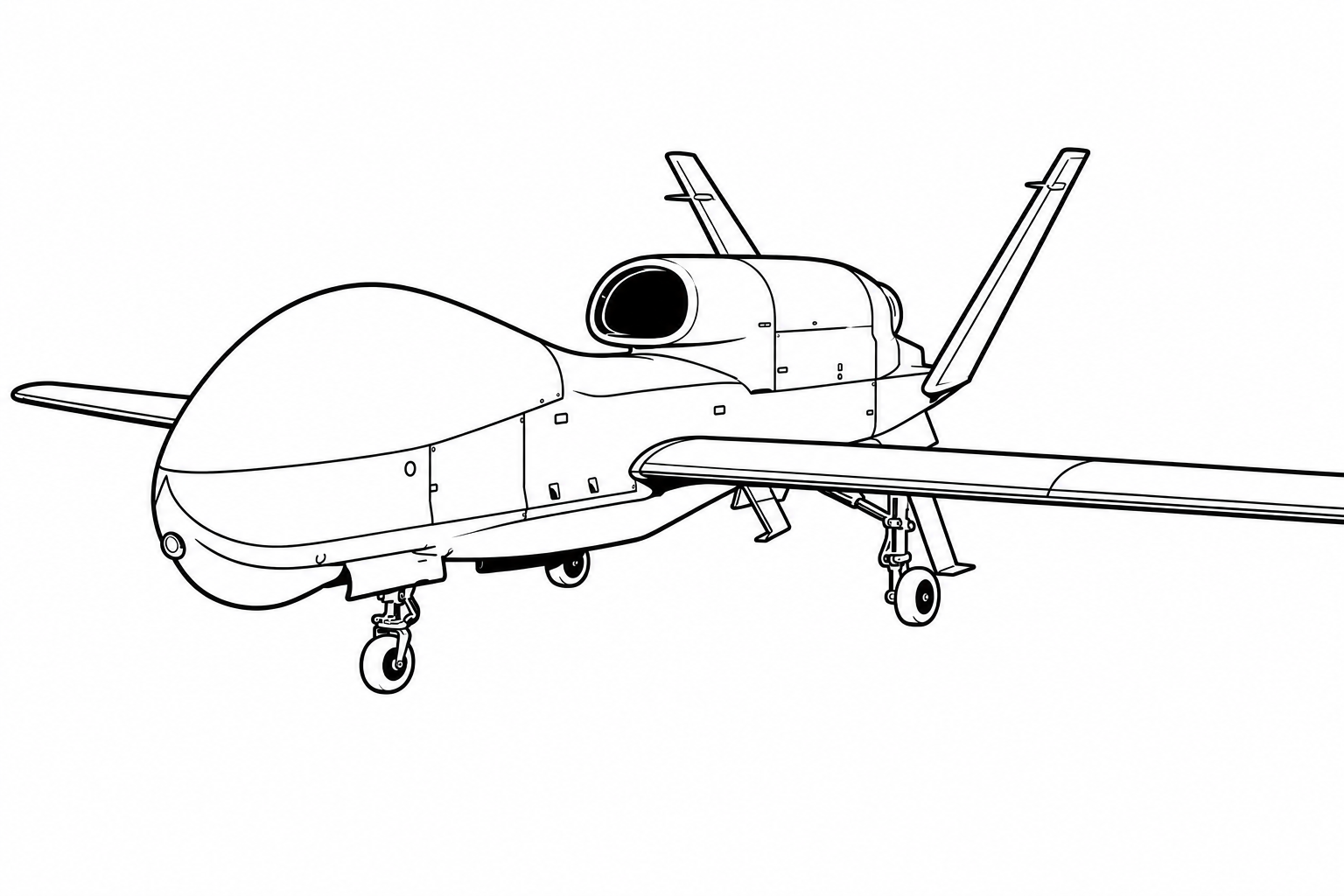
RQ-4 Global Hawk overview
The RQ-4 Global Hawk, built by Northrop Grumman, is the premier high-altitude, long-endurance (HALE) unmanned surveillance aircraft in the world. Its development began in the 1990s under the Defense Advanced Research Projects Agency (DARPA), with the first flight occurring in February 1998 at Edwards Air Force Base. The system entered operational service in 2001 and saw its combat debut during Operation Enduring Freedom in Afghanistan, where it provided unprecedented persistent overhead imagery of Taliban and al-Qaeda positions. The Global Hawk can survey up to 100,000 square kilometers of terrain per day from altitudes exceeding 60,000 feet — above the operational ceiling of most fighter aircraft and the vast majority of surface-to-air missile systems — providing near-real-time imagery intelligence to combatant commanders across the globe via satellite datalinks.
The platform has been produced in several operationally distinct variants. The Block 20 was the initial production model; the Block 30 added an Airborne Signals Intelligence Payload (ASIP) for electronic intelligence collection; and the Block 40, the most advanced variant, carries the Multi-Platform Radar Technology Insertion Program (MP-RTIP) active electronically scanned array radar capable of generating high-resolution ground moving target indicator data through clouds, haze, and darkness. The NATO Alliance Ground Surveillance (AGS) configuration, operated from Sigonella Air Base in Sicily, provides the alliance with persistent wide-area ISR coverage of Europe, the Middle East, and North Africa. Japan has acquired multiple RQ-4B Block 30 aircraft for Pacific strategic surveillance missions.
As of 2025–2026, public USAF planning describes retirement of older Block 20 and Block 30 airframes, while the Block 40 has been the principal U.S. variant associated with MP-RTIP radar. Iran's shoot-down of a U.S. Navy MQ-4C Triton (Global Hawk derivative) over the Strait of Hormuz in June 2019, and Russia's degradation of Ukrainian ISR coverage through electronic warfare, have intensified debates about HALE drone survivability in near-peer conflicts. The USAF has discussed electronic protection and successors under the classified RQ-180 program, but the Global Hawk's combination of endurance, sensor diversity, and proven operational reliability has kept it relevant to strategic reconnaissance; the future duration of U.S. service should not be stated as a guaranteed early-2030s commitment.
Recent public USAF budget and force-structure material supports a continuing drawdown of U.S.-owned RQ-4 airframes, but it does not by itself verify the source record's claimed September 2025 Block 40 electronic-protection or MP-RTIP modernization event. That distinction is important because NATO AGS, Japan's RQ-4B fleet, and other operators are not interchangeable with the U.S. retirement plan. Through 2026, official NATO material continues to describe the RQ-4D-based AGS force as an active alliance surveillance capability, while no public announcement establishes an operational RQ-4 successor or a newly fielded U.S. Block 40 upgrade.
Armament
None (reconnaissance only)
Development and operational timeline
- First flight of RQ-4A Global Hawk prototype at Edwards AFB
- Operational debut in Afghanistan during Operation Enduring Freedom
- Germany cancels Euro Hawk program after €600M spent on compatibility issues
- First NATO RQ-4D aircraft are delivered to Sigonella for the Alliance Ground Surveillance program
- Iranian IRGC shoots down U.S. Navy BAMS-D variant over Strait of Hormuz
- Japan receives its first RQ-4B Global Hawk for Pacific strategic surveillance
- USAF begins phased retirement of Block 20/30 fleet; Block 40 sustained
- Public U.S. planning continues the RQ-4 drawdown while official NATO AGS material continues to identify the RQ-4D as an active alliance ISR platform