Air ·
Michigan Firm to Produce 4,000 Attack Drones for U.S. Military
Swarm Defense Technologies has secured a significant contract to manufacture 4,000 one-way attack drones, enhancing the U.S. military's capabilities under the Drone Dominance Program.
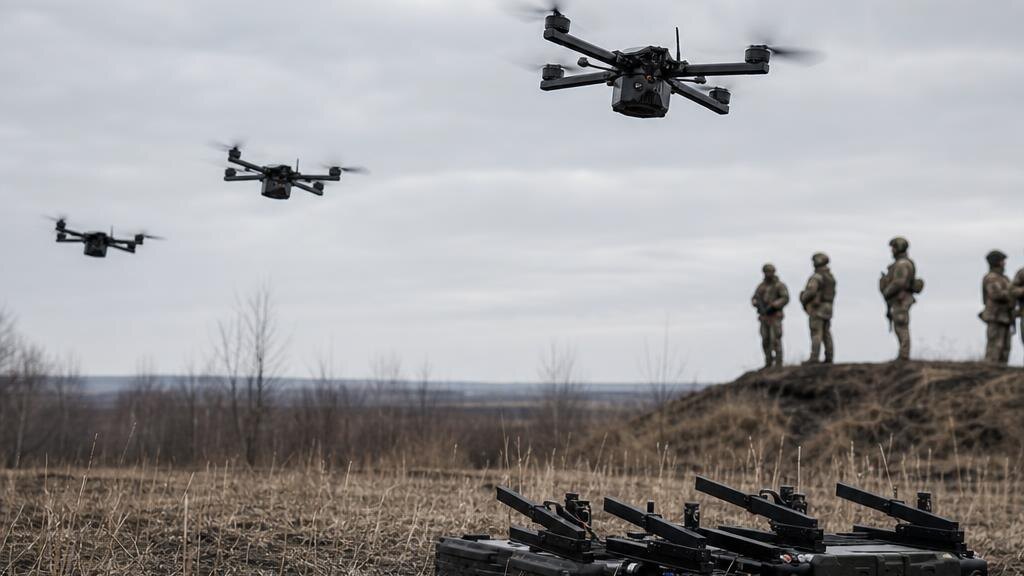
In a significant development for U.S. military capabilities, Michigan-based Swarm Defense Technologies has been awarded a contract to produce 4,000 Kiwi one-way attack drones for the U.S. Department of War’s Drone Dominance Program. Announced on September 22, this contract, valued at a minimum of $25 million, underscores the increasing reliance on unmanned aerial systems (UAS) in modern warfare, particularly in the context of asymmetric threats posed by adversaries. The decision to invest in such technology reflects a broader trend within the military to adapt to evolving battlefield dynamics, where traditional combat methods may no longer suffice.
The Kiwi drone is designed as a loitering munition, a type of UAV that can remain airborne for extended periods while searching for targets before delivering an explosive payload. This capability aligns with the U.S. military's strategic shift towards more agile and responsive combat systems that can engage targets without risking pilot lives. The cost of approximately $6,250 per drone highlights the affordability and scalability of such systems, making them an attractive option for frontline units. This price point allows for mass deployment, potentially enabling the military to field large numbers of drones in a conflict scenario, thereby overwhelming enemy defenses and increasing operational tempo.
The U.S. military's focus on drone technology is evident in its broader strategy to dominate the battlefield through advanced unmanned systems. The Drone Dominance Program aims to integrate various unmanned aerial vehicles into a cohesive operational framework, enhancing situational awareness and lethality. As conflicts evolve, the need for systems that can operate in contested environments while minimizing collateral damage becomes paramount. The Kiwi drone is expected to play a crucial role in this paradigm shift, offering a low-cost, high-impact solution to engage enemy assets. This integration could potentially lead to a more decentralized command structure, where frontline units are empowered to make real-time decisions based on the data provided by these drones.
Historically, the U.S. military has employed a range of drone platforms, from surveillance UAVs like the RQ-4 Global Hawk to strike systems like the MQ-9 Reaper. However, the introduction of one-way attack drones like the Kiwi represents a new frontier in drone warfare, where the emphasis is not solely on reconnaissance but also on direct engagement. This shift reflects lessons learned from recent conflicts where loitering munitions have proven effective against a variety of targets, including armored vehicles and fortified positions. The operational flexibility provided by such systems allows for a broader range of tactical options, particularly in asymmetrical warfare scenarios where conventional forces may be at a disadvantage.
Despite the advantages, the deployment of one-way attack drones raises several strategic and ethical considerations. The potential for misuse and the implications of autonomous decision-making in combat scenarios are significant concerns. As militaries around the world continue to integrate drone technology, ensuring robust oversight and adherence to international laws of warfare will be critical. The U.S. military must navigate these challenges while remaining at the forefront of drone innovation. Moreover, the ethical implications surrounding the use of drones in combat, particularly regarding civilian casualties and accountability, will require ongoing dialogue among military leaders, policymakers, and the public.
Additionally, the rapid procurement of such systems may lead to operational challenges, including the need for adequate training and integration into existing military frameworks. Ensuring that personnel are well-versed in the capabilities and limitations of these drones will be essential for maximizing their effectiveness in combat. The U.S. Army and other branches will need to develop comprehensive training programs to prepare soldiers for the complexities of operating and deploying loitering munitions. This will not only involve technical training but also simulations that prepare personnel for the ethical and tactical decision-making required in real-world scenarios.
The contract with Swarm Defense Technologies also indicates a growing trend towards collaboration with private defense firms to accelerate technological advancements. As the defense industrial base evolves, partnerships between military branches and innovative companies will be crucial for maintaining competitive advantages against peer and near-peer adversaries. The U.S. military's ability to leverage commercial technology will play a significant role in future conflicts, particularly in the realm of unmanned systems. This collaboration can foster rapid innovation cycles, enabling the military to adapt more quickly to emerging threats and technological advancements.
Looking ahead, the successful integration of the Kiwi drones into military operations will depend on ongoing assessments of their performance in real-world scenarios. The U.S. military will likely conduct extensive testing to evaluate the effectiveness of these drones in various combat environments. As operational data is collected, adjustments may be made to enhance their capabilities further, ensuring that they meet the evolving demands of modern warfare. This iterative process of testing and refinement is essential for ensuring that the drones can operate effectively in diverse conditions, from urban environments to open battlefields.
In conclusion, the production of 4,000 Kiwi one-way attack drones marks a pivotal moment in the U.S. military's approach to unmanned warfare. With their ability to deliver precision strikes at a fraction of the cost of traditional munitions, these drones are set to transform tactical operations, offering commanders new options for engaging adversaries while minimizing risks to personnel. As the landscape of warfare continues to change, the integration of such technologies will be vital for maintaining operational superiority on the battlefield. The successful deployment of the Kiwi drones could serve as a model for future unmanned systems, shaping the future of military engagements in an increasingly complex global security environment.