Air system · Stealth
RQ-170 Sentinel
Stealth Reconnaissance
Also known as: Beast of Kandahar / Lockheed Martin RQ-170
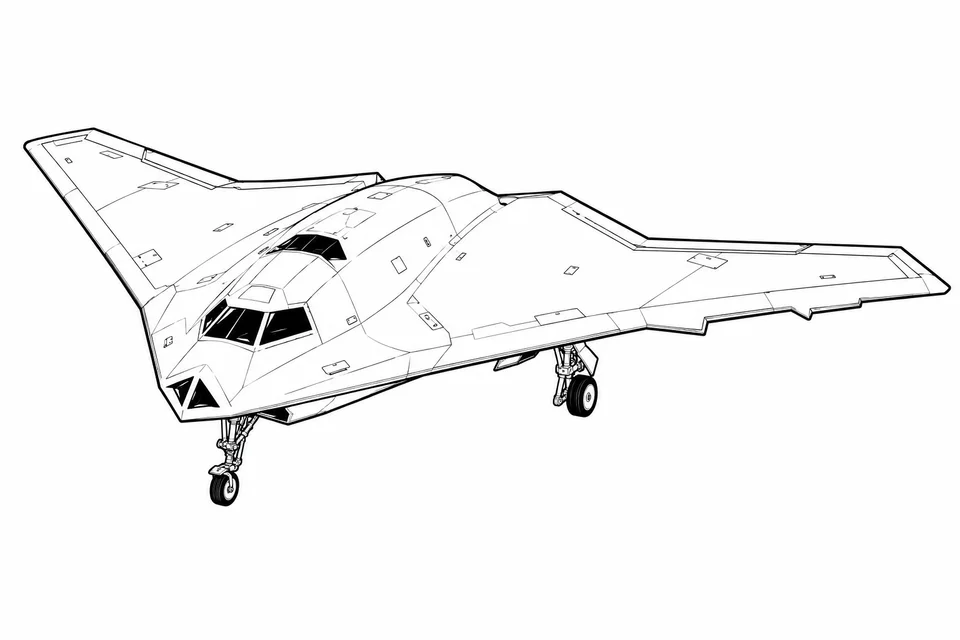
RQ-170 Sentinel overview
Last reviewed:
The RQ-170 Sentinel is Lockheed Martin's low-observable reconnaissance aircraft, developed through the company's Skunk Works organization for sensitive U.S. intelligence missions. The Air Force officially describes its purpose as reconnaissance and surveillance in support of joint commanders, including locating targets. It is not an armed equivalent of the MQ-9 Reaper, and public acknowledgment of the aircraft does not amount to publication of its complete mission equipment. The Sentinel's importance lies in collecting intelligence where a conspicuous conventional surveillance aircraft may be unsuitable, rather than advertising a maximum weapon load.
Its flying-wing configuration removes the conventional vertical tail and integrates much of the aircraft into a broad wing. That arrangement is consistent with reducing radar reflections, but photographs cannot establish a measured radar cross-section, immunity to detection or an ability to penetrate every air-defense network. Low observability also depends on materials, manufacturing tolerances, inlets, exhaust treatment and operating conditions. Comparing Sentinel with the RQ-4 Global Hawk therefore requires more than choosing whichever aircraft appears to have the longer endurance: the two designs address different access and surveillance problems.
The public history began with sightings around Kandahar, Afghanistan, which produced the nickname Beast of Kandahar before the Air Force acknowledged the designation in December 2009. Its official fact sheet links the program to Air Combat Command, the 432nd Wing and the 30th Reconnaissance Squadron. These organizational references establish a real operational program, but the fact sheet is deliberately brief. It does not provide authenticated dimensions, payload mass, speed, range, ceiling, endurance or a current fleet inventory. Estimated specifications repeated across websites should not be mistaken for a declassified manufacturer data sheet.
Reporting has associated Sentinel with surveillance preceding the May 2011 operation against Osama bin Laden. In December 2011, Iran displayed an RQ-170 following the loss of a U.S. aircraft. The loss is well documented, but competing explanations for how it occurred are not equally established. Iranian claims of electronic capture, navigation manipulation and successful replication should be attributed rather than presented as a proven technical reconstruction. An outwardly similar airframe does not demonstrate equal sensors, mission software, communications or low-observable performance.
September 2026 reporting by The War Zone provides a newer, unusually specific view of the operator community. An award citation for the 30th Reconnaissance Squadron described 87 intelligence, surveillance and reconnaissance missions across three areas of responsibility during 2025, together with six large-force exercises and rapid deployments. The award was presented in 2026, but the cited activity occurred in 2025. Crucially, the citation did not explicitly identify the aircraft used on every mission; the unit's association with Sentinel cannot turn its entire activity record into a confirmed RQ-170 sortie tally.
The same reporting discusses Sentinel's association with the January 2026 Venezuela operation, while separating that record from speculation about other deployments. This is useful evidence of continued relevance, not disclosure of routes, sensors or the full intelligence contribution. Claims about a particular target, basing location or strike-support function need their own evidence. Maintaining this distinction makes the aircraft's operational history more informative without presenting assumptions about classified missions as verified facts.
Within the catalog, WZ-X offers a useful comparison in how analysts assess a large, sparsely documented flying-wing reconnaissance design, while GJ-11 Sharp Sword illustrates a different reported combat-aircraft development path. Neither is established as a Sentinel equivalent simply because its outline is similar. XQ-58 Valkyrie is another distinct case: a publicly tested jet used for autonomy, payload and collaborative mission experiments. Following these related systems helps distinguish penetrating reconnaissance, high-altitude surveillance and collaborative combat development instead of treating every stealth-shaped drone as the same category.
As reviewed on November 8, 2026, the strongest public profile combines the Air Force's confirmed mission description with carefully attributed operational reporting. No newly published official specification sheet in the reviewed sources resolves the aircraft's classified performance figures. The timeline therefore records public acknowledgments, documented incidents and publication dates, rather than inventing annual upgrades or declaring an undisclosed replacement operational. Sentinel remains a significant reconnaissance program whose lack of public numbers is itself an important limitation when comparing capabilities.
Armament
None (stealth reconnaissance)
Development and operational timeline
- Photographs around Kandahar bring the previously unacknowledged flying-wing aircraft to public attention
- The U.S. Air Force publicly acknowledges the RQ-170 Sentinel designation and reconnaissance mission
- Reporting associates Sentinel with surveillance preceding the bin Laden raid; the complete mission record remains classified
- Iran displays a lost U.S. RQ-170; the mechanism of its loss and capture remains disputed
- Operational reporting associates RQ-170 aircraft with the Venezuela operation; mission equipment and detailed tasking remain undisclosed
- The War Zone reports the 30th Reconnaissance Squadron's award and 2025 mission activity; the citation does not identify every aircraft flown
- Editorial status review: retain official mission evidence and distinguish operator-level reporting from confirmed aircraft-specific performance