Air system · Reported Flying-Wing Reconnaissance Development
WZ-X
Reported Long-Range ISR / Flight-Test Development
Also known as: WZ-X / reported Chinese flying-wing UAV
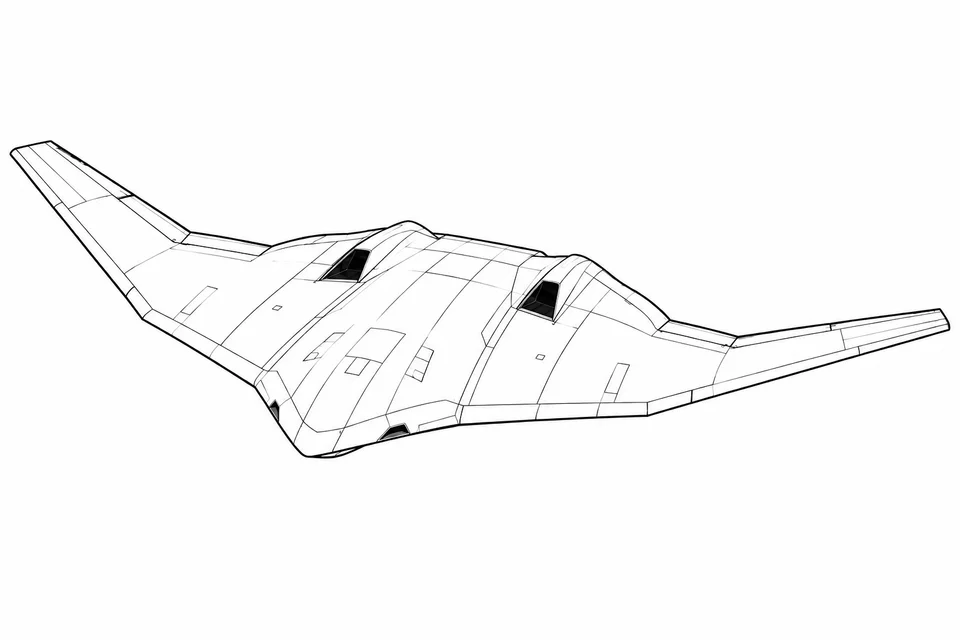
WZ-X overview
Last reviewed:
WZ-X is the tentative open-source designation associated with a large Chinese tailless flying-wing unmanned aircraft seen in imagery around a test facility and subsequently reported in flight. The important November 2026 update is that the public record now extends beyond a purely speculative catalog concept: Janes described flight-trial imagery in September 2026. However, a provisional analyst label is not an official Chinese military designation. The reviewed record does not establish a manufacturer-issued specification sheet, a confirmed operational unit or a declared service-entry date.
Janes traces the aircraft to commercial satellite imagery of Malan Air Base, north of Bosten Lake in Xinjiang, in May 2025. Its September report describes later images circulating on Weibo that show the aircraft airborne, including views with landing gear extended. This is evidence for a reported development and flight-test program, not a dated first-flight announcement from the manufacturer. The first publicly circulated image may come after earlier flights, and the original date and full provenance of social-media photographs can be uncertain. Those limits should remain visible alongside the new evidence.
The same Janes assessment estimates a 52–53-metre wingspan and a length of about 13 metres. These are image-based analytical estimates, not official dimensions. The described planform has a broad central section transitioning to long, higher-aspect-ratio outer wings, with apparent split control surfaces. Such an arrangement is consistent with interest in efficient long-duration flight and low observability, but it cannot establish actual endurance or radar performance. This profile provides the useful reported dimensions while retaining their attribution rather than leaving all public analysis out or presenting estimates as factory figures.
A long-range intelligence, surveillance and reconnaissance role is an analytical interpretation of the size and configuration. Janes explicitly says that an additional strike capability cannot be confirmed from the available imagery. No reviewed primary release establishes weapons carriage, payload mass, engine type, fuel capacity, speed, ceiling or mission radius. It would therefore be misleading to assign the aircraft a missile inventory or a complete anti-ship targeting function based only on a flying-wing shape. A plausible mission hypothesis is not the same as a tested and operational capability.
South China Morning Post reporting on September 11 adds analysis of the trailing-edge shape and the clearer airborne photographs, while noting that their original source and precise location had not been independently verified. That distinction is important when assessing apparent stealth features. Shaping may suggest design intent, but real detection characteristics depend on much more than the outline. Nor do daylight images establish a mature fleet: a developmental aircraft can fly visibly while remaining years from a defined operational role, and one photographed airframe does not reveal production quantities.
WZ-X should remain separate from WZ-7 Soaring Dragon, WZ-8, CH-7 and GJ-11 Sharp Sword. These are different catalog subjects with different configurations and evidence histories. Janes specifically distinguishes the observed WZ-X from the smaller CH-7, rather than treating the two names as synonyms. A reported WZ-X wingspan should not overwrite CH-7's figures, and WZ-8's speed claims do not transfer to this design. The RQ-170 Sentinel provides a useful cross-national example of limited public disclosure, not evidence that China has reproduced that aircraft's systems or achieved equivalent performance.
The catalog image is an illustration supplied for the profile, not a measurement source or authenticated photograph of the aircraft in the reported test imagery. It cannot validate the aircraft's details, and the page now labels that limitation explicitly. This matters especially for an emerging system: attractive artwork can appear more definite than the underlying evidence. Readers should use the linked reporting to understand what was observed, what analysts estimated and which capabilities remain unknown, rather than infer an authoritative configuration from the illustration.
As reviewed on November 8, 2026, the appropriate status is a reported Chinese flying-wing reconnaissance development with flight-trial imagery, an unconfirmed designation and no verified service entry. The old placeholder chronology implying earlier dated public milestones has been replaced with the actual imagery and reporting sequence. Manufacturer and operator remain unconfirmed. The timeline records the May 2025 observation, the September 2026 reports and this review, rather than inventing a precise first flight, procurement announcement or operational achievement to make the history appear longer.
Armament
No confirmed armament; Janes cannot establish a strike capability from imagery
Development and operational timeline
- Commercial satellite imagery at Malan shows the aircraft later discussed as WZ-X, according to Janes' September 2026 account
- Airborne images circulate on Chinese social media; their publication does not establish the exact first-flight date
- Janes reports flight trials and estimates a 52–53 m wingspan, while leaving the designation tentative and strike capability unconfirmed
- South China Morning Post discusses clearer photographs and analyst interpretations, noting unresolved source and location verification
- Editorial status review: reported flight-test evidence supersedes the purely speculative description; official identity, manufacturer and service entry remain unconfirmed