Air system · Stealth
CH-7
Stealth Reconnaissance / Strike
Also known as: Caihong-7 / Rainbow-7 / CASC CH-7
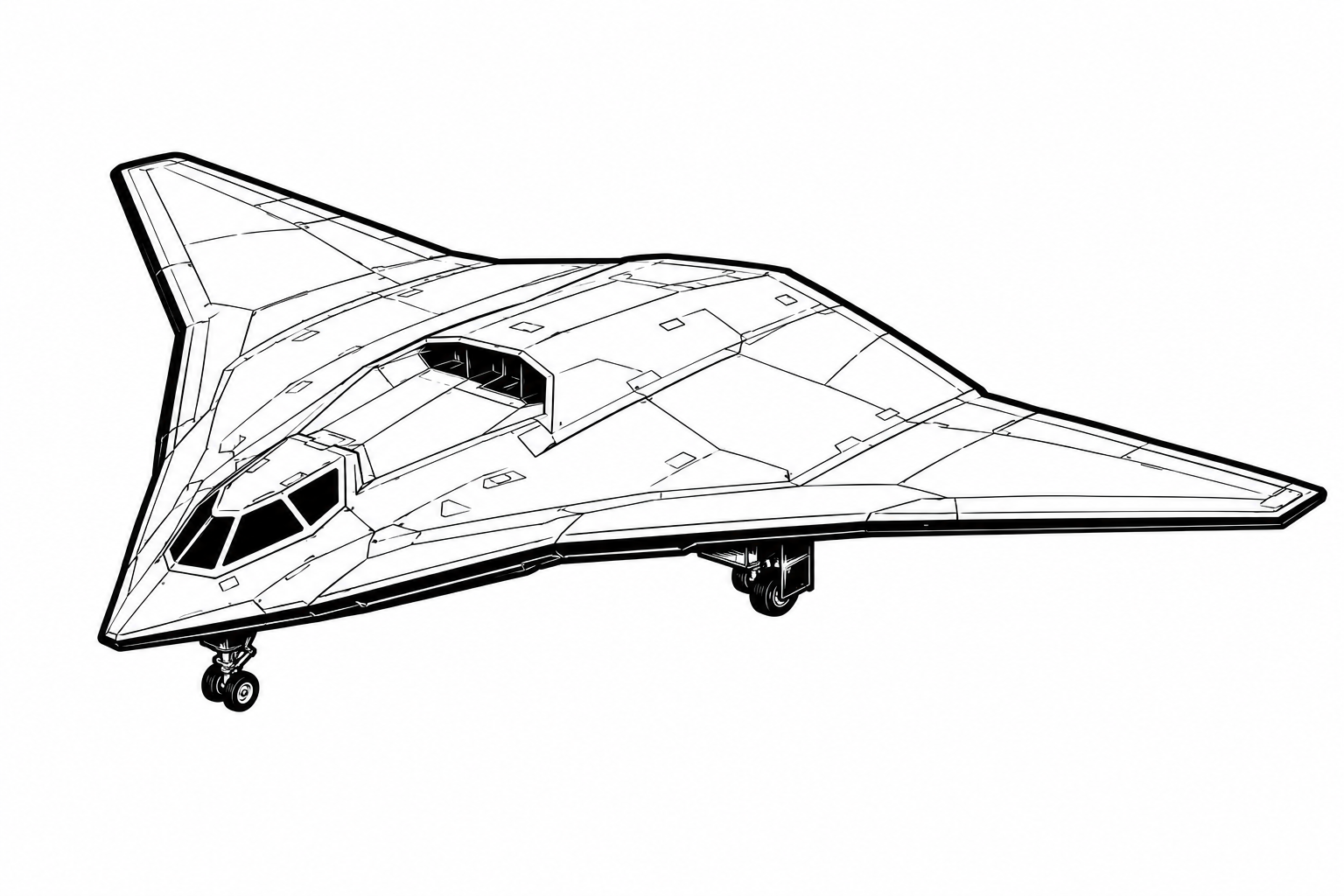
CH-7 overview
Last reviewed:
CH-7, or Caihong-7, is the stealth-oriented flying-wing unmanned-aircraft program associated with the China Academy of Aerospace Aerodynamics within CASC. Its name means Rainbow-7. The design is intended to combine high-altitude endurance with lower radar visibility than conventional propeller-driven export drones. It is a separate program from the GJ-11 Sharp Sword, even though both are commonly described as Chinese flying-wing unmanned combat aircraft.
Public exhibits show a tailless jet-powered configuration rather than the straight-wing pusher-propeller layout of the CH-4 and CH-5. A flying wing can offer useful aerodynamic and signature advantages, but it also creates control and integration challenges. The design's shape alone does not disclose radar cross section, sensor capability, or survivability. Internal payload volume and autonomous flight functions are development features that require testing rather than assumptions based on appearance.
Early exhibition descriptions associated CH-7 with figures such as a 27.3 m wingspan and roughly 8,000 kg maximum takeoff weight. Later public aircraft and displays changed significantly, making those early proposal figures unreliable as a final production specification. Published range, endurance, and speed values also differ across reporting. This profile therefore identifies early estimates as development context instead of presenting one precise-looking combination as a verified current aircraft data sheet.
CH-7 appeared publicly at the 2018 Zhuhai airshow and again in a revised form at the 2024 China International Aviation and Aerospace Exhibition. On December 15, 2025, CGTN reported completion of the maiden flight and published takeoff imagery. The report said further work would expand the flight envelope and verify payload functions. The announcement date establishes when the achievement became public, not necessarily the exact day the flight occurred.
The reported maiden flight is a meaningful advance beyond a mock-up, but it is not equivalent to operational acceptance, a weapons certification, or a delivered fleet. China's state-media reporting frames CH-7 as a high-altitude, high-speed, long-endurance aircraft; those descriptions should remain attributed until detailed testing or a final specification is released. An export-oriented product line also does not establish a named customer or a completed export sale for this specific model.
Through October 2026, the strongest recent documented milestone is the late-2025 maiden-flight announcement. The public sources reviewed do not establish a commissioned operational fleet, confirmed combat use, or a final configuration-specific performance table. Its significance lies in the move toward a more complex low-observable reconnaissance and potential strike platform. Readers should follow flight testing, payload validation, and customer or service announcements separately instead of treating a development exhibit as a fielded combat system.
Armament
Potential internal strike payload; operational weapon integration not publicly confirmed
Development and operational timeline
- CASC publicly exhibits the CH-7 flying-wing concept at Zhuhai
- A revised CH-7 configuration appears at the China International Aviation and Aerospace Exhibition
- CGTN announces completion of the CH-7 maiden flight and publishes takeoff imagery
- The announcement identifies flight-envelope expansion and payload verification as follow-on work
- Status review: public sources reviewed do not confirm operational acceptance, combat employment, or final production specifications