Air system · Maritime Patrol MALE UAV
MQ-9B SeaGuardian
Maritime Domain Awareness / Anti-Submarine Warfare / Strike / ISR
Also known as: SeaGuardian / MQ-9B maritime / GA-ASI maritime drone
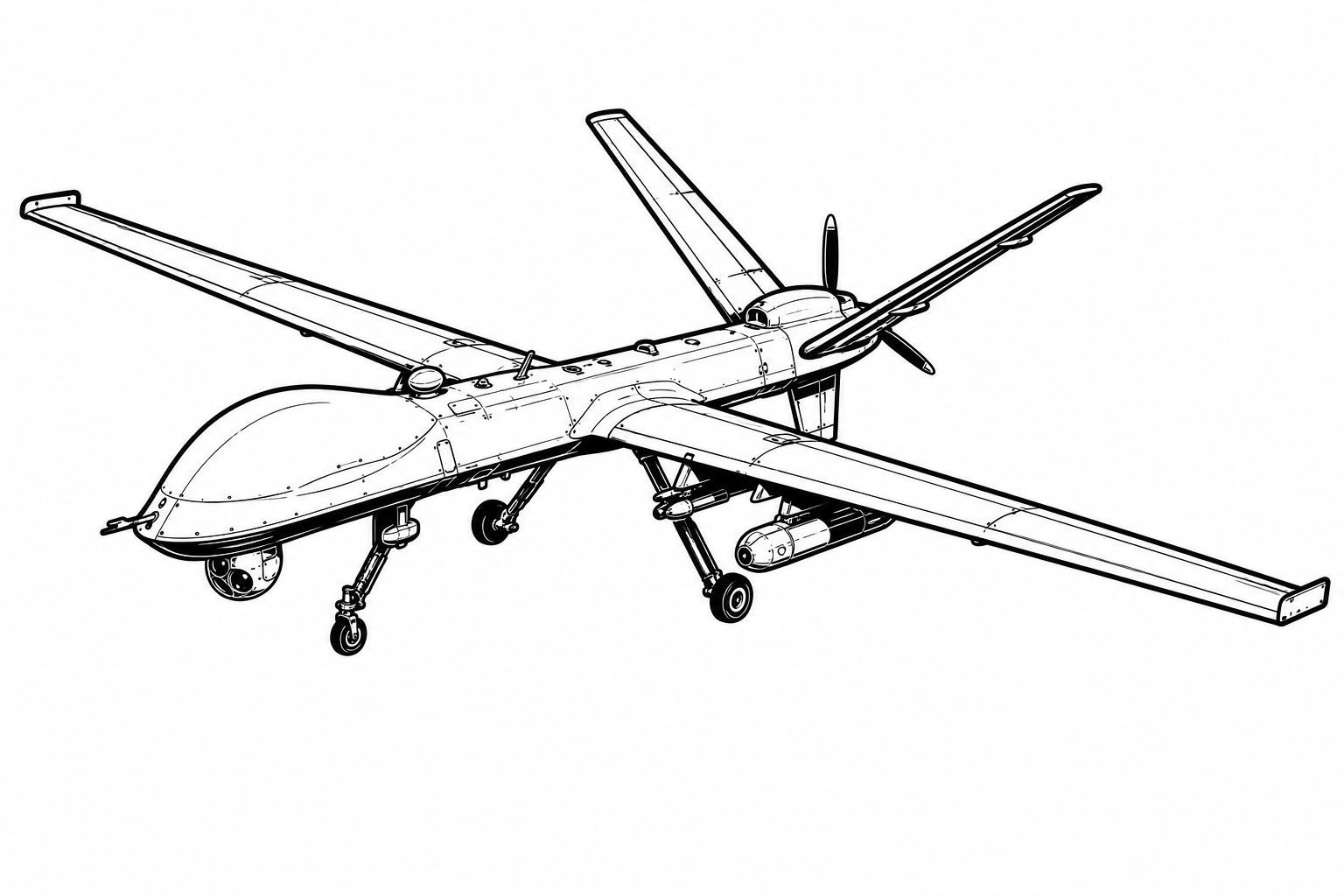
MQ-9B SeaGuardian overview
The MQ-9B SeaGuardian is the maritime surveillance specialist in the MQ-9B family, purpose-built for the open-ocean mission requirements that the standard SkyGuardian does not fully address. Its defining technical feature is the 360-degree multi-mode maritime surface search radar — a capability the land-focused MQ-9 variants lack — which can simultaneously track multiple surface contacts, classify vessel types through inverse synthetic aperture radar imagery, and detect objects as small as a submarine periscope or a small vessel on a rough sea surface. Combined with an automatic identification system receiver and optical sensors, the SeaGuardian provides a comprehensive picture of maritime activity across an enormous area from a single platform flying at altitude for 40 hours.
The anti-submarine warfare capability package adds a dimension that makes the SeaGuardian genuinely unique in the unmanned maritime patrol market. Sonobouys — small acoustic sensors dropped into the water to listen for submarine propeller and machinery noise — have historically been the primary tool of maritime patrol aircraft for locating submerged submarines. Equipping an unmanned platform with sonobuoy dispensers allows persistent submarine-hunting coverage over vast ocean areas without the crew fatigue constraints of crewed aircraft, which must rotate crews and take maintenance breaks that create surveillance gaps a submarine can exploit. The combination of sonobuoy dropping, acoustic data processing onboard, and the ability to coordinate a Mk 54 torpedo attack on a located submarine makes the SeaGuardian a complete ASW system rather than simply a sensor relay platform.
Japan and India significantly expanded SeaGuardian procurement through 2025-2026, driven by documented increases in Chinese and North Korean submarine activity in the Western Pacific. Japan operates SeaGuardians from Misawa Air Base for surveillance of waters around the Japanese archipelago and the Sea of Japan, while India uses them for Indian Ocean coverage including monitoring of the approaches to key naval bases. Both nations have cited the SeaGuardian's 40-hour endurance as essential for maintaining the continuous maritime domain awareness that their strategic situations demand.
Armament
AGM-114 Hellfire missiles, GBU-12 Paveway II laser-guided bombs, GBU-38 JDAM, Mk 54 lightweight torpedo; maritime radar, ISAR, AIS, EO/IR sensor suite
Development and operational timeline
- MQ-9B SeaGuardian configuration finalized; maritime search radar and sonobuoy dispenser integrated
- SeaGuardian first flight; multi-mode maritime radar and ASW sensor suite validated
- UK Royal Navy evaluation; SeaGuardian conducts maritime patrol demonstration in North Sea
- Japan Maritime Self-Defense Force evaluation begins; submarine detection capability assessed
- India selects MQ-9B including SeaGuardian variant for Indian Ocean maritime patrol requirement
- Japan formally procures MQ-9B; SeaGuardian to be based at Misawa for Pacific surveillance
- Japan SeaGuardian operational capability; Pacific submarine surveillance patrols begin
- India SeaGuardian delivery; Indian Ocean patrol operations commence from INS Rajali
- Australia evaluates SeaGuardian for Indo-Pacific maritime patrol requirement
- Japan expands SeaGuardian fleet; additional aircraft ordered after initial operational success
- SeaGuardian ASW package upgraded; improved sonobuoy processor and AI-assisted contact classification integrated
- Taiwan Strait surveillance integration: SeaGuardian data feeds into U.S. 7th Fleet maritime picture in real time