Air system · Combat UAV
Bayraktar TB2
Reconnaissance / Light Attack
Also known as: TB2 / Baykar TB2 / Bayraktar TB2T-AI
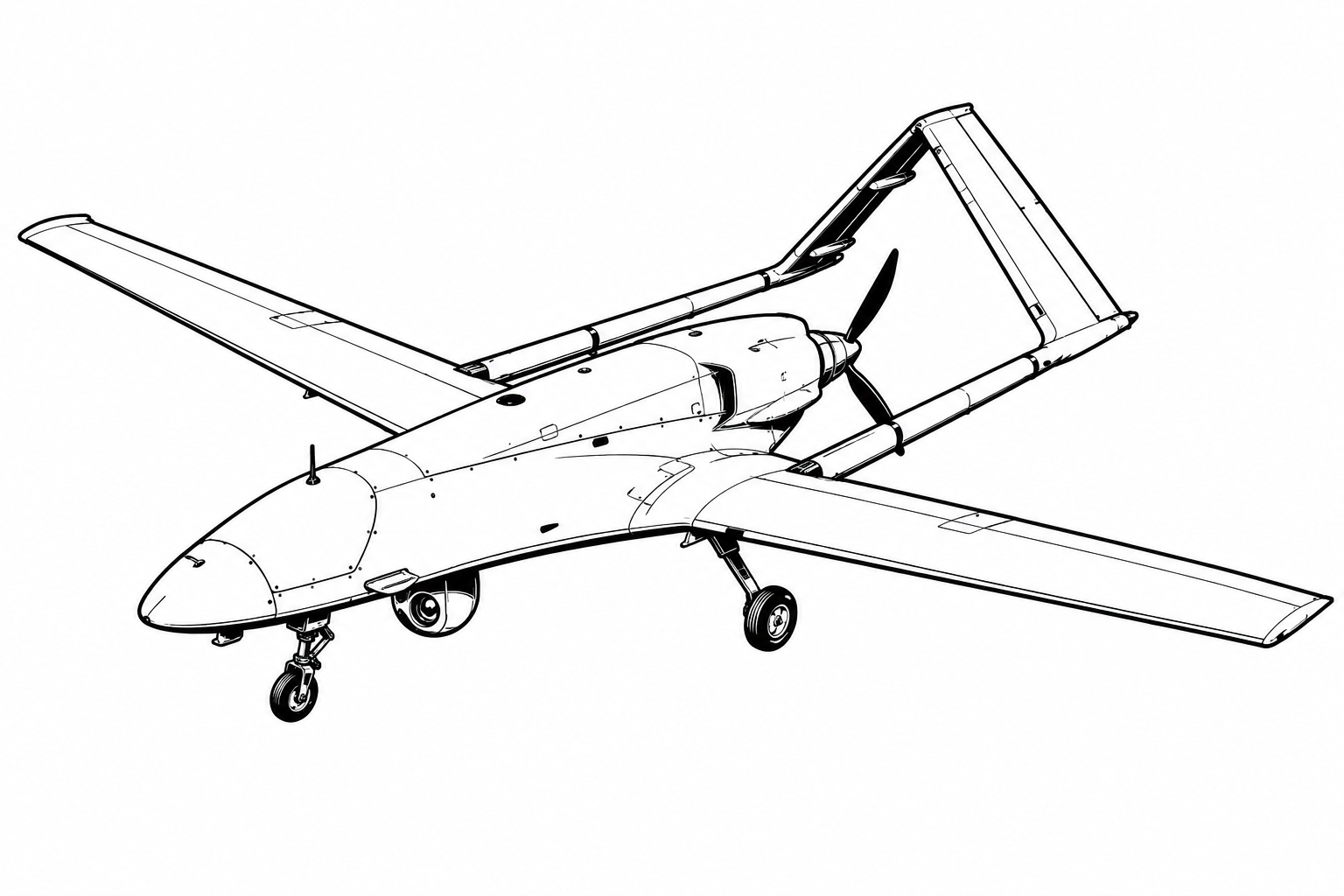
Bayraktar TB2 overview
Last reviewed:
The Bayraktar TB2 is Baykar's Turkish medium-altitude armed reconnaissance drone. It became internationally prominent because it combines persistent observation with relatively small precision-guided munitions in a reusable aircraft. Its battlefield reputation comes from operations in several very different conflicts, but those experiences should not be reduced to the claim that an inexpensive drone can always defeat modern air defenses. The aircraft's effectiveness depends on the surrounding intelligence, communications, and threat environment.
The baseline TB2 has a 12 m wingspan and a 6.4 m fuselage according to Baykar. The current product page lists 700 kg maximum takeoff weight, 150 kg payload capacity, a 20,000-foot service ceiling, and 18+ hours of endurance. It also records a 27-hour, 3-minute endurance achievement. A record flight and a routinely available mission endurance are different measures, especially once sensors, weapons, weather, and reserve fuel are considered.
The aircraft normally combines an electro-optical/infrared observation turret with laser designation and compatible guided munitions, including the MAM-L and MAM-C. A ground team controls the wider mission while the aircraft uses automated taxi, takeoff, flight, and landing functions. Different communications arrangements have appeared across the product family. The familiar 150 km figure in older accounts describes an early line-of-sight control context, not an immutable maximum flight distance for every current TB2 configuration.
TB2 gained attention in Libya, Syria, and the 2020 Nagorno-Karabakh conflict, then in Ukraine following Russia's 2022 full-scale invasion. Combat footage establishes that some engagements occurred, but edited video is not a complete loss-rate or effectiveness data set. As air defenses and electronic warfare adapt, the same aircraft may be used differently or face greater limits. Export numbers also need careful wording: an order, delivery, and fully trained operational unit are separate milestones.
Baykar introduced the turbocharged TB2T-AI development in February 2025 and reported a 37,096-foot test altitude on May 6, 2025. The manufacturer describes improved onboard computing, flight-control functions, and a higher-performance engine. Those test figures belong to the turbo variant, not the conventional TB2 baseline. In particular, a high-altitude record is not proof that an entire existing TB2 fleet has that engine or is routinely cleared to operate at the same altitude.
Through October 2026, TB2 is best understood as a widely used and evolving product family rather than a fixed 2014 specification sheet. Its enduring appeal is the combined reconnaissance-and-strike system and the broader training and support package. Its limitations include exposure to organized air defenses and disruption of the communications or sensing chain. This profile distinguishes current published baseline figures, historical records, and TB2T-AI test claims so that readers can make a meaningful comparison with Akinci, Wing Loong II, or other armed drones.
Armament
MAM-L, MAM-C smart munitions, LUMTAS
Development and operational timeline
- TB2 flight development and initial Turkish military introduction establish the production platform
- Publicly reported guided-munition integration expands the armed TB2 role
- Baykar records a 27-hour, 3-minute endurance flight in Kuwait
- Combat use in multiple theaters brings TB2 wider international attention
- Ukraine uses TB2 during the initial phase of the full-scale Russian invasion
- Baykar reports that the TB2 family has passed one million flight hours
- Baykar reports successful turbocharged TB2T-AI testing and a 30,318-foot altitude achievement
- Baykar reports a 37,096-foot TB2T-AI test record
- Status review: current baseline specifications and turbo-variant development claims must not be blended