Air system · MALE
Wing Loong II
Reconnaissance / Strike
Also known as: Wing Loong 2 / CAIG Wing Loong II / GJ-2
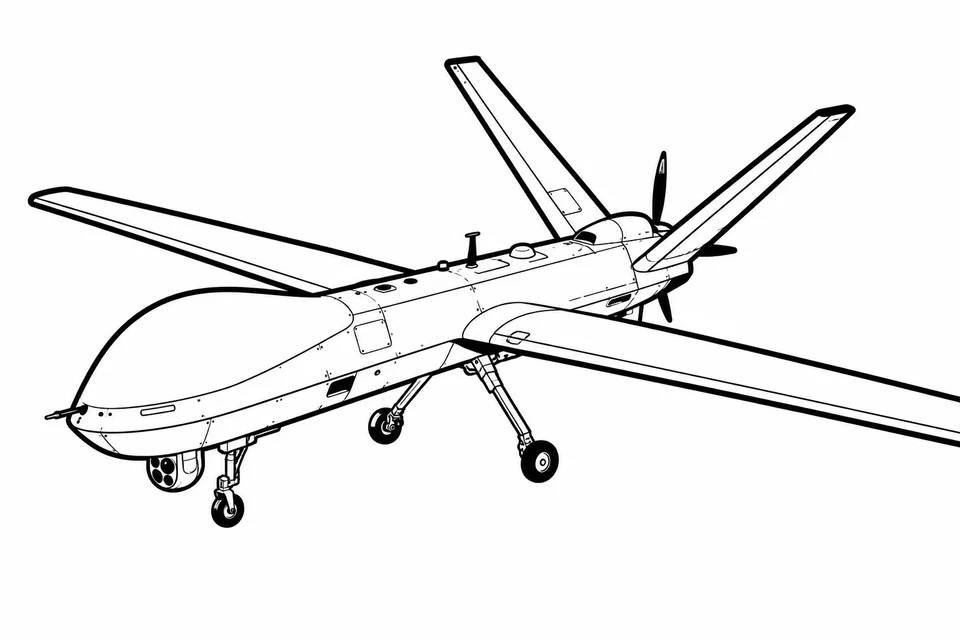
Wing Loong II overview
Last reviewed:
Wing Loong II is a Chinese medium-altitude, long-endurance armed drone developed by the Chengdu Aircraft Industry Group within AVIC. It is larger and more capable than the original Wing Loong, with a mission centered on persistent reconnaissance and precision attack. The export name and the Chinese military GJ-2 designation are closely related, but not every aircraft sold abroad necessarily has the same sensors, communications, or weapon integrations as a domestic configuration.
Commonly published Wing Loong II figures include an approximately 20.5 m wingspan, 11 m length, 4,200 kg maximum takeoff weight, and speeds up to 370 km/h. Public descriptions quote endurance up to 32 hours and approximately 480 kg of external weapons capacity. These are reported design figures, not independently demonstrated maxima for every export aircraft. Endurance with a light sensor load will differ from a mission carrying a full set of external weapons.
The aircraft uses a turboprop engine and a pusher propeller, with an electro-optical/infrared turret for observation and targeting. Publicly displayed configurations have multiple underwing hardpoints, allowing it to carry a mix of compatible guided weapons. Radar and satellite-control arrangements may vary by customer. Counting visible weapon stations is not enough to establish the total payload or every permitted combination, because individual stores impose integration and weight limits.
Wing Loong II first flew in February 2017, and the related GJ-2 entered Chinese air-force service in 2018 according to published histories. The program also attracted export customers, with reporting linking the type to operations in the Middle East and North Africa. Exact attribution is not always straightforward: photographs and media descriptions sometimes conflate Wing Loong I, Wing Loong II, and other Chinese MALE drones. Customer order totals should therefore be checked against deliveries and specific model identifications.
The export appeal combines a reusable armed ISR platform with a procurement route outside the principal Western suppliers. That does not make the system immune to air defenses or guarantee identical performance across buyers. Operator training, maintenance, communications reliability, and access to compatible weapons are part of the real capability. Public combat videos can establish individual engagements but do not provide a complete accounting of losses, availability, or civilian-harm assessments.
At the October 2026 review, Wing Loong II remains a mature Chinese armed-UAV design in the public record, while configuration-specific current fleet totals and upgrade status remain unevenly documented. The profile does not treat Wing Loong III or another newer AVIC aircraft as an automatic upgrade to every Wing Loong II. Readers comparing it with TB2 or Akinci should consider aircraft size, payload definition, sensor fit, and actual customer configuration rather than mixing values from different aircraft families.
Armament
BA-7 ATM, FT-9 50kg bomb, LS-6 GPS guided
Development and operational timeline
- Wing Loong II is publicly presented as a larger successor to Wing Loong I
- The Wing Loong II prototype completes its first flight
- Published program histories identify early export-customer activity
- The related GJ-2 is reported entering Chinese air-force service
- Public reporting links Wing Loong-family aircraft to operations in several export-customer theaters; individual model attribution varies
- Status review: distinguish export configurations, domestic GJ-2, and newer Wing Loong-family aircraft; no universal upgrade is established