Air system · Long-Range One-Way Attack UAV
Baykar K2
Long-Range Strike / Cooperative Flight
Also known as: K2 Kamikaze UAV / K2
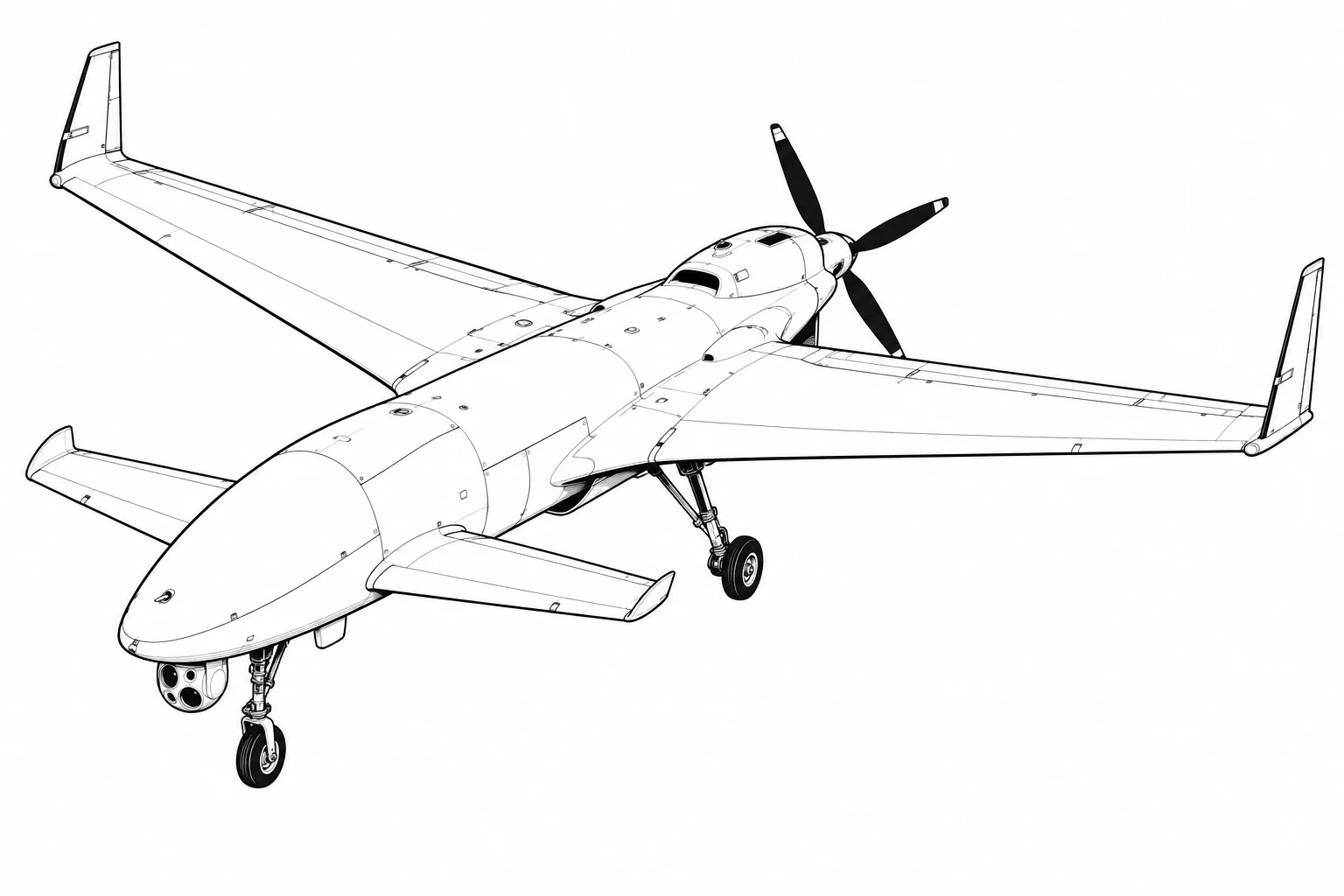
Baykar K2 overview
Last reviewed:
K2 is a large, propeller-driven one-way attack UAV developed by Baykar in Türkiye. It is not a TB2 variant: Baykar presents it as a separate long-range strike system with a much heavier expendable payload and cooperative flight capabilities. The design occupies a space between small tactical loitering munitions and reusable armed surveillance aircraft. Its publicly documented 2026 activity consists principally of manufacturer flight demonstrations and exhibition coverage, rather than a confirmed operational service entry or a published combat record.
Baykar's current product sheet lists an 800 kg maximum takeoff weight, 10 m wingspan, 5.1 m length and 2.1 m height. A 100 hp internal-combustion engine provides propulsion. Advertised performance includes more than 2,000 km operational range, over 13 hours endurance, 70 KTAS cruise speed and 110 KTAS maximum speed, approximately 130 and 204 km/h respectively. The listed service ceiling is 10,000 ft, about 3,048 m. These are manufacturer-stated values, not a guarantee that maximum payload, range and endurance are attained together under operational conditions.
A principal design feature is navigation that can estimate position by matching observed terrain features when satellite navigation is unavailable. Baykar describes EO/IR imaging, visual target lock, coordinate-based attack functions and an autonomy stack that coordinates multiple aircraft. The product listing also advertises a line-of-sight communications range above 100 km and optional beyond-line-of-sight connectivity. The communications figure is not the 2,000 km flight-range claim, and the presence of autonomy does not establish resistance to every form of interference or prove an independently validated autonomous targeting capability.
The first detailed public milestone in the reviewed material is Baykar's March 14, 2026 announcement of five-aircraft formation tests conducted over two days around Keşan and the Gulf of Saros. A further April 17 demonstration combined five K2s, ten Sivrisinek loitering munitions and TB2, TB3 and Akıncı aircraft. Baykar's April 24 account describes coordinated formations, visual navigation, target detection and attack demonstrations. Its description of a K2 diving toward designated coordinates and conducting a pass is not the same as a documented full-warhead combat strike.
The standard product table specifies a 200 kg payload, while promotional wording elsewhere says 200+ kg; this catalog uses the tabulated 200 kg figure. Baykar has also described a future development path in which a derivative could release weapons and return to base. That reusable concept must remain separate from the baseline expendable K2. Public exhibition coverage followed at SAHA 2026. As of October 24, the evidence reviewed supports a flight-demonstrated development program with substantial manufacturer claims, but does not confirm export deliveries, squadron-level service, combat deployment or completion of the proposed reusable variant.
Armament
Advertised 200 kg one-way-attack warhead payload; a weapon-releasing reusable derivative is a separate development concept
Development and operational timeline
- First day of the two-day, five-aircraft formation-test sequence subsequently described by Baykar
- Baykar publicly introduces K2 and reports formation tests, long-range strike specifications and a future reusable-derivative concept
- Baykar conducts a mixed-platform demonstration with five K2s, ten Sivrisinek aircraft, TB2, TB3 and Akıncı
- Manufacturer publishes the demonstration account, distinguishing coordinated flight and attack passes from a combat deployment
- SAHA 2026 public exhibition is documented in subsequent industry coverage
- Editorial status review: flight-demonstrated strike UAV; service entry, export deliveries and the reusable derivative are not confirmed by the reviewed sources