Naval system · Autonomous Surface Vessel
Devil Ray T-45
Maritime Strike / ISR / Area Denial
Also known as: T-45 USV / Blue Water Autonomy Devil Ray / high-speed combat USV
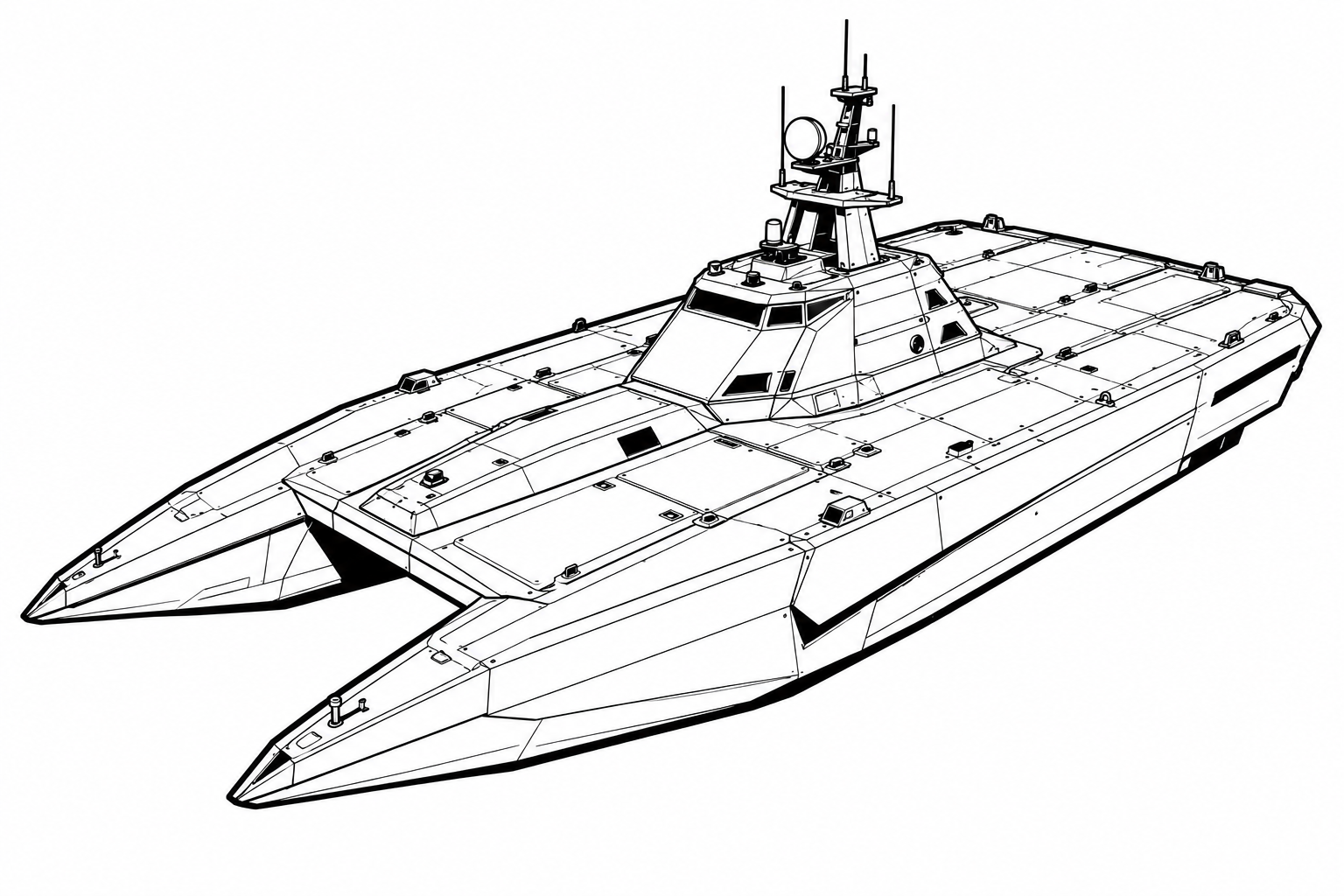
Devil Ray T-45 overview
The Devil Ray T-45 entered the crowded U.S. autonomous combat surface vessel market in 2026 as a product of Blue Water Autonomy, a startup that distinguished its offering from competitors like Saronic and the larger Devil Ray series through an emphasis on high-speed transit capability. Where most USVs in its size class optimize for endurance and stealth — moving slowly at low radar cross-section — the T-45 uses a planing monohull design to achieve 40-knot sprint speeds that allow rapid repositioning to intercept fast-moving targets, rapidly close on a vessel of interest before it can evade, or execute high-speed attack runs that complicate defensive fire tracking.
The T-45's design philosophy reflects lessons from studying the operational use of Ukrainian Sea Baby USVs, which demonstrated that the ability to sprint at high speed toward a target before defensive measures could be brought to bear was a critical operational attribute. A slow-moving USV approaching a defended vessel gives the target time to maneuver, deploy countermeasures, and engage with defensive systems; a 40-knot sprint from a direction that keeps the attacking vessel bow-on (minimizing radar cross section) significantly compresses the defender's reaction time. Blue Water Autonomy's autonomy software integrates threat assessment and attack profile selection, presenting the human supervisor with recommended profiles rather than requiring manual tactical decision-making.
The T-45 attracted immediate attention from U.S. Navy evaluators at its 2026 unveiling, with officials noting it filled a gap between the smaller, slower Saronic Corsair and the larger Devil Ray T-38 that the Navy was already evaluating. The company's claimed 40-knot speed — if substantiated in independent evaluation — would make the T-45 one of the fastest autonomous surface combat vessels available, matching the sprint speed of many conventional naval patrol craft and significantly exceeding the chase capability of most adversary defensive vessel types.
Armament
Modular: anti-ship munitions, decoys, ISR sensors, or waterline explosive charge
Development and operational timeline
- Blue Water Autonomy founded; Devil Ray T-45 development begins as high-speed planing monohull USV
- T-45 hull design finalized; planing configuration and 40-knot speed target specified
- Propulsion system testing; T-45 achieves 38-knot sustained speed in initial trials
- Autonomy software integration; attack profile algorithms and threat response system developed
- First full-system sea trials; T-45 operates autonomously in 2-meter wave conditions at 35 knots
- Payload integration; modular weapons bay and sensor suite validated
- U.S. Navy informal evaluation; T-45 demonstrated to NAVSEA program office representatives
- Devil Ray T-45 publicly unveiled at Sea-Air-Space exposition; specifications disclosed
- Blue Water Autonomy receives Navy Other Transaction Agreement for T-45 evaluation