Naval system · Unmanned Surface Strike Vessel
Sea Baby
Naval Strike / Bridge and Infrastructure Attack / Black Sea Operations
Also known as: SBU Sea Baby / Morskyi Maliuk / Морський малюк
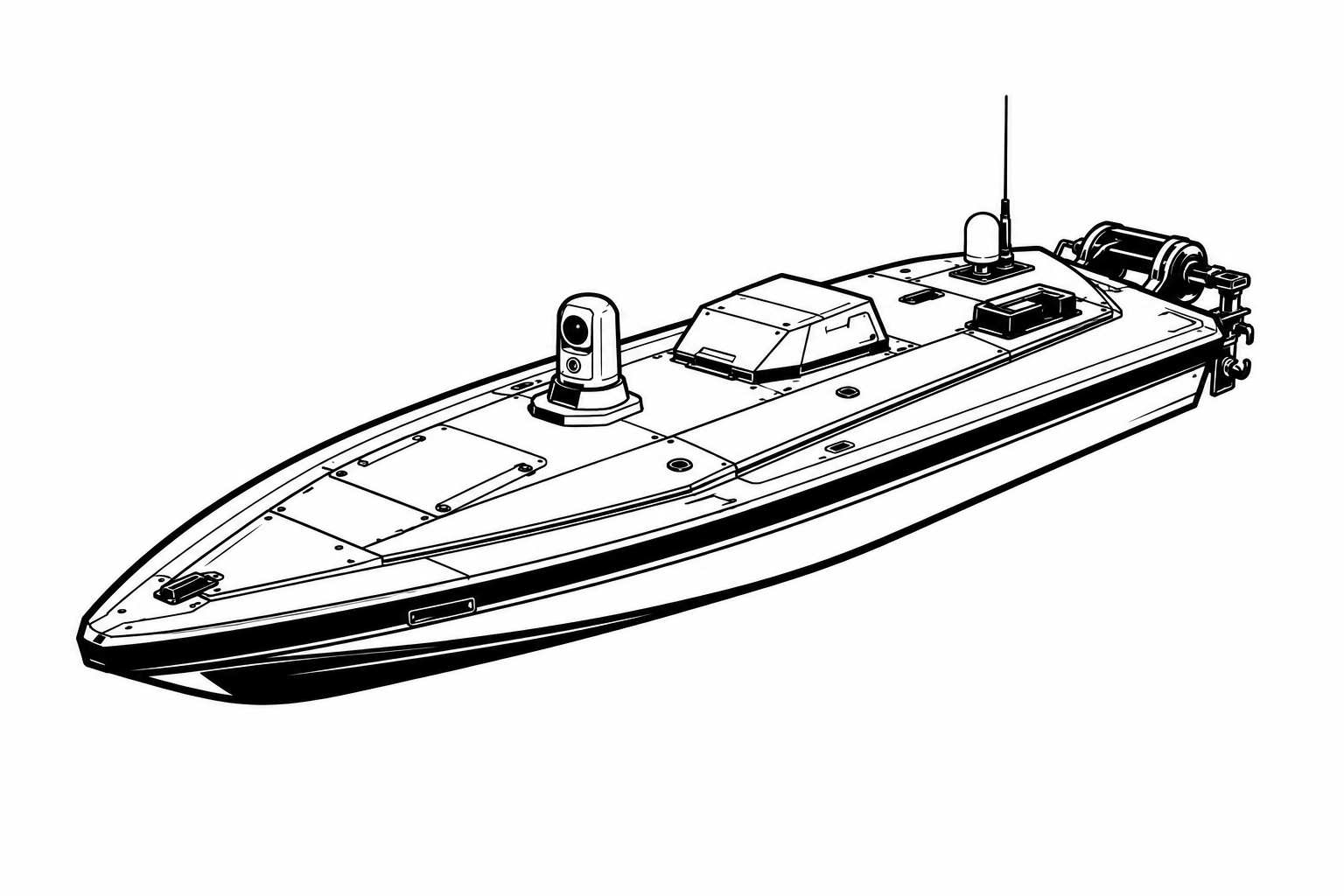
Sea Baby overview
Last reviewed:
Sea Baby is the Ukrainian Security Service's unmanned surface-vessel family, associated with attacks on Russian maritime infrastructure and with an expanding range of other Black Sea missions. Its name is an English rendering of Morskyi Maliuk. The original public image was that of a remotely controlled explosive attack boat, but later versions added weapon and mission options. Sea Baby is not the same platform as the Ukrainian military-intelligence MAGURA family, despite their overlapping operating environment.
The system became widely known after the July 2023 attack on the Kerch bridge, which Ukrainian officials attributed to Sea Baby vessels. That event demonstrated the strategic consequences a small unmanned surface craft could have beyond the immediate coastline. Exact damage assessments and the roles of individual vehicles should still be tied to the evidence for each operation. One prominent attack is not a complete public record of reliability, losses, or mission success.
Earlier public configurations were associated with approximately 1,000 km range and warheads up to about 850 kg. In October 2025, the SBU presented an upgraded generation and claimed up to 1,500 km reach and 2,000 kg payload capacity. Independent reporting carried those statements but did not turn them into externally audited test results. The larger payload number is not automatically an explosive-warhead mass, and maximum reach should not be assumed achievable with every payload at maximum speed.
The 2025 presentation showed different mission fits, including a stabilized machine-gun turret and a multiple-rocket launcher. These configurations shift the platform away from a single-purpose explosive boat toward a modular armed system. The existence of multiple fits does not imply that one vessel carries every option simultaneously. Navigation, communications, sea conditions, power, and target identification remain practical constraints, even when a developer describes improved autonomy or operation during interference.
July 2026 Navy Times reporting discussed claims that Sea Baby boats could carry six to eight FPV drones and thermobaric rockets. The detailed drone-carrier account was attributed to Russian reporting about activity around the Kinburn Spit, so it remains a reported configuration rather than an independently confirmed fleet-wide standard. Separately reported Sub Sea Baby underwater activity must also be kept distinct from the surface craft: a shared name is not proof of a shared hull or performance specification.
Through October 2026, Sea Baby's significance is its evolution from an asymmetric explosive craft toward a wider set of unmanned maritime missions. Its reported range and payload improvements help explain continued interest, but wartime claims must be evaluated operation by operation. The timeline records attributable public announcements and explicitly labels the less certain 2026 carrier reports. It does not invent subsequent deliveries or treat every claimed strike as independently verified damage to a named Russian vessel.
Armament
Explosive or mission-specific rocket/machine-gun fits; reported FPV-carrier option unconfirmed
Development and operational timeline
- Ukrainian officials associate Sea Baby with the Kerch bridge attack
- The SBU publicly reveals further information about the surface-drone program
- Public Ukrainian descriptions show rocket-equipped and heavier-payload surface configurations
- The SBU presents an upgraded generation and claims 1,500 km reach and up to 2,000 kg payload capacity
- Reported Sub Sea Baby underwater activity introduces a distinct vehicle identity, not a new specification for the surface craft
- Navy Times covers FPV-carrier claims based on Russian accounts; the configuration is not independently confirmed as a universal fit
- Status review: surface variants, underwater namesakes, developer performance claims, and individual strike results remain separate evidence categories