Naval system · Developmental Autonomous Underwater Vehicle
Toloka TLK-1000
Proposed Underwater ISR / Mapping / Strike
Also known as: TLK 1000 / TLK-1000 / TOLOKA-1000 / Toloka 1000
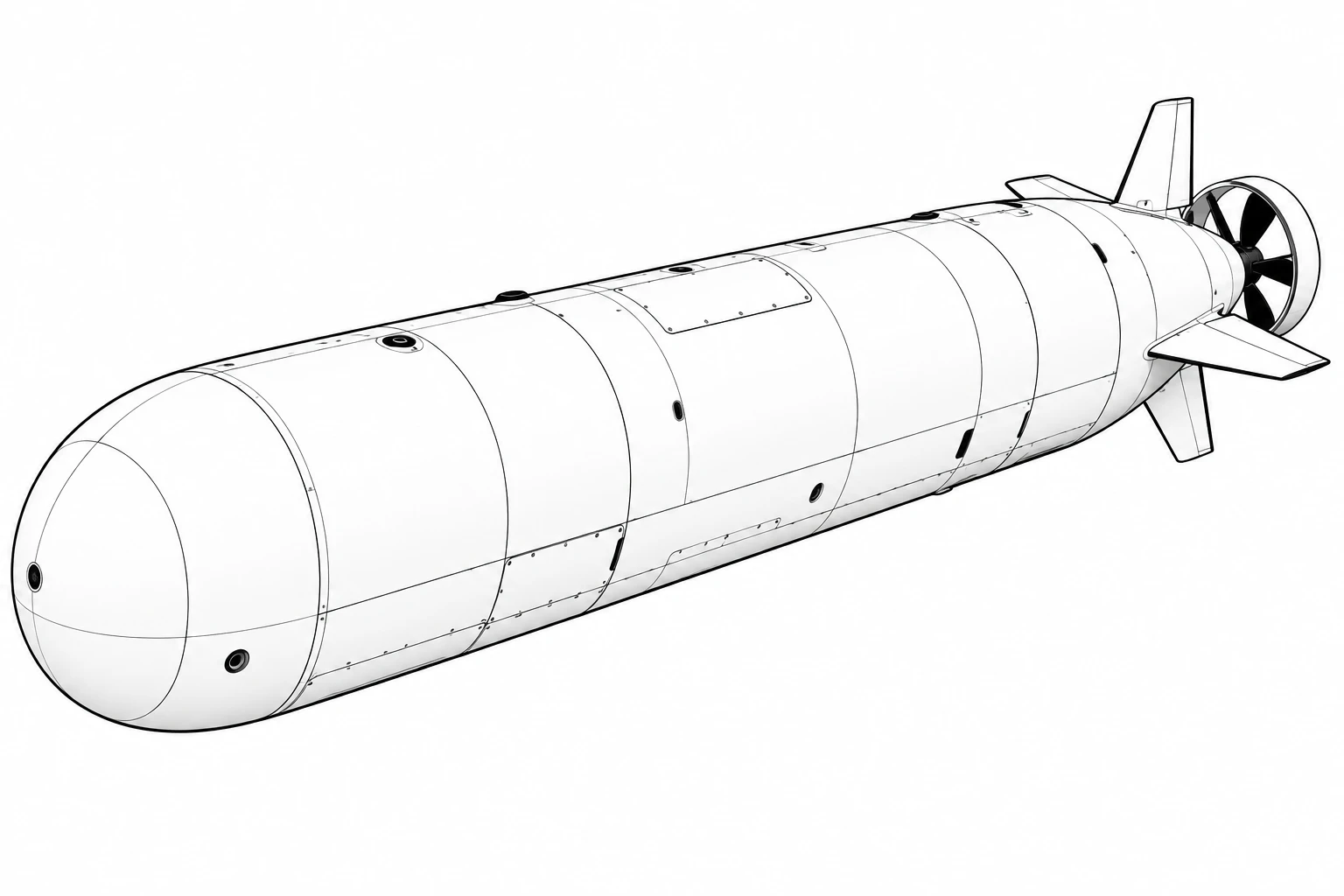
Toloka TLK-1000 overview
Last reviewed:
Toloka TLK-1000 is the largest publicly described member of a Ukrainian family of autonomous underwater vehicles. It is distinct from the smaller TLK-150/TLK-200 and TLK-400 designs, and from the separate Marichka project. Early presentations in 2023 outlined the larger vehicle as a future long-range platform; later coverage described a diesel-electric design and exhibited model. Proposed applications include underwater reconnaissance, surveillance, mapping and strike, but a mission list is not evidence that each capability has completed sea trials.
The design has evolved in public reporting. A February 2025 Militarnyi article recalled an early concept spanning 4–12 m depending on the mission, up to 5,000 kg payload and a target range of 2,000 km. At Defense Tech Valley in September 2025, a company representative described a composite hull approximately 1.5 m in diameter, claimed depth capability up to 1,000 m, 5–15 knot speed and a diesel-electric power arrangement. The payload figure describes an advertised carrying capacity, not an independently weighed explosive charge or a demonstrated warhead configuration.
Range and endurance quotations are not fully consistent. Militarnyi reported up to 2,000 km and as much as three months operation when batteries are recharged using a diesel generator, while another contemporary outlet quoted up to 3,000 km. This profile keeps the 2,000 km developer-interview figure in the specification table and explicitly acknowledges the competing report. Generator-assisted endurance is not three months of continuous fully submerged battery operation: an air-breathing power source imposes different operating constraints. Nor should maximum speed, deepest dive, longest endurance and largest payload be treated as simultaneously demonstrated performance.
The September 2025 developer interview said onboard equipment testing was underway, with sea trials and a decision on series production still to follow. In the same report, production preparations for smaller TOLOKA-200 and TOLOKA-400 vehicles were separate announcements, not evidence that the TLK-1000 had entered production. Through the November 2026 review, the linked record supports an ambitious developmental UUV with published claims and a model display. It does not establish completed deep-water qualification, combat deployment, a confirmed full-range voyage or serial delivery of the large variant.
Armament
Proposed modular strike payload; warhead configuration, deep-water trials and service entry not independently established
Development and operational timeline
- Toloka family presentation outlines TLK-1000 as a larger future variant; the smaller displayed vehicle's evidence must not be assigned to it
- Militarnyi reviews the early 4–12 m, 5,000 kg and 2,000 km TLK-1000 concept while reporting progress on the separate small variant
- Defense Tech Valley exhibition features a TOLOKA-1000 model and developer description of the diesel-electric design
- Developer interview reports equipment testing with sea trials still planned; production preparation concerns smaller variants separately
- Editorial status review: evolving specifications and conflicting range quotations qualified; completed sea trials, series deliveries and operational use not established by reviewed sources