Naval system · USV
Devil Ray T-12
Tactical ISR / Force Protection
Also known as: Devil Ray T-12 / MARTAC T-12 / small unmanned surface vessel
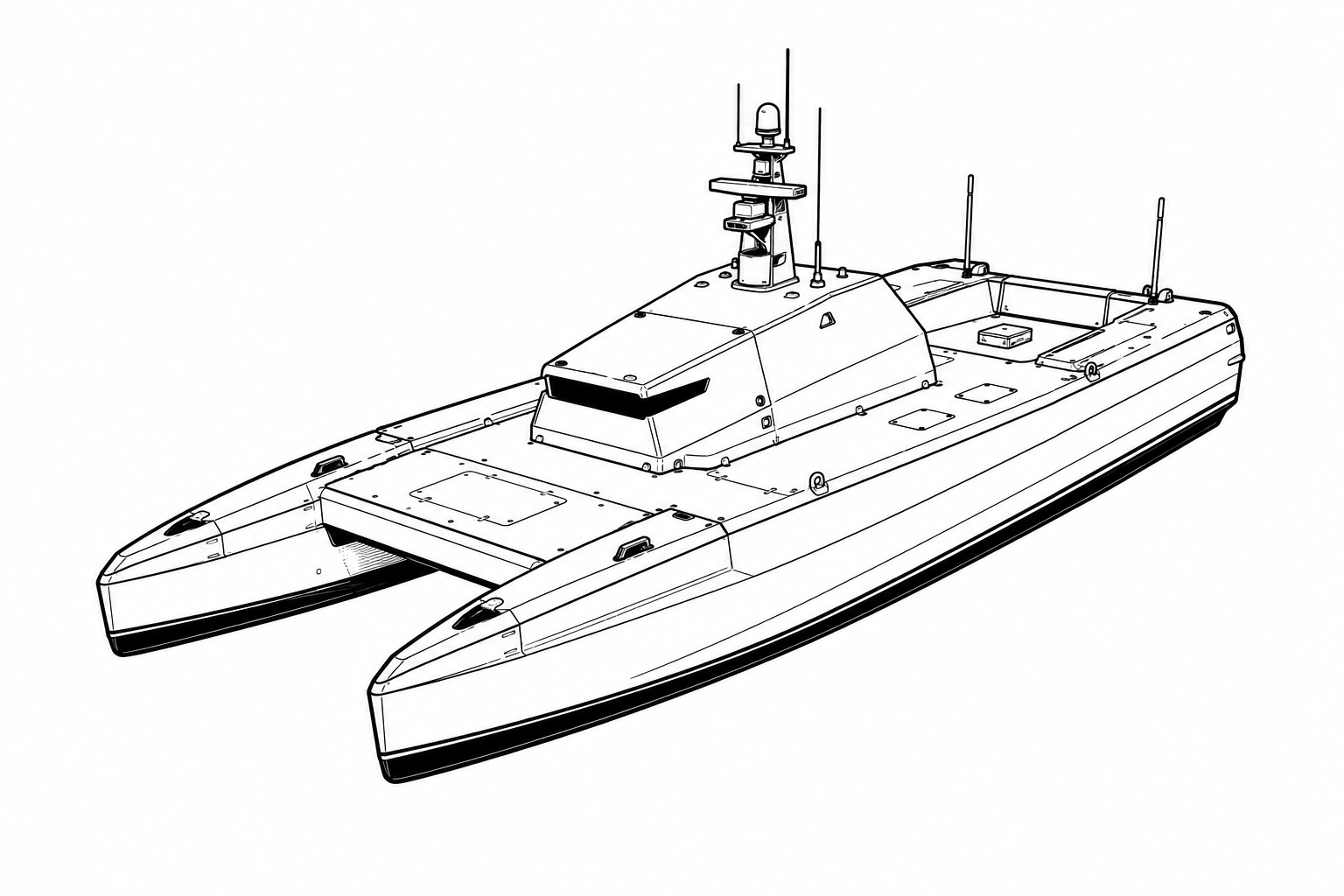
Devil Ray T-12 overview
The Devil Ray T-12 is the compact entry in MARTAC's Devil Ray family of autonomous catamaran vessels, designed to fill the tactical end of the unmanned surface vessel spectrum where larger platforms would be too expensive, too slow to deploy, or too operationally conspicuous for the mission. At just 12 feet (approximately 3.7 meters), the T-12 can be transported in the bed of a pickup truck, launched by two personnel from any boat ramp, dock, or beach, and be operating autonomously within minutes of arrival at the operating area — an operational agility that the larger T-38 and Navy Large USVs cannot match. The twin-hull catamaran design, miniaturized from MARTAC's larger platform, provides the same seakeeping and stability advantages that distinguish the Devil Ray family from mono-hull competitors, maintaining useful sensor performance in coastal chop conditions that would render a mono-hull craft useless for ISR.
The T-12's payload options reflect its tactical scale: a stabilized electro-optical/infrared camera mounted on the center deck provides day/night video for port security and coastal patrol, while hydrophone arrays can be trailed behind for passive acoustic surveillance. In multi-vessel configurations, several T-12s can be coordinated through a single operator station, establishing an unmanned picket line across a harbor entrance or coastal chokepoint that would require a dozen Coast Guard RHIBs and their crews to replicate with manned assets. The autonomous control system handles station-keeping, patrol routes, and obstacle avoidance, with the operator monitoring video feeds and directing investigation of anomalous contacts. Communications options include encrypted radio for line-of-sight operation and cellular LTE for operations within range of coastal towers — a practical choice for harbor security where cellular infrastructure is typically robust.
The T-12 has been evaluated by U.S. Navy Expeditionary Warfare squadrons, Naval Special Warfare units for reconnaissance and surveillance ahead of maritime special operations, and by U.S. Coast Guard units exploring unmanned options for patrol augmentation. As of 2025–2026, the T-12 occupies a growing operational niche as exercises and real-world port security requirements identify specific scenarios where its combination of low cost, rapid deployment, and autonomous capability outperforms both larger USVs and traditional boat-based patrol. MARTAC is developing the T-12 in both autonomous-surveillance and expendable-strike configurations, the latter intended for scenarios where the vehicle itself can serve as a low-cost attack platform against threats identified during its surveillance mission.
Armament
Modular payload (EO/IR, radar, acoustic sensors)
Development and operational timeline
- MARTAC introduces Devil Ray T-12 as compact catamaran USV entry
- T-12 demonstrated in port security exercise; pickup-truck deployability highlighted
- Naval Special Warfare evaluates T-12 for pre-assault coastal reconnaissance
- T-12 evaluated by U.S. Navy expeditionary forces and Coast Guard for coastal surveillance
- MARTAC delivers T-12 fleet units for operational testing; multi-vessel coordination validated
- T-12 participates in multi-USV exercise coordinating with T-38 for layered maritime surveillance
- MARTAC announces strike variant T-12 concept with expendable attack payload option