Naval system · USV
Ranger
Medium Autonomous Surface Ship
Also known as: Ranger USV / Textron Ranger / CUSV Ranger
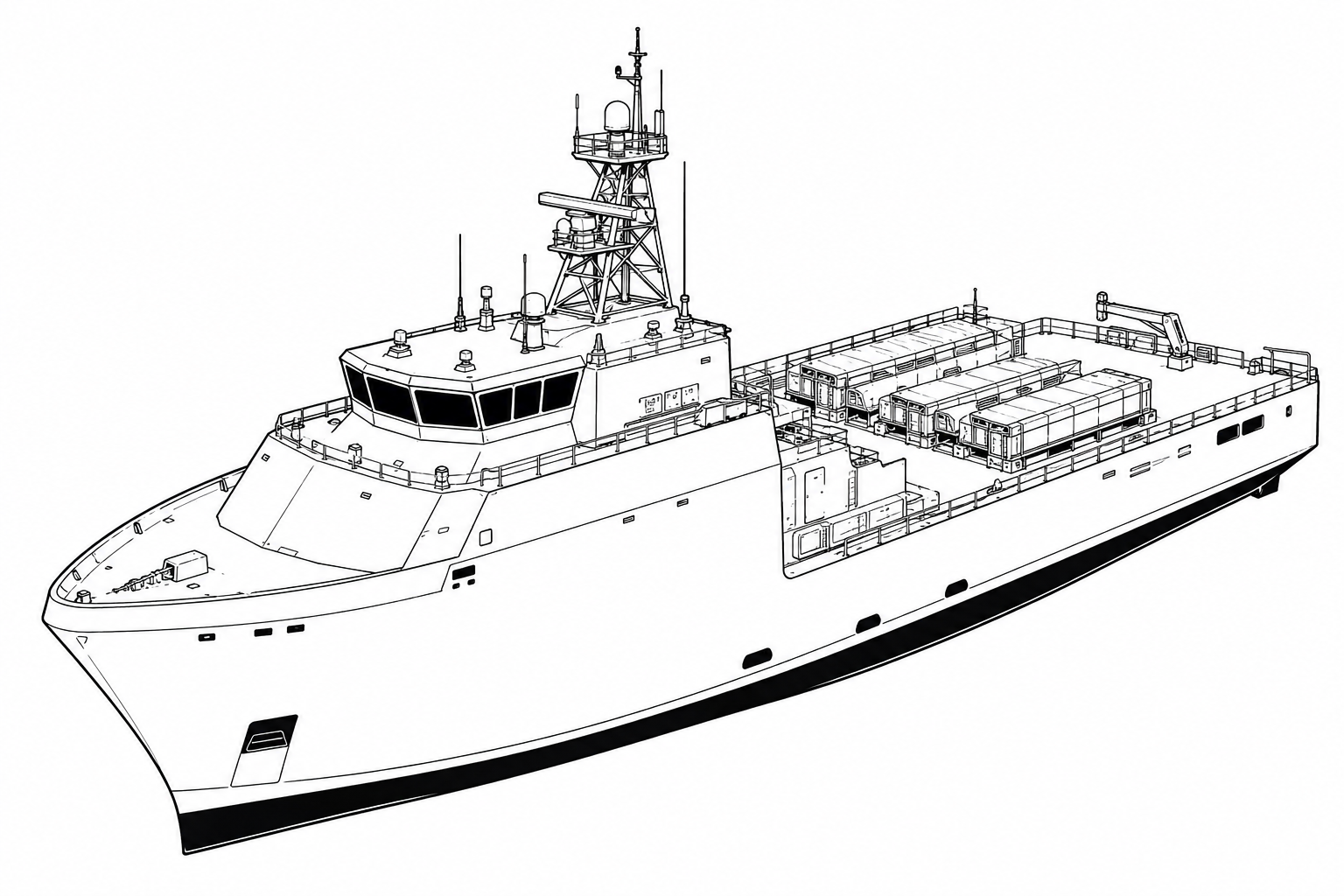
Ranger overview
The Ranger is the operational designation for Textron Systems' Common Unmanned Surface Vehicle (CUSV) in U.S. Navy mine countermeasures service, representing a key component of the Navy's strategy to remove sailors from the most dangerous phases of mine warfare. Naval mines remain one of the most cost-asymmetric threats in existence — a relatively inexpensive mine can deny access to a harbor, sink a warship, or force a fleet to divert far around a critical chokepoint. The traditional response required manned minehunters sailing slowly through suspected minefields with their crew aboard, accepting significant risk. The Ranger concept replaces this exposure with a remotely operated or autonomous rigid-hull vessel that can tow detection sonar, deploy mine disposal systems, and conduct ocean survey operations without crew endangerment.
The Ranger's 11-meter fiberglass hull is optimized for low acoustic signature — critical because sonar performance depends on minimizing self-generated noise from the towing vessel — and for operation in sea states up to Sea State 4 (significant wave height 2.5 meters), covering most littoral operating environments. The vessel integrates a towed mine-hunting sonar in the Airborne Laser Mine Detection System (ALMDS) and Mk 18 Mod 2 REMUS support configuration, allowing it to both detect mines acoustically and to deploy underwater vehicles for close-up inspection and neutralization. A fiber optic and radio link provides the operator with real-time video and sensor data from a safe standoff distance, while autonomous navigation allows preset area-search patterns to be executed with minimal operator workload.
The Navy selected the CUSV for the Littoral Combat Ship Mine Countermeasures Mission Package — the unmanned systems component that transforms the LCS from a general-purpose warship into a dedicated mine warfare platform during a mission package swap. As of 2025–2026, the Ranger/CUSV has accumulated significant sea time in operational testing, with deployments alongside LCS units in the Pacific and Atlantic evaluating its effectiveness, reliability, and integration with shipboard command systems. The MCM Mission Package has faced program management challenges related to integration complexity, but the Ranger itself has generally demonstrated reliable performance in a role that directly reduces fleet risk in some of the most contested littoral environments.
Armament
Modular weapons bay (Mk 41 VLS, torpedoes, guns planned)
Development and operational timeline
- Textron Systems begins CUSV development for Navy MCM Mission Package competition
- CUSV selected as prime unmanned surface component of LCS MCM Mission Package
- Ranger completes mine-hunting sonar integration testing at Naval Surface Warfare Center
- Ranger deployed alongside USS Detroit for LCS MCM package sea trials
- U.S. Navy conducts operational evaluation with CUSV; performance assessment completed
- Ranger demonstrates autonomous towed sonar survey pattern in contested-environment scenario
- CUSV integrated into operational LCS MCM mission package; fleet deployment begins
- Ranger operational alongside LCS in Pacific; Navy evaluates expanded autonomy for complex mine environments