Naval system · USV
Sea Hunter
Anti-Submarine Warfare
Also known as: Sea Hunter / ACTUV / Anti-Submarine Warfare Continuous Trail Unmanned Vessel
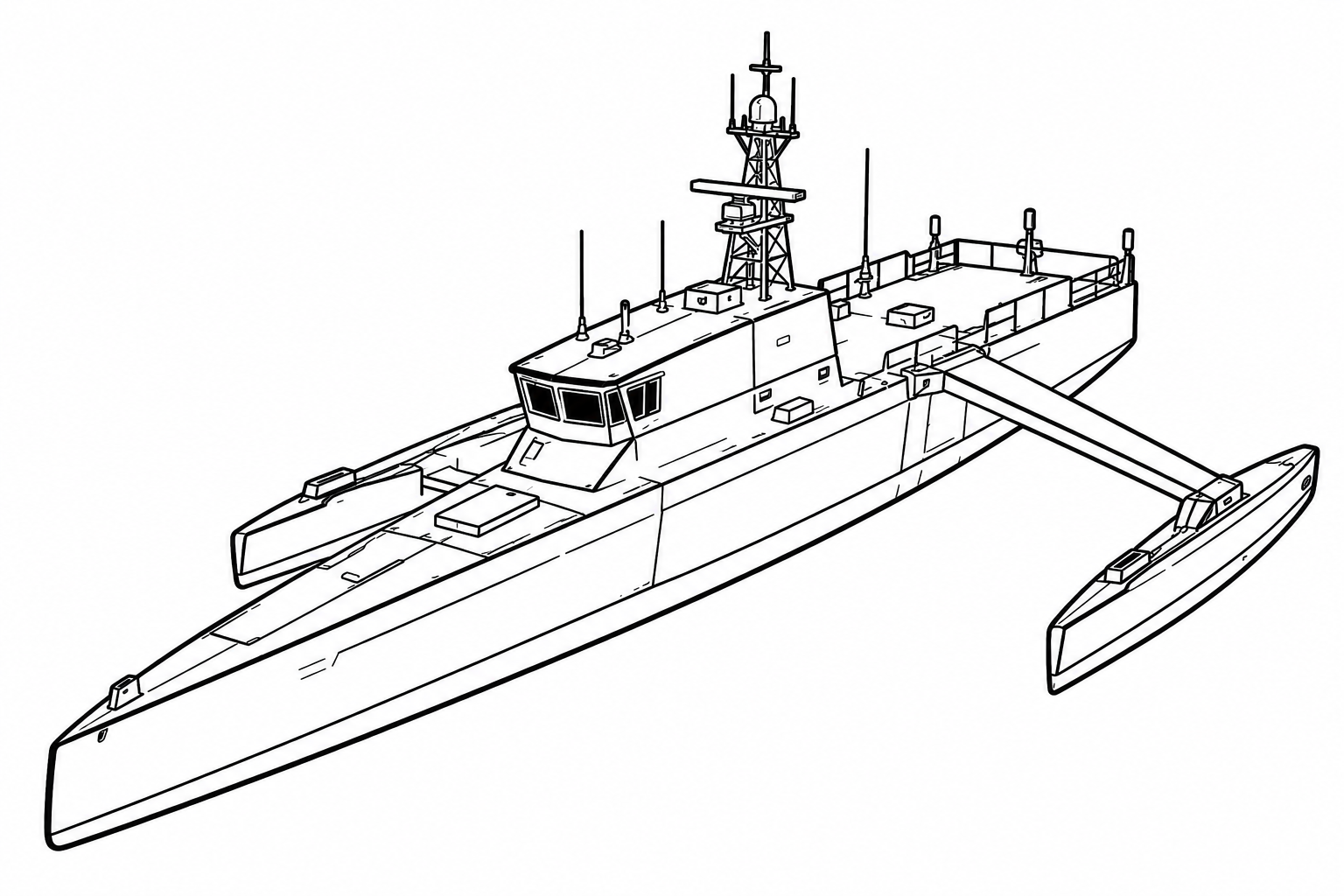
Sea Hunter overview
Sea Hunter is an autonomous unmanned surface vessel developed for DARPA's Anti-Submarine Warfare Continuous Trail Unmanned Vessel (ACTUV) program, with Leidos as the builder. DARPA publicly presented the 40-meter trimaran as a demonstration of long-duration autonomous navigation and potential submarine-tracking support. The vessel's central significance is a test of whether a large surface craft can operate at sea without a permanently embarked crew while following maritime navigation rules.
The trimaran hull, autonomous navigation system and surface-search equipment shown in public program material support a test-and-demonstration role. Public sources do not establish that Sea Hunter carries a permanently installed operational anti-submarine sensor suite or has authority to prosecute a target. It is more accurate to call it an unmanned surface-vessel demonstrator than an autonomous warship with an independently verified combat mission.
DARPA reported an autonomous San Diego–Pearl Harbor transit and later transition of the technology toward Navy experimentation. Navy unmanned-vessel work subsequently expanded through Ghost Fleet and the MUSV/LUSV families, but a successor program should not be conflated with Sea Hunter itself. Public Navy planning does not establish that the prototype has become a front-line fleet ship.
Through 2026, official and reputable public material supports Sea Hunter's continuing importance as an autonomy testbed and as an influence on U.S. unmanned-maritime experimentation. No public 2025–2026 release reviewed for this profile establishes a permanent Sea Hunter mission payload, operational warship status or a new verified performance milestone.
Armament
Towed sonar array, anti-submarine sensors (weapons integration planned)
Development and operational timeline
- DARPA christens Sea Hunter in Portland, Oregon, as the ACTUV program's prototype vessel
- DARPA begins reporting open-water testing of Sea Hunter's autonomous navigation
- DARPA reports an autonomous San Diego–Pearl Harbor round trip of approximately 4,400 nautical miles
- DARPA and Navy transition material describes ACTUV technology moving into Navy experimentation; front-line deployment is not established
- Navy public material describes continuing unmanned-maritime experimentation; specific Sea Hunter payload or exercise claims are not treated as confirmed here
- Navy planning documents describe MUSV and LUSV as a separate procurement path informed by unmanned-vessel demonstrations
- Public Navy and DARPA material continues to use ACTUV experience as an autonomy reference point; no operational Sea Hunter status is announced
- No public official release reviewed for this profile verifies a new Sea Hunter deployment or permanent sensor fit
- Sea Hunter remains publicly documented as an autonomy demonstrator while Navy planning emphasizes newer unmanned-vessel programs