Air system · Loitering Munition
X-Bat
Precision Strike / Anti-Armor / Anti-Personnel
Also known as: X-Bat / X-BAT drone / folding wing strike drone / X-Bat loitering munition
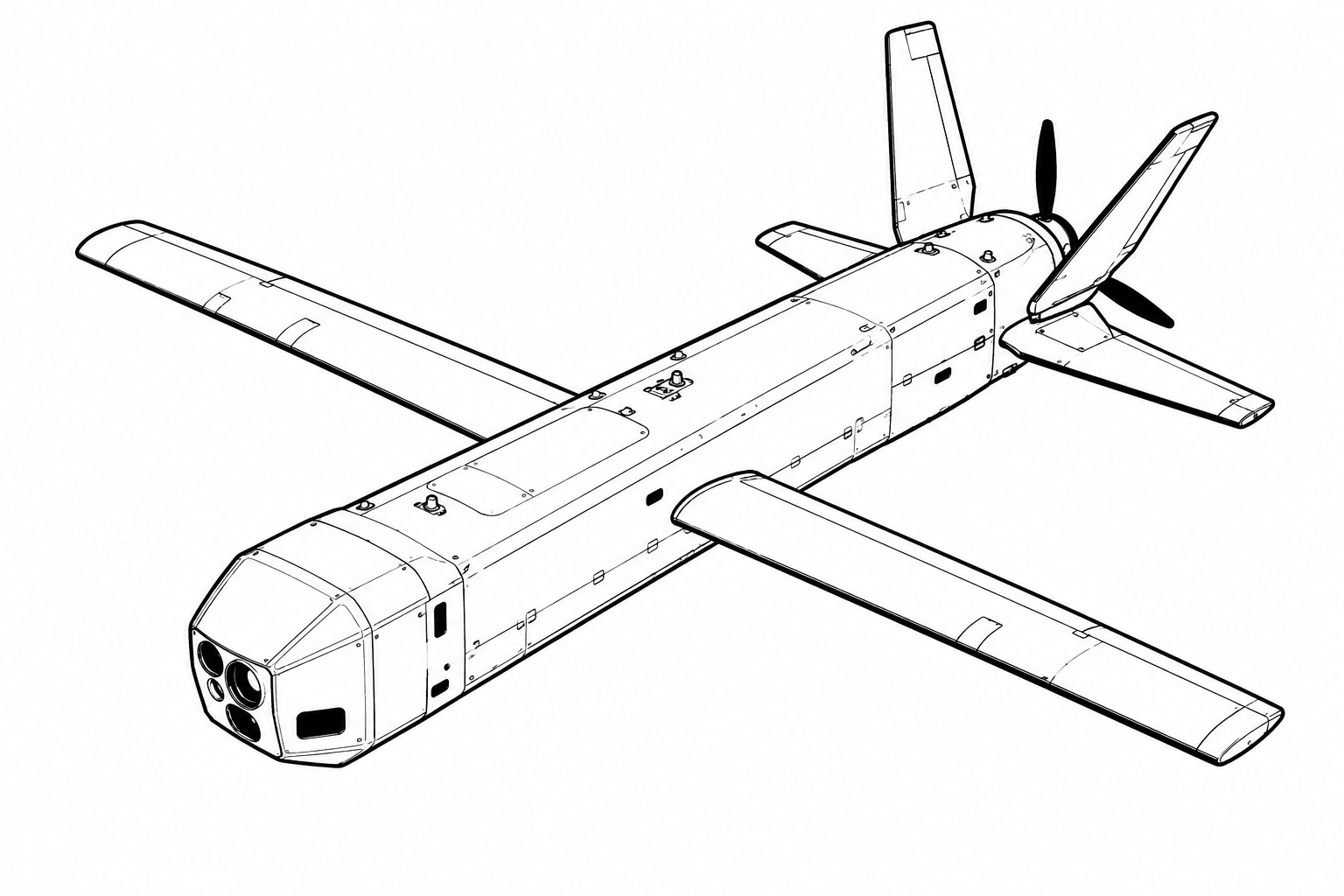
X-Bat overview
The X-Bat is a compact folding-wing loitering munition and precision strike drone developed for military and special operations applications, designed around the specific operational constraint that has limited the adoption of larger strike drones at the team and platoon level: the requirement for dedicated launch infrastructure. The X-Bat stores in a tube or compact case, deploys folding wings on launch, and transitions immediately to powered flight — enabling a two-soldier team to carry, launch, and direct a precision strike capability from almost any terrain without a ground control station, dedicated runway, or pneumatic launcher. At launch weight of approximately 4 to 6 kilograms depending on warhead variant, the X-Bat carries a shaped-charge or fragmentation payload effective against personnel, light vehicles, and soft-skinned equipment, with an electric propulsion system providing 30 to 40 minutes of endurance and a maximum operating range of 15 kilometers from the operator. The folding wing configuration enables the aircraft to be stored flat in a standard military backpack panel, and the launch sequence from pack to airborne can be completed in under 90 seconds by a trained team — a critical tactical characteristic in dynamic engagements where delay equals exposure.
The X-Bat's guidance architecture reflects the maturation of the loitering munition concept from strategic asset to tactical consumable. Early-generation loitering munitions such as the Israeli Harop required specialized operators and extensive pre-mission planning. The X-Bat is designed to be operated by any infantryman who has completed a one-week qualification course, using a tablet-based interface that presents a simplified mission planning screen, a live first-person video feed, and a single-button terminal attack command. Autonomous features include GPS waypoint navigation, automatic target locking using AI-assisted visual tracking, and an abort function allowing the operator to wave off an attack and return the drone to orbit for re-engagement up to the point of motor cutoff. This human-in-the-loop architecture with autonomous assistance satisfies current U.S. and NATO rules of engagement requirements for autonomous lethal decision-making while substantially reducing the cognitive burden on the operator during the high-stress terminal attack phase. Multiple warhead options — including an anti-armor variant using an explosively formed penetrator jet — allow mission planners to configure the X-Bat for specific target sets before deployment.
By 2025–2026, X-Bat systems have been operationally evaluated by U.S. Army light infantry, ranger, and special forces units as a candidate to fill the gap between the Switchblade 300 (sub-2 km range, 0.6 kg warhead) and the Switchblade 600 (40 km range, complex logistics) — a tactical middle tier that unit commanders have repeatedly identified as unmet in the existing inventory. NATO partners including the UK, Netherlands, and Australia have conducted parallel evaluations, and the platform has attracted interest from several Indo-Pacific partner nations seeking to develop distributed maritime defense capabilities against naval surface threats in island chain environments. Production scale-up was initiated in 2025, and the platform has been offered for Foreign Military Sale to several partner nations as part of the broader U.S. effort to accelerate allied counter-access capabilities in potential Taiwan Strait and Baltic Sea contingency scenarios.
Armament
3 kg shaped-charge, fragmentation, or EFP (explosively formed penetrator) anti-armor warhead
Development and operational timeline
- X-Bat concept development initiated; folding-wing tube-launch configuration and single-operator interface specified
- X-Bat prototype completes first flight; folding wing deployment mechanism and AI target tracking validated
- U.S. Army light infantry evaluation: X-Bat pack-carry and 90-second launch-to-airborne validated by two-soldier team
- Anti-armor EFP warhead variant qualified; shaped-charge and fragmentation variants approved for operational use
- U.S. Army formal evaluation of X-Bat as tactical middle tier between Switchblade 300 and Switchblade 600
- NATO partner evaluations: UK, Netherlands, and Australia conduct parallel X-Bat operational trials
- X-Bat Foreign Military Sale approved for several Indo-Pacific partner nations for distributed maritime defense
- Production scale-up initiated; X-Bat selected by two allied nations for infantry loitering munition requirement
- X-Bat in operational use with U.S. special forces and two NATO allies; further procurement discussions with Baltic and Pacific partners ongoing