Air system · Nano / Micro UAS
Black Widow
Soldier-Borne ISR / Building Clearance / Close Reconnaissance
Also known as: Black Widow UAS / AV Black Widow / PD-100 Black Widow / nano surveillance drone
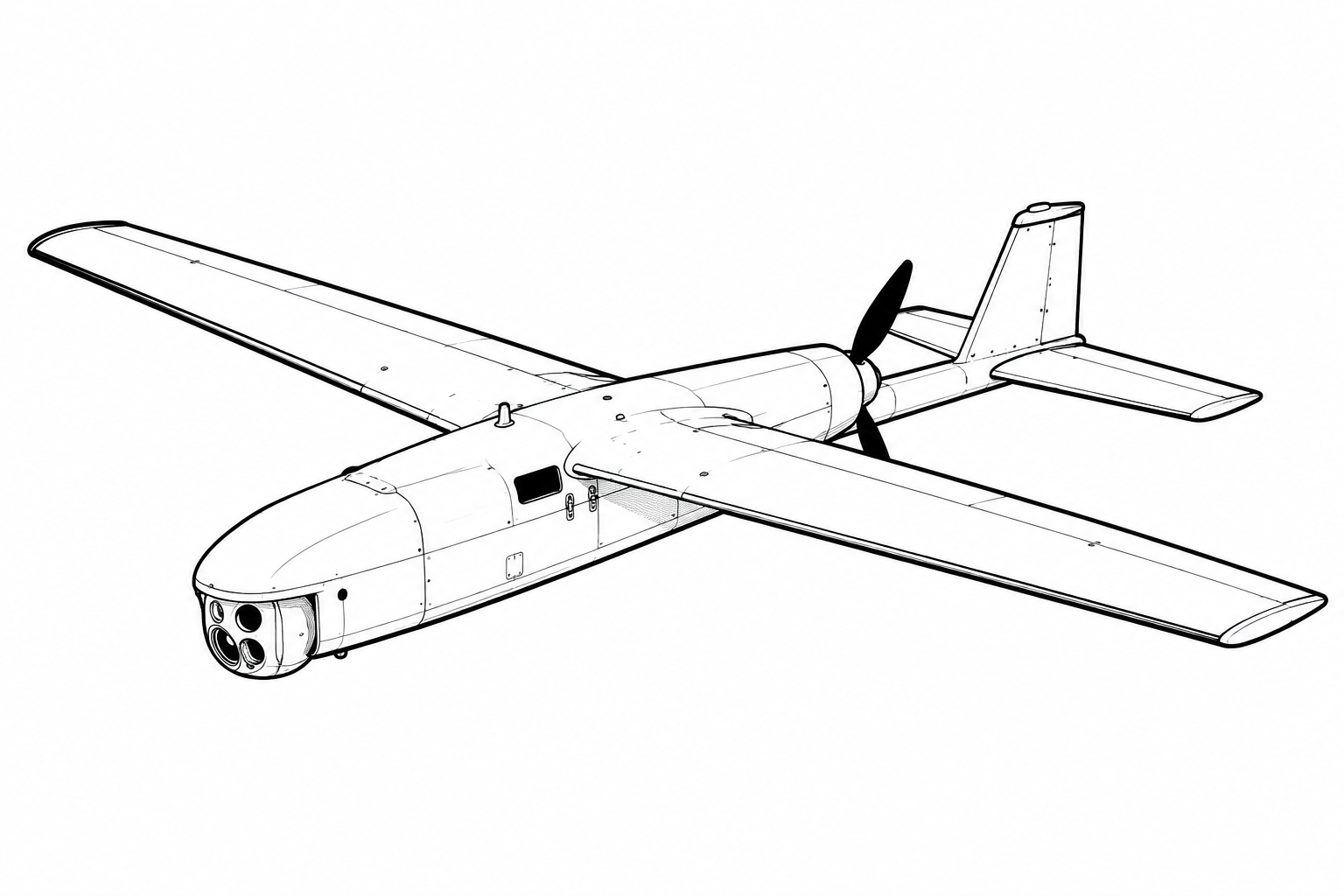
Black Widow overview
The Black Widow is a family name applied to two distinct but related unmanned aerial vehicle programs that share a lineage in micro and nano UAS development for military reconnaissance. The original Black Widow was a DARPA-funded micro air vehicle developed by AeroVironment in the late 1990s under the agency's Micro Air Vehicle program, designed to be hand-launchable, palm-sized, and capable of autonomous flight for indoor and outdoor reconnaissance — a concept so far ahead of miniaturization technology at the time that it was considered more demonstration than operational capability. The more operationally significant Black Widow in current military use is the PD-100 Black Hornet-lineage nano-drone family developed by Proxdynamics (now part of FLIR, acquired by Teledyne), though the name 'Black Widow' has also been applied to a larger multi-rotor platform developed for special operations forces by several U.S. and allied defense firms. For military purposes, the Black Widow concept — a small, near-silent rotary-wing UAS weighing under 500 grams — represents a capability class that has become essential to dismounted infantry operations: providing organic surveillance of the next terrain feature, building interior, or enemy position without requiring a dedicated UAS operator separate from the fire team. Its electric propulsion produces a noise signature below ambient battlefield noise at ranges exceeding 50 meters, and its optical and thermal sensors can identify personnel and weapons at ranges relevant to small-unit tactics.
The operationally deployed Black Widow variants used by U.S. Special Operations Command and allied forces incorporate dual electro-optical and thermal imaging sensors feeding a stabilized micro-gimbal, a GPS/inertial navigation system enabling waypoint flight and return-to-home without operator intervention, and an encrypted digital video downlink operating in frequency bands resistant to the commercial jamming systems widely proliferated in conflict zones. Critically, the entire system — aircraft, controller, and spare batteries — fits in a pouch that a single soldier carries without mission-load impact. SOCOM procurement records indicate the Black Widow family has been issued to ranger, special forces, and marine raider units as an individual or team-level ISR asset, enabling direct-action teams to conduct building clearances and ambush-site reconnaissance without risking personnel to initial exposure. Lessons from Ukraine have significantly accelerated interest in nano-UAS capabilities: Ukrainian infantry units have demonstrated that even consumer-grade nano-drones provide a decisive situational awareness advantage in urban and treeline combat, and the Black Widow family's military-grade EW resistance and thermal capability represents the logical next tier above commercial systems.
By 2025–2026, the Black Widow platform family has benefited from Teledyne FLIR's integration of advanced sensor technology, with third-generation variants featuring artificial intelligence-assisted person and vehicle detection that alerts operators to specific target types without requiring continuous video monitoring. The U.S. Army has incorporated Black Widow-class nano-UAS into its Soldier Borne Sensor program, issuing systems down to squad level in rotational units deploying to Europe and the Indo-Pacific. NATO allies including the UK, Australia, Canada, and Norway have procured the system under government-to-government arrangements, and the platform has been provided to Ukrainian special operations forces under security assistance packages. A contested-environment variant with GPS-independent navigation using visual odometry and map-matching was fielded in 2025, specifically addressing the GPS jamming environment Ukrainian and other operators face in peer and near-peer conflict scenarios.
Armament
None (reconnaissance only)
Development and operational timeline
- DARPA awards AeroVironment contract for original Black Widow MAV demonstrator under Micro Air Vehicle program
- Next-generation Black Widow nano-UAS concept development begins for SOCOM individual soldier ISR requirement
- PD-100 Black Widow variant enters SOCOM procurement; issued to ranger and special forces direct-action teams
- Proxdynamics acquired by FLIR Systems; Black Widow production and development continues under new ownership
- Teledyne acquires FLIR; Black Widow family integrated into Teledyne FLIR unmanned systems portfolio
- Third-generation Black Widow with AI-assisted person and vehicle detection fielded to U.S. Army Soldier Borne Sensor program
- Black Widow provided to Ukrainian special operations forces under U.S. security assistance; thermal capability valued in urban operations
- GPS-independent variant with visual odometry navigation fielded; designed specifically for GPS-contested environments
- Black Widow issued to squad level in U.S. Army units rotating to Europe; NATO allies including UK, Australia, Canada operating the system