Air system · Hand-Launched Small UAS
RQ-11 Raven
Short-Range Tactical ISR / Route Reconnaissance
Also known as: Raven B / RQ-11B / AeroVironment Raven
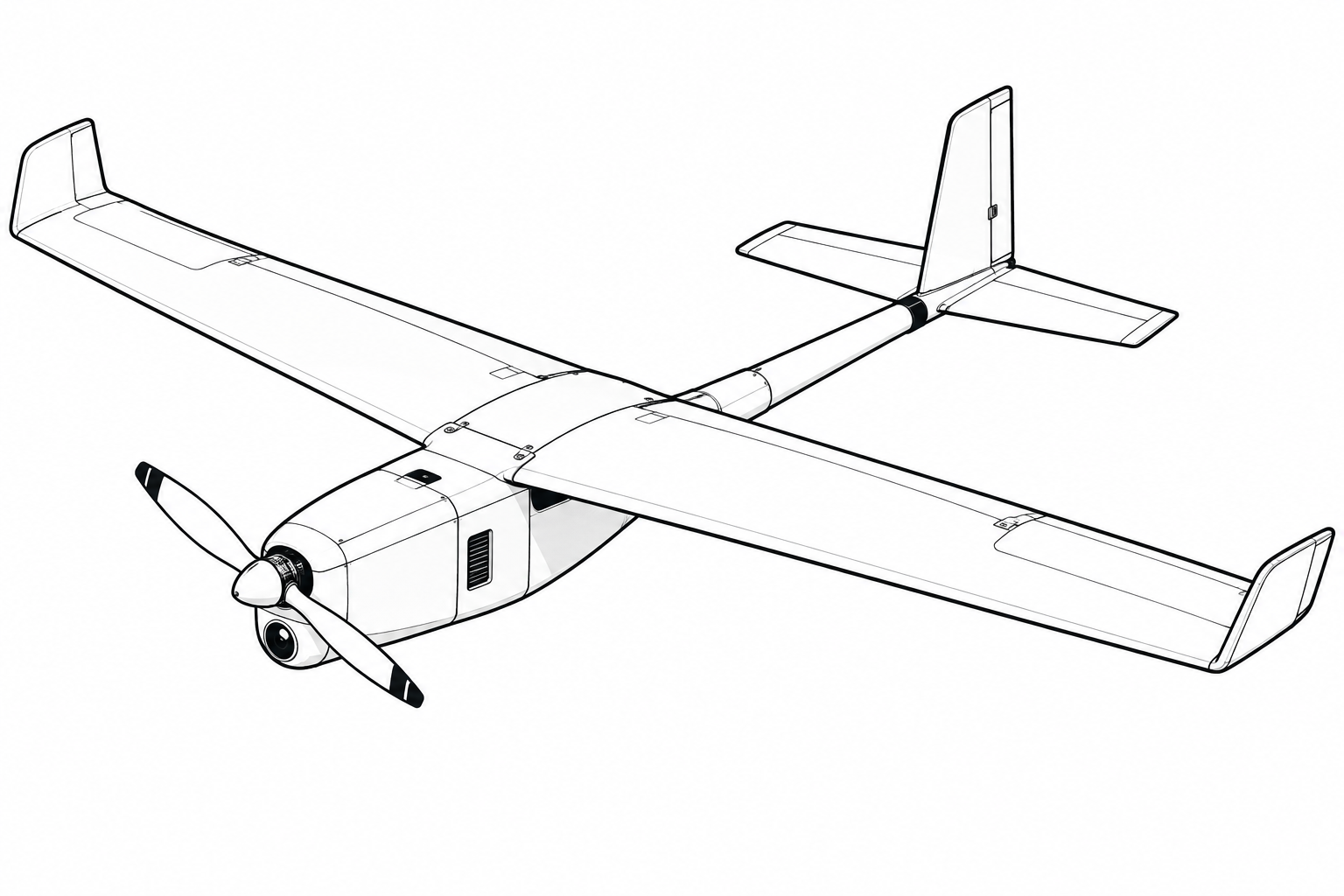
RQ-11 Raven overview
Last reviewed:
The RQ-11 Raven is AeroVironment's hand-launched fixed-wing reconnaissance drone, designed to give small units an aerial view without a runway or a large aviation detachment. It is an unarmed Group 1 system whose value is local situational awareness rather than long-range strike. The aircraft is small enough for a soldier to launch, but the useful capability includes the control station, sensors, batteries, trained operators, and procedures for sharing the imagery.
The current Raven B manufacturer page lists approximately 2.2 kg aircraft weight, a 10 km operational range, and endurance of 75+ minutes, while also describing a broader 60–90-minute operating window. The Air Force fact sheet gives a 1.37 m wingspan and roughly 0.9 m length. These public figures are far more useful than an empty specification table, but should remain tied to the Raven B configuration and the conditions under which they were published.
Raven's electric propulsion and hand launch make it comparatively quick to deploy. Recovery is normally achieved without a conventional runway landing, and the airframe is designed around portability rather than carrying weapons or heavy sensors. Daylight and infrared payloads support different observation needs, with later configurations incorporating gimbaled imaging. A camera's presence does not guarantee identification at the edge of radio range or equal performance in every weather and lighting condition.
The aircraft can be operated through manual control and automated navigation functions. An operator still has to plan and supervise the mission, interpret imagery, and manage the available endurance. The 10 km figure describes an operational link context, not a promise of useful observation anywhere inside a perfect circle. Terrain, obstacles, interference, payload, and battery condition affect the practical task. A compact drone's portability is an advantage, but it is not immunity to a contested radio environment.
Raven became associated with U.S. and allied units during operations in Iraq and Afghanistan, and its broad international use made it a familiar small-UAS baseline. As newer systems offer different imaging, autonomy, and communications, operators face different sustainment or replacement decisions. A country's decision to replace its Raven fleet does not mean the aircraft has been globally retired. Likewise, a manufacturer's broader small-UAS contract does not establish how many Ravens were delivered under that award.
Through October 2026, Raven remains a documented tactical-reconnaissance product with publicly available baseline specifications, even as older fleets create replacement demand. Its enduring lesson is the operational value of putting aerial observation close to the ground unit. Readers comparing it with Black Hornet should consider the differences between a fixed-wing squad reconnaissance system and a nano-helicopter used for much closer observation. The relevant measures include carried system weight, sensor fit, control range, and mission endurance, not aircraft mass alone.
Armament
None; tactical reconnaissance
Development and operational timeline
- Raven development produces the first-flight lineage reported in published aircraft histories
- Raven begins its early U.S. military introduction
- Use by U.S. and allied forces in Iraq and Afghanistan establishes its tactical-reconnaissance role
- Digital-link and imaging improvements appear across Raven B configurations
- AeroVironment announces a broader foreign-military-sales UAS contract that includes Raven; this is not a Raven-only delivery count
- Status review: current manufacturer and Air Force material provide Raven B specifications; fleet replacement decisions vary by operator