Air system · VTOL Tactical ISR UAS
AV JUMP 20
Persistent ISR / Maritime Patrol / Force Protection
Also known as: JUMP 20 / AeroVironment JUMP / AV VTOL tactical drone
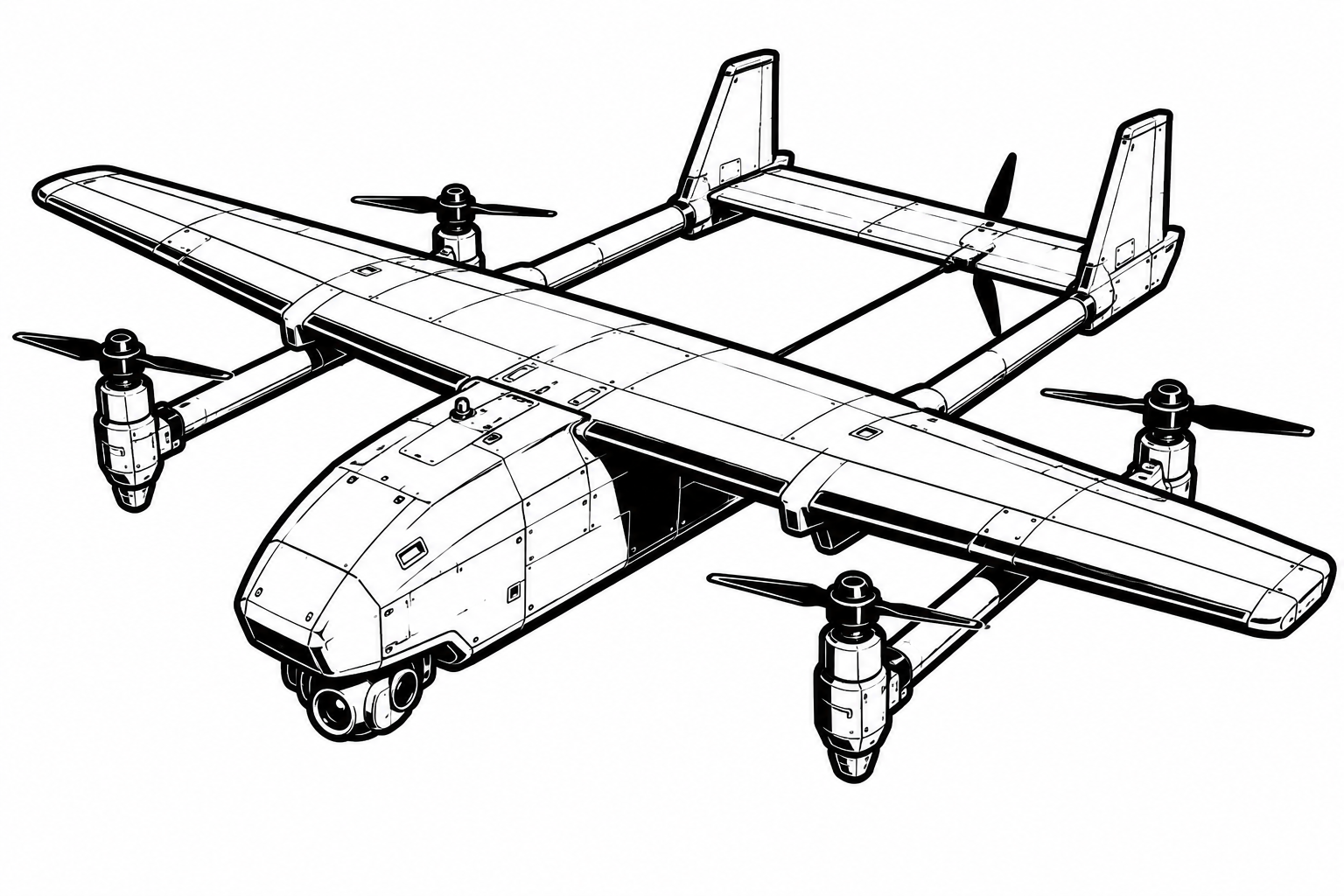
AV JUMP 20 overview
The AV JUMP 20 was AeroVironment's answer to a persistent operational frustration: fixed-wing UAS systems with excellent endurance and sensor capability are useless anywhere a unit cannot establish a cleared launch strip, while multirotor UAS can launch from anywhere but sacrifice the flight time and speed that make fixed-wing platforms operationally effective. The JUMP 20 solved this dilemma with a hybrid design — rotors for vertical take-off and landing, fixed wings for cruise — that delivers 16 hours of endurance from a platform that can be launched from a ship deck, a forest clearing, a rooftop, or the back of a vehicle.
The transition from vertical to horizontal flight is the critical design challenge in VTOL-to-fixed-wing aircraft, and AeroVironment addressed it through a tilt-rotor approach that has proven reliable through extensive testing. After vertical takeoff, the JUMP 20 pitches forward and its rotors generate forward thrust as its wings generate lift, enabling a smooth transition without the complex mechanical transformation required by earlier tilt-rotor designs. This reliability in transition has been essential for the platform's acceptance by operators who cannot afford to lose expensive aircraft to mechanical failures during the inherently dangerous take-off/landing phase.
The JUMP 20's deployment with U.S. Army and allied military units has accumulated a substantial operational track record through 2025-2026. Army units have used it for persistent surveillance of supply routes, border monitoring, and force protection at forward operating bases where clearing a fixed-wing strip would compromise the unit's security posture. The platform's 16-hour endurance allows a single aircraft to maintain continuous sensor coverage through a full day-night cycle, dramatically reducing the number of aircraft and launch/recovery cycles needed to maintain persistent awareness compared to systems with 4-6 hour endurance.
Armament
None (ISR); EO/IR gimbal, optional SIGINT payload
Development and operational timeline
- AeroVironment begins JUMP 20 development under Army VTOL UAS requirement
- JUMP 20 prototype first flight; VTOL-to-fixed-wing transition demonstrated
- U.S. Army evaluation contract awarded; JUMP 20 assessed against Army Group 3 UAS requirements
- Ship-deck launch and recovery demonstrated; U.S. Navy evaluates JUMP 20 for maritime patrol role
- Army Type Classification; JUMP 20 approved for fielding with Army intelligence brigades
- First operational deployments; JUMP 20 units deployed to Middle East for persistent ISR
- Australia selects JUMP 20 for Australian Army UAS program; deliveries begin
- UK evaluation; JUMP 20 demonstrated to British Army as alternative to Watchkeeper
- EW payload integration; JUMP 20 with SIGINT collection system demonstrated to Army
- Expanded U.S. Army contract; additional JUMP 20 units ordered for Pacific-region brigades
- JUMP 20 used in INDOPACOM exercise; extended maritime patrol mission from island airstrip completed
- Contract extension awarded; AeroVironment begins JUMP 20 life-extension program for extended service