Air system · Anti-Armor Loitering Munition
Switchblade 400
Man-Portable Precision Anti-Armor Strike
Also known as: AV Switchblade 400 / Lightweight Tank Destroyer
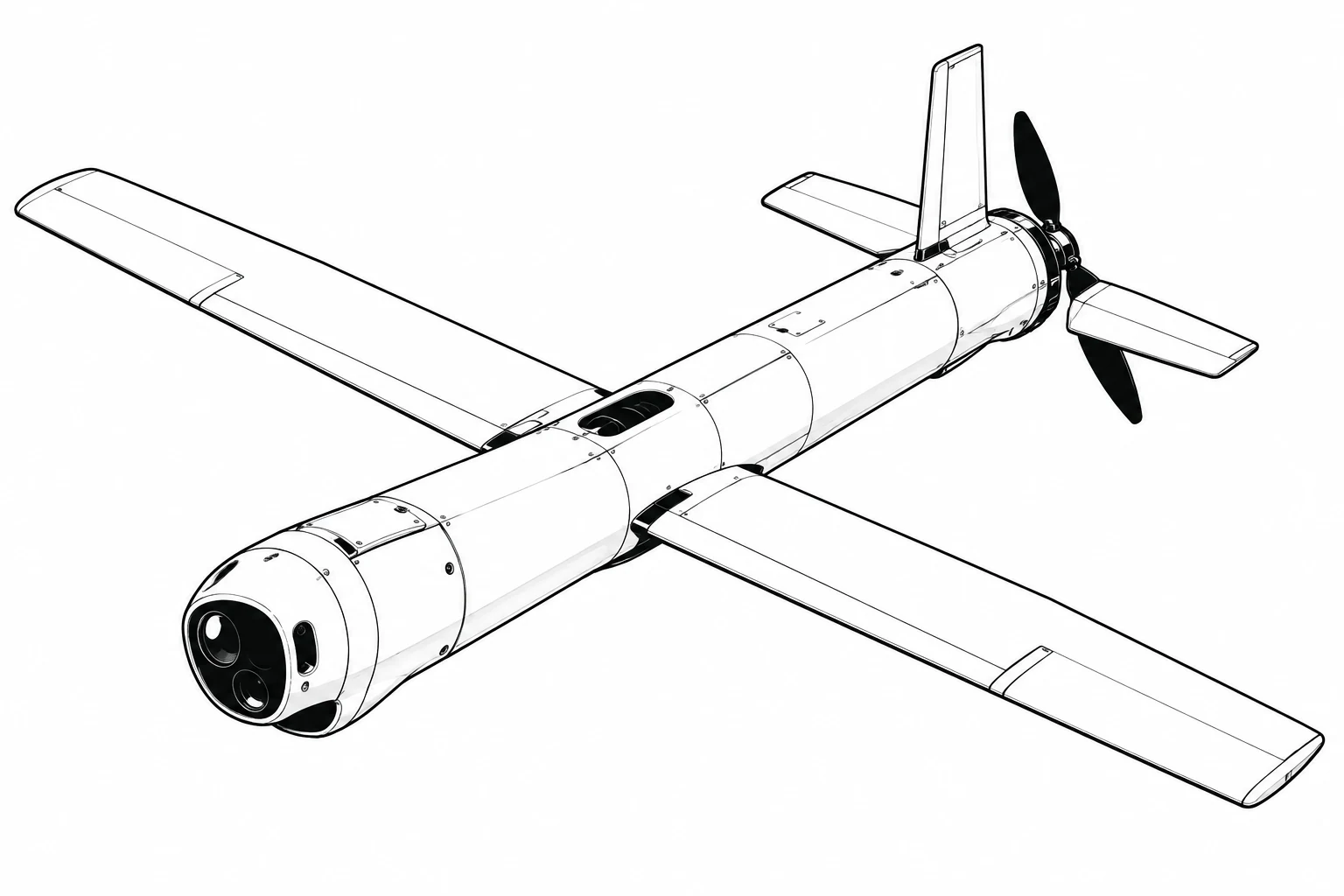
Switchblade 400 overview
Last reviewed:
Switchblade 400 is AeroVironment's medium-range, man-portable anti-armor loitering munition. Publicly introduced with the next generation of the Switchblade family in October 2025, it is a distinct product rather than a renaming of Switchblade 300 or 600. Its purpose is to give small units a longer-reaching precision-strike option against armored vehicles without carrying the heavier all-up round associated with larger systems. An expendable loitering munition carries its effect into the target; it should not be described as a reusable reconnaissance drone with an optional weapon attached.
The current manufacturer product page lists a 65 km range, 35 minutes of endurance, a 12 kg munition and an 18 kg all-up round including the launch configuration. The same page gives 113 km/h loiter speed and 145 km/h sprint speed. AeroVironment says a single soldier can prepare the rocket-assisted tube-launch system in under five minutes. These values are advertised performance and packaging figures; the 18 kg round does not represent the weight of a complete unit's equipment, spare rounds, batteries, communications and carrying arrangements.
AeroVironment describes day/night electro-optical and infrared sensing, aided target recognition, onboard computing and an open architecture for integrating software, radios and sensors. The system is marketed for use with the AV_Halo command-and-control ecosystem and tactical networks such as ATAK and Nett Warrior. These capabilities are intended to shorten the workflow between detecting, classifying and assigning a target. Manufacturer descriptions of autonomy and operation in contested electromagnetic conditions do not constitute a guarantee of immunity to jamming or successful identification in every weather and visibility condition.
The most significant confirmed procurement milestone is the May 4, 2026 announcement of a U.S. Army prototype agreement under Low-Altitude Stalking and Strike Ordnance, or LASSO. The award covers rapid development, delivery and testing and positions Switchblade 400 within that program. It should not be inflated into completed Army-wide fielding, a declared operational capability or a verified combat deployment. The Army is a development and evaluation customer here; the reviewed announcements do not establish the quantities and delivery status needed to describe a mature operational fleet.
Family-level contract headlines require particular care. The May announcement also references a US$186 million order for Switchblade 600 Block 2 and 300 Block 20 under a separate existing arrangement. That figure is not a Switchblade 400 production order, and the wider US$990 million family contract ceiling is not money already spent on this variant. Through October 24, 2026, the public record supports a formally selected LASSO prototype system with a published manufacturer performance envelope. Confirmed production quantities, variant-specific combat use and independent effectiveness statistics remain separate questions.
Armament
Integrated anti-armor effect with EO/IR targeting; specific warhead details and fielded performance not independently verified
Development and operational timeline
- AeroVironment introduces the next-generation Switchblade lineup, including the new medium-range Switchblade 400
- AeroVironment announces a U.S. Army LASSO prototype agreement covering development, delivery and testing of Switchblade 400
- Editorial status review: current 65 km/35-minute product claims and LASSO selection are documented; completed operational fielding and separate 300/600 orders must not be attributed to the 400