Air system · Tactical
RQ-7 Shadow
Tactical Reconnaissance
Also known as: Shadow 200 / Shadow TUAS / RQ-7B
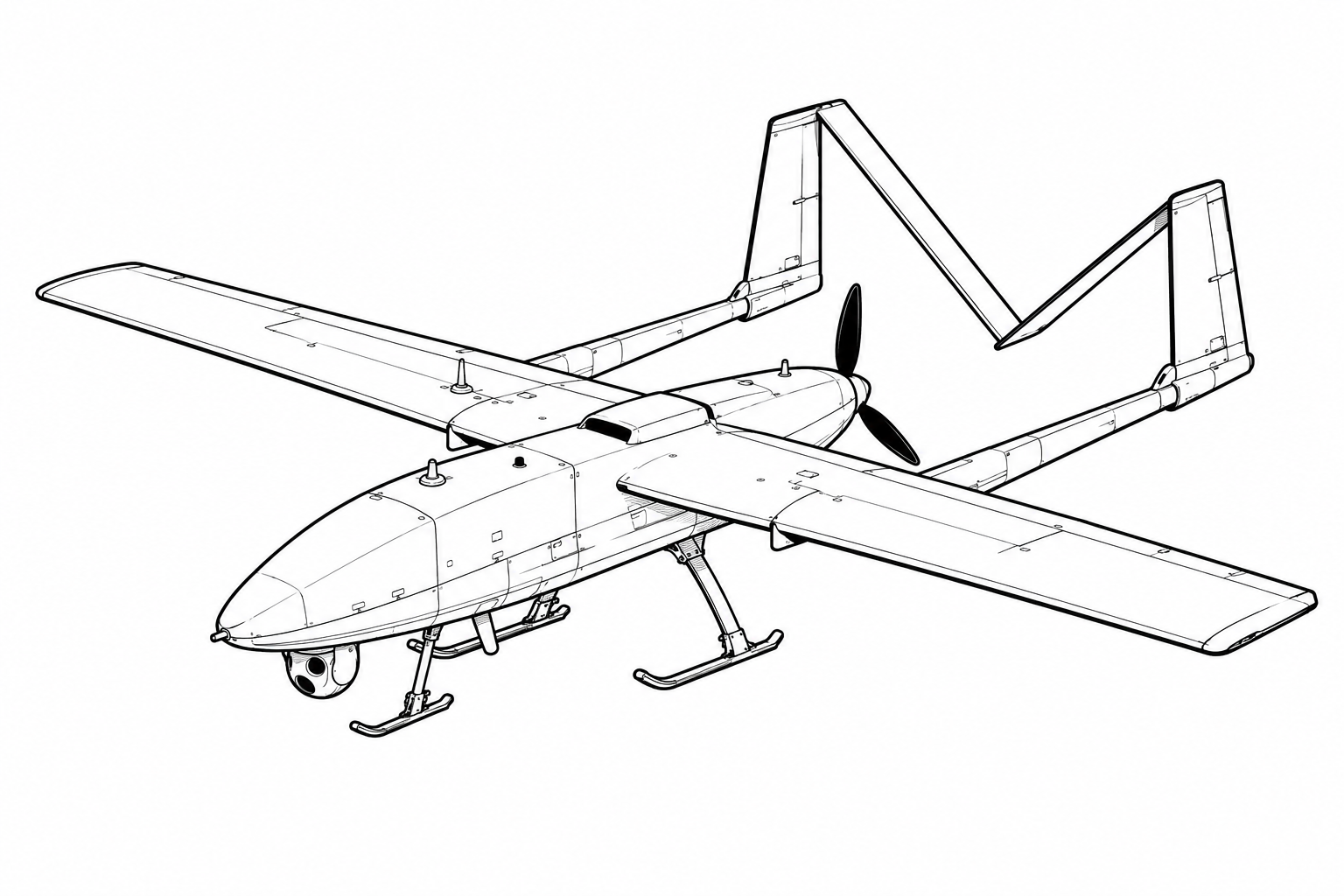
RQ-7 Shadow overview
The RQ-7 Shadow is a tactical unmanned aircraft system developed by AAI Corporation (now part of Textron Systems) for the U.S. Army. Entering service in 2002, it became the primary brigade-level tactical UAS, providing real-time intelligence, surveillance, target acquisition, and reconnaissance (ISTAR) to ground commanders in the Iraqi and Afghan theaters. The Shadow is launched from a rail launcher using a pneumatic catapult and recovered via an arresting hook system, allowing operations from unprepared forward operating bases without the runway infrastructure required by fixed-wing aircraft. Its twin-boom, pusher-propeller configuration gives a distinctive silhouette and supports the mounting of electro-optical/infrared sensor payloads in an unobstructed forward position.
During the peak of operations in Iraq and Afghanistan, Shadow aircraft were flying around the clock in support of combat brigades, providing company and battalion commanders with persistent overhead eyes during patrols, cordon-and-search operations, convoy movements, and targeted raids. The system's ground data terminal feeds video directly to ground commander displays in near real time, allowing leaders to see the terrain ahead of their forces and adjust routes or timing based on enemy activity. The RQ-7B Shadow 200 variant introduced improved endurance of over nine hours, a wider range of payload options, and the Universal Ground Control Station shared with the MQ-1C Gray Eagle, reducing operator training burden. Over its service life, the Shadow fleet accumulated over one million flight hours — a testament to the system's operational tempo and mechanical reliability.
As of 2025–2026, the U.S. Army is transitioning to the Future Tactical UAS (FTUAS) program to replace the Shadow, with Textron's Aerosonde HQ selected as the replacement platform. The Aerosonde HQ offers vertical takeoff and landing capability, reducing the Shadow's dependence on prepared launch-and-recovery infrastructure — a significant advantage for the Army's evolving multi-domain operations doctrine that emphasizes dispersed operations from austere locations. The RQ-7 Shadow remains operational with several allied armies including Sweden, Jordan, Pakistan, and others who have purchased the system via Foreign Military Sales. The Shadow's legacy is foundational: it normalized the concept of persistent brigade-level unmanned ISR, generating doctrine, training infrastructure, and cultural acceptance of UAV operations that shaped every subsequent Army unmanned aircraft program.
Armament
None (reconnaissance only)
Development and operational timeline
- RQ-7 Shadow achieves initial operational capability with U.S. Army
- Shadow deployed to Iraq in opening months of Operation Iraqi Freedom
- Shadow flies first dedicated combat missions with Army brigades in Anbar Province
- Shadow fleet reaches 500,000 cumulative flight hours in combat
- RQ-7Bv2 upgraded variant with improved sensors and extended endurance fielded
- U.S. Army selects Textron Aerosonde HQ as FTUAS replacement for Shadow
- Shadow fleet exceeds 1 million cumulative flight hours
- FTUAS fielding begins at first brigade; Shadow phased out from active-duty Army units