Air system · Tactical
RQ-21 Blackjack
Tactical ISR
Also known as: Blackjack / Integrator / Insitu RQ-21
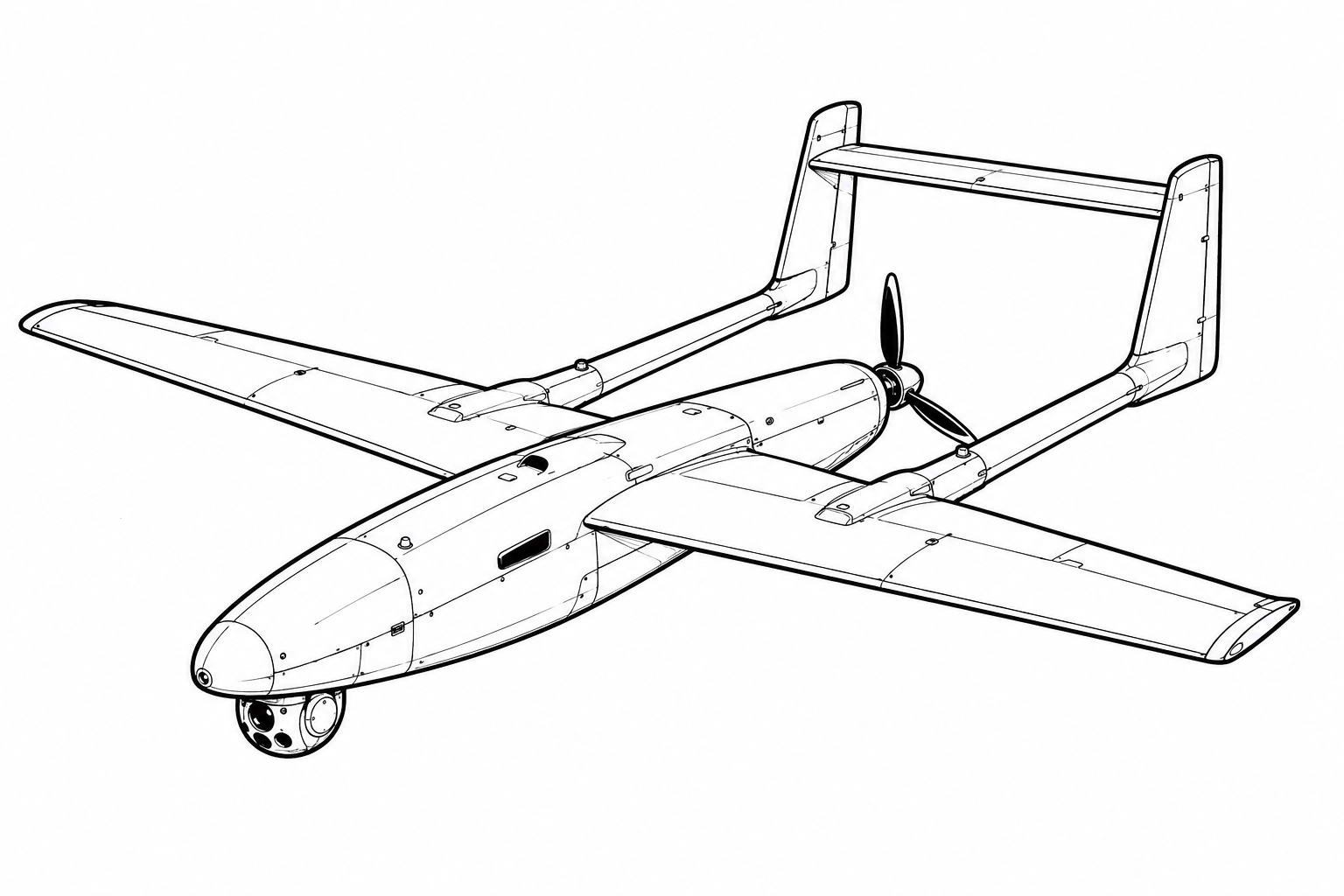
RQ-21 Blackjack overview
The RQ-21 Blackjack is a tactical unmanned aircraft system developed by Insitu — a Boeing subsidiary — based on their commercial Integrator airframe, and represents the U.S. Marine Corps' and Navy's primary organic ISR capability at the battalion and Marine Expeditionary Unit level. Entering service in 2014, the Blackjack was specifically designed to address the STUAS (Small Tactical Unmanned Aircraft System) requirement for a runway-independent platform capable of operating from amphibious ships as well as austere land bases. Like its smaller sibling the ScanEagle, the RQ-21 uses a pneumatic catapult for launch and Insitu's patented SkyHook cable-catch system for recovery, with the arresting cable strung between two poles that the aircraft's wingtip rail-snags in a precision maneuver that allows operations from ship decks as small as those on amphibious ready groups.
With a maximum takeoff weight of 61 kilograms and wingspan of 4.9 meters, the Blackjack occupies the critical gap between small hand-launched mini-drones that lack endurance and large MALE aircraft that require substantial infrastructure. Its endurance of over 16 hours at altitudes up to 19,500 feet gives a Marine battalion commander persistent overhead surveillance through a full operational day, watching a road network, monitoring insertion routes, or tracking a specific target compound without the gaps and vulnerabilities inherent in shorter-endurance systems. The platform can carry up to four payload stations simultaneously — a unique capability among tactical UAS — allowing an operator to switch between an EO/IR ball turret for surveillance, a SIGINT package for communications intelligence, and a laser designator for directing guided munitions all within the same mission profile.
The RQ-21 has been deployed to Afghanistan, the Middle East, and the Pacific, and has operated from the USS Iwo Jima, USS Bataan, and other amphibious ships in the Navy's fleet. Poland became the first international customer in 2020, integrating the Blackjack into its naval aviation inventory for Baltic Sea maritime surveillance. As of 2025–2026, the USMC is evaluating next-generation replacements for the Blackjack as part of the Marine Corps' evolving force design that emphasizes smaller, more distributed units operating from austere island locations in the Pacific — a concept that may drive requirements for longer-range, more persistent, and potentially armed small UAS that the current Blackjack cannot fully meet.
Armament
None (ISR only)
Development and operational timeline
- RQ-21 Integrator selected as Marine Corps STUAS — catapult and SkyHook recovery system required
- RQ-21 Blackjack achieves initial operational capability with USMC
- First RQ-21 deployment aboard amphibious ship; ship-deck operations validated
- Blackjack deployed to Afghanistan in support of Marine battalion operations
- Multi-payload configuration validated — simultaneous EO/IR and SIGINT operations
- Poland signs Blackjack FMS contract — first international customer
- USMC begins evaluation of next-generation STUAS successor requirements
- Blackjack continues Pacific operations; future replacement program concepts under development