Air system · Nano UAV
Black Hornet
Close-Range ISR
Also known as: Black Hornet PRS / PD-100 / Black Hornet 3 / Black Hornet 4
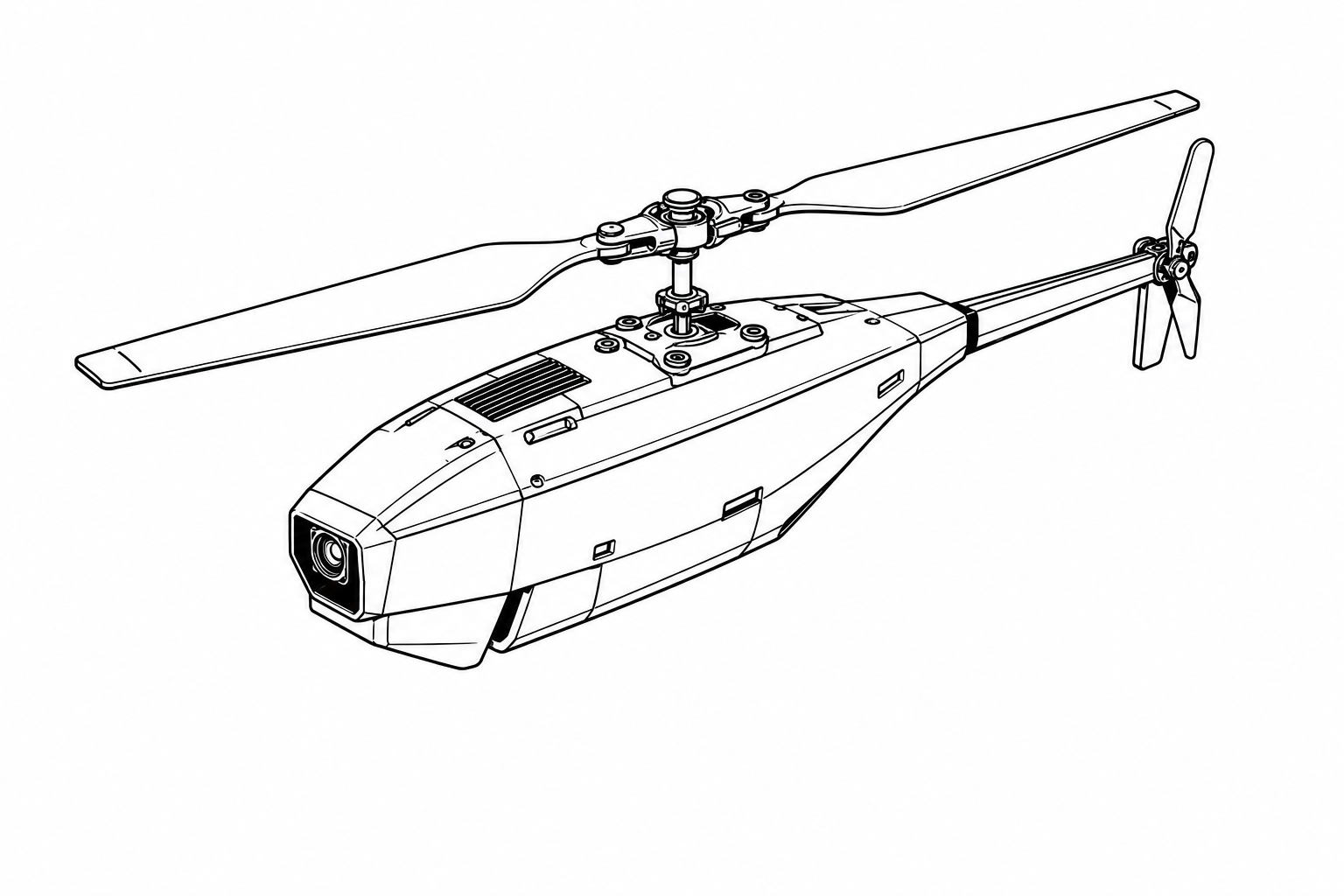
Black Hornet overview
Last reviewed:
Black Hornet is a family of very small personal-reconnaissance helicopters originally developed by Norway's Prox Dynamics and now produced by Teledyne FLIR Defense. Its purpose is to give a soldier a view beyond a wall, around a building, or over nearby terrain without exposing that soldier to the same observation point. It is an unarmed sensor system, not an FPV attack drone. The small size, low acoustic signature, and portable control equipment are central to its tactical role.
The first PD-100 generation attracted attention through British use in Afghanistan. Subsequent generations added improved imaging, communications, and navigation. A personal reconnaissance system normally includes more than the flying vehicle: operators need a controller, display, batteries, and support equipment. Published aircraft weights therefore must not be confused with the weight of the complete carried system. That distinction is particularly important when comparing a nano-helicopter with a larger squad-level fixed-wing drone.
Black Hornet 3, introduced in 2018, was advertised at approximately 32 grams, with a control range of about 2 km and flight time around 25 minutes. It introduced improved visible and thermal imaging and manufacturer-described navigation in GPS-denied environments. These figures describe that generation and mission configuration. They are not an appropriate way to summarize every earlier PD-100 or the substantially heavier Black Hornet 4.
Teledyne FLIR unveiled Black Hornet 4 at the AUSA exhibition in October 2023, not in 2025. The company describes a 70-gram aircraft with more than 30 minutes of flight time, a 12-megapixel daylight camera, and an upgraded thermal imager. Its launch release quoted a range greater than 2 km; the current product page quotes more than 3 km. Those are manufacturer figures from different public documents, so the source and generation should always accompany a comparison.
The U.S. Army's Soldier Borne Sensor program is a major procurement context, while British and Norwegian donations have brought Black Hornet systems to Ukraine. These examples illustrate the demand for close-range reconnaissance, but a national purchase does not mean every infantry unit has the newest version. FLIR's launch release described extensive international use across the family. Family-wide delivery totals should not be relabeled as Black Hornet 4 deliveries or treated as an audited count of operational aircraft.
As reviewed in October 2026, Black Hornet 4 is a current advertised generation, while older systems remain relevant to understanding the family. Its advantage is short-range, low-exposure observation rather than long-range persistence or weapons carriage. Wind, rain, obstacles, battery state, and the radio environment affect practical use even where the manufacturer advertises resilience. Readers should compare the specific generation, imaging package, and complete carried system rather than selecting whichever individual figure looks most impressive.
Armament
None; personal reconnaissance system
Development and operational timeline
- Prox Dynamics begins the development effort that leads to the PD-100 personal reconnaissance system
- British military use in Afghanistan brings Black Hornet to wider public attention
- FLIR acquires Prox Dynamics, adding Black Hornet to its defense portfolio
- FLIR announces Black Hornet 3 with updated thermal imaging and navigation capabilities
- Britain and Norway announce Black Hornet support for Ukraine
- Teledyne FLIR unveils the 70-gram Black Hornet 4 at AUSA
- Status review: the current Black Hornet 4 product page advertises 30+ minutes and more than 3 km; these are not Black Hornet 3 specifications