Air system · Modular Tactical ISR UAV
TEKEVER AR3
Land / Maritime ISR / Communications Relay
Also known as: AR3 / AR3 VTOL / AR3 EVO / AR3 Evolution
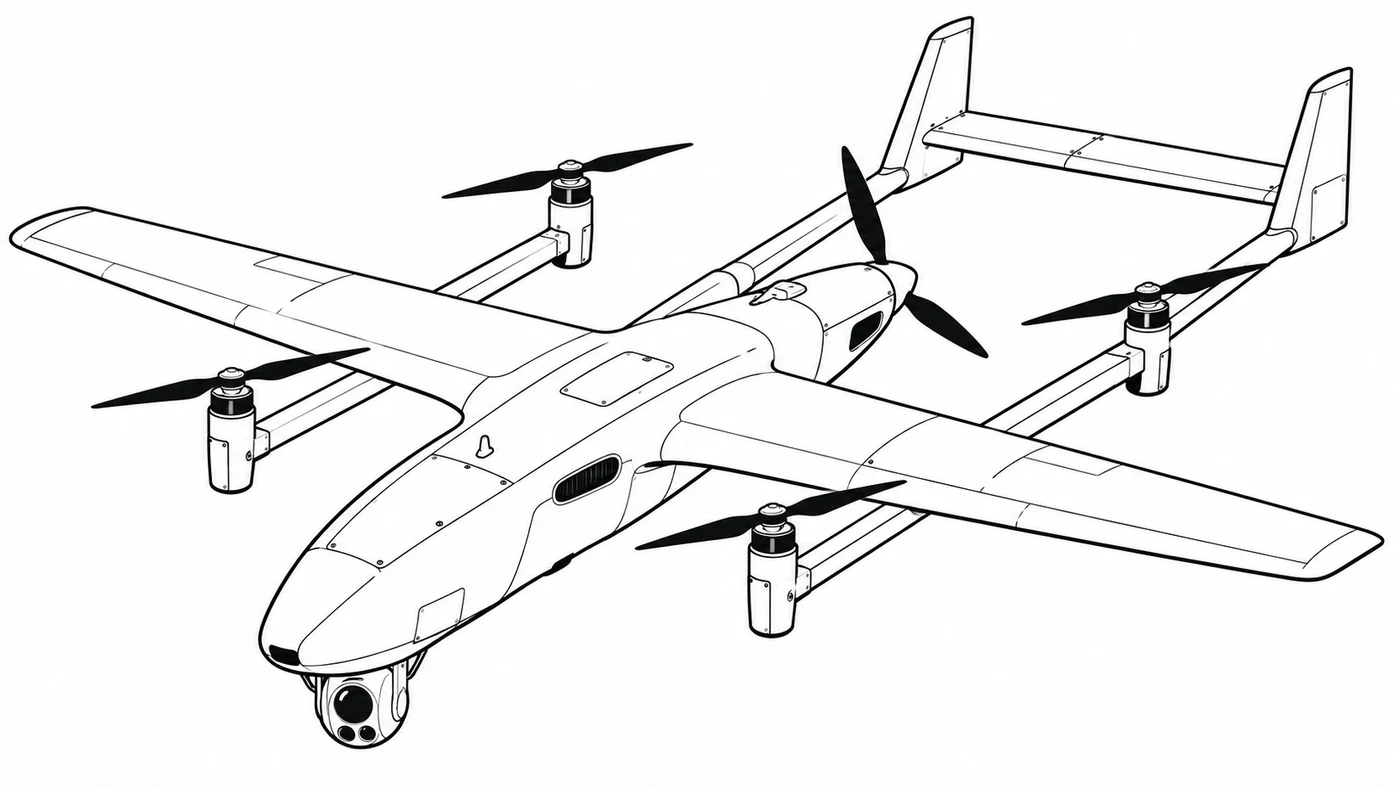
TEKEVER AR3 overview
Last reviewed:
TEKEVER AR3 is a Portuguese-origin tactical reconnaissance aircraft family designed for persistent land and maritime observation with a relatively small logistical footprint. The family includes catapult-launched fixed-wing configurations and versions with vertical-takeoff-and-landing equipment. AR3 EVO expands that modular approach rather than representing the specifications of every earlier AR3. The catalog's 2025 introduction marker refers to EVO's public unveiling, not the origin of the older AR3 family. The supplied artwork depicts a VTOL-style configuration, but an illustration cannot establish its engine, communications fit, installed sensor or exact production standard.
The distinction between generations is important when reading TEKEVER's literature. The older AR3 section of its 2025 combined brochure describes payload-dependent endurance of 8–16 hours and a 3,600 m ceiling. The separate AR3 EVO specification section advertises up to 22 hours in fixed-wing configuration or 14 hours in VTOL configuration, a 6 kg payload and a 25 kg maximum takeoff weight rising to 30 kg with VTOL equipment. Those EVO figures are manufacturer claims for configuration-dependent limits, not a guarantee that every supplied AR3 can meet them.
The EVO section also lists a 4.2 m wingspan, 1.96 m length, cruise speed of 46 knots and communications range up to 230 km. Cruise speed is not maximum speed, and communications reach is not the total mission path or a guaranteed radius in an electronically contested environment. VTOL hardware adds flexibility but consumes mass and energy, so the fixed-wing endurance headline should not be assigned to a vertical-launch sortie. Payload selection and propulsion options similarly require a defined aircraft configuration before meaningful comparisons can be made.
Typical roles include electro-optical and infrared reconnaissance, artillery observation, maritime monitoring and communications relay. TEKEVER describes a wide selection of gimbals, radio systems, radar and electronic-support options, but a catalog of available equipment is not a statement that all sensors are fitted simultaneously. The company also advertises resilience features for degraded satellite navigation and contested radio environments. These are configuration-specific capabilities and manufacturer assessments, not proof that any small drone is immune to jamming, detection or loss.
Operational experience in Ukraine has informed the aircraft's development. On March 27, 2025, industry reporting relayed TEKEVER's announcement that AR3 had exceeded 10,000 operational flight hours in Ukraine. That is a cumulative company-reported fleet milestone, not the endurance of one airframe or an independently audited survival rate. At DSEI in September 2025, the company introduced AR3 EVO, with contemporary reporting placing the unveiling on September 9. Website update timestamps should not move those 2025 events into 2026.
The French industrial and procurement story provides substantive late-2026 milestones. Aerobuzz's November 16 report describes the November 13 inauguration of TEKEVER's Cahors facility, where AR3 and AR5 production had already begun, and presentation of a first AR3 system intended for French forces under SDLRAT. The article describes the first 15 systems as due before the end of 2026. Presentation, shipment and formal military acceptance are different events, so this profile does not declare all 15 delivered simply because the schedule calls for that quantity by year-end.
The November 21, 2026 review therefore connects battlefield-informed development to a documented European production and procurement effort while preserving the distinction between baseline AR3 and EVO. It does not invent future December deliveries or transfer AR5 performance to this smaller family. Readers comparing AR3 with LUNA NG, ScanEagle or RQ-21 Blackjack should consider runway independence, sensors, control links, local support and mission configuration. Those factors are more useful than choosing whichever maximum endurance figure is largest without checking which version produced it.
Armament
ISR, relay and specialized payload options; no universal standard strike load
Development and operational timeline
- Industry reporting relays TEKEVER's claim of over 10,000 cumulative AR3 operational flight hours in Ukraine
- AR3 EVO unveiled at DSEI UK, according to contemporary event reporting
- Manufacturer brochure separately publishes baseline AR3 and EVO configurations and performance claims
- Cahors facility formally inaugurated and first French-destined AR3 system presented; production had already begun
- Aerobuzz reports the French SDLRAT program and a planned first 15 systems before year-end; complete delivery is not inferred
- Editorial status review: French industrial milestone and variant-specific figures included; future deliveries and universal VTOL endurance not asserted