Air system · Rotary-Wing ISR UAV
CAMCOPTER S-100
Maritime / Land ISR / Payload Carrier
Also known as: Schiebel CAMCOPTER S-100 / Camcopter S100 / S-100 UAS
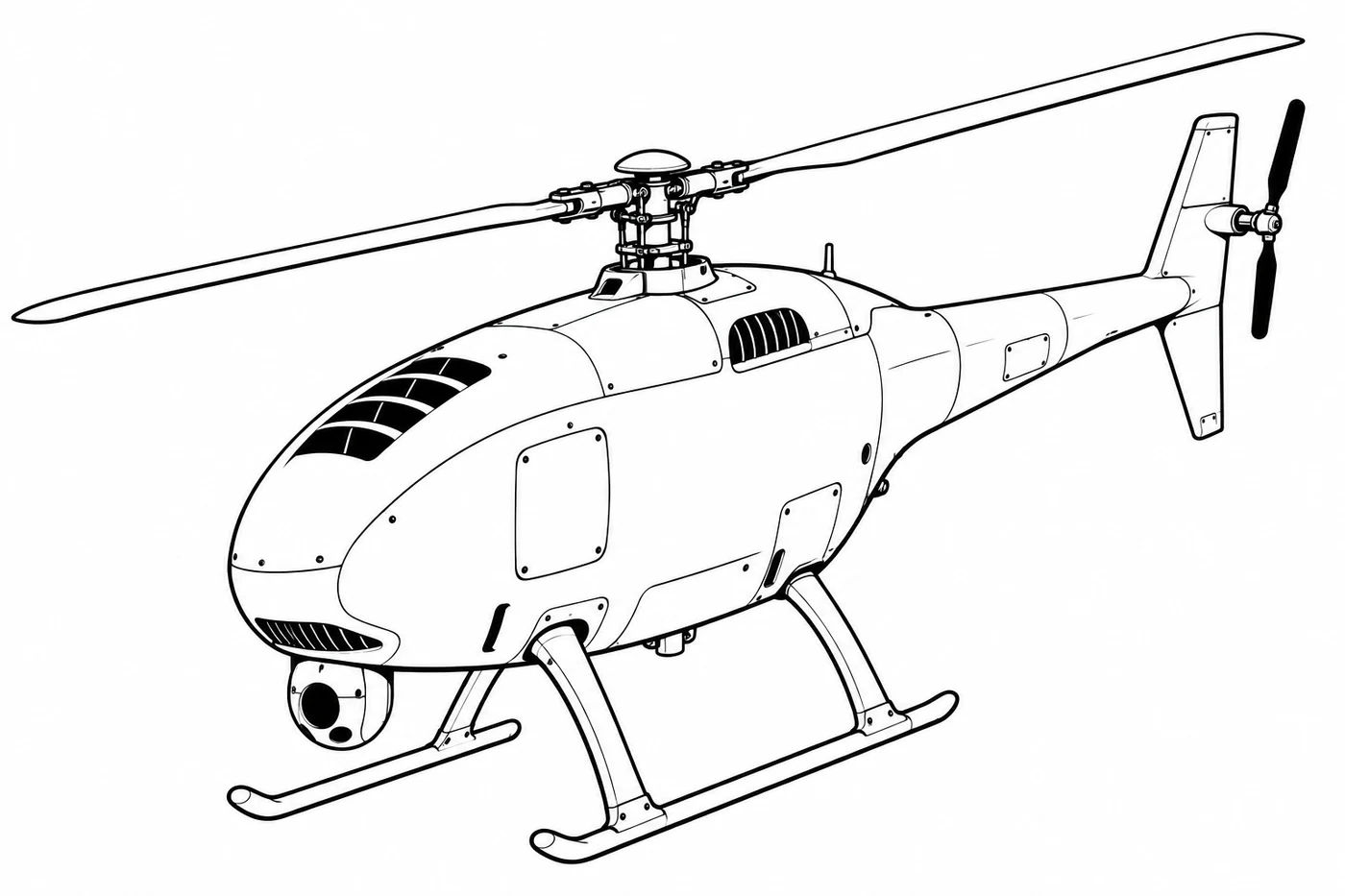
CAMCOPTER S-100 overview
Last reviewed:
CAMCOPTER S-100 is Schiebel's Austrian-developed uncrewed helicopter for reconnaissance, surveillance and other payload-dependent missions on land and at sea. Its main rotor and tail rotor let it hover and take off vertically, avoiding the launch rail or recovery net used by some fixed-wing tactical drones. Although strongly associated with shipboard operation, it remains an Air-domain aircraft. A system normally includes more than one air vehicle, control workstations, communications and support equipment, so contract quantities need to distinguish complete systems from individual helicopters.
Schiebel's 2026 brochure lists a 3.11 m fuselage length, 1.12 m height, 1.24 m width and 3.4 m main-rotor diameter. It gives 200 kg maximum takeoff weight and a typical 50 kg payload. Typical empty weight is approximately 114 kg; fuel and the actual installed equipment consume the remaining allowance. The brochure distinguishes engine options and fuel compatibility rather than treating every S-100 as one identical powerplant configuration. Rotor diameter is shown in the catalog's span field because a helicopter does not have a conventional fixed-wing wingspan.
Manufacturer performance figures include a 100-knot dash speed, approximately 185 km/h, and a 55-knot best-endurance cruise, approximately 102 km/h. Endurance exceeds six hours in the brochure, with optional external fuel extending it beyond ten hours. Typical communications options span 50, 111 or 200 km, depending on the installed link. The longest endurance, heaviest payload, fastest dash and greatest radio reach are not a single guaranteed mission profile; fuel, payload, atmospheric conditions and communications fit all matter.
Payload choices include electro-optical and infrared cameras, maritime radar, vessel-identification receivers and specialized sensors. Schiebel also describes cargo, emissions-monitoring and other applications, but an available integration is not a standard fit on every customer's aircraft. Operating from a ship requires more than hovering above the deck: navigation, ship-relative landing, deck securing, communications and integration with the vessel's mission systems all affect practical usefulness. Compared with ScanEagle or TEKEVER AR3, the S-100 trades a rotary-wing configuration's characteristics against fixed-wing endurance and launch arrangements.
The program has a long operational history, and a September 2024 company announcement records an EASA Design Verification Report for rotary-wing UAS operations. That specific regulatory finding should not be expanded into a claim of unrestricted airline-style type certification for every mission worldwide. In February 2026, Greece contracted for systems intended for its new FDI frigates. Schiebel's April 23 release then documents acceptance testing of the first two systems, comprising four aircraft, at Kotroni. This is a firmer milestone than assuming all contracted systems were delivered on the signing date.
A particularly recent development was announced on November 18, 2026. Schiebel and OSIRIS Poland demonstrated an S-100 carrying and releasing an HSCD-1 small drone in forward flight, then relaying its communications and video link. The company explicitly describes a proof of concept using an inert variant. Potential future interceptor and loitering-munition applications are therefore possibilities, not proof of a deployed armed mothership capability or a completed live intercept. The announcement date is recorded separately from any undisclosed exact test date.
The November 21, 2026 editorial review includes both the Greek acceptance campaign and this new carrier-and-relay demonstration while retaining their different maturity levels. The supplied image is labeled as an illustration, not a photograph of the Greek sensor configuration or the OSIRIS test aircraft. Readers exploring cargo applications can also consult K-MAX, which occupies a much heavier external-lift class. S-100's value is its combination of vertical flight, modular sensors and shipboard experience, assessed through documented customer and test milestones rather than assuming every proposed mission has already entered operational service.
Armament
Payload-dependent; November 2026 carried-drone demonstration used an inert variant
Development and operational timeline
- S-100 commercial introduction period commonly identified in historical references
- Schiebel announces an EASA Design Verification Report for rotary-wing UAS operations
- Hellenic Navy procurement contract announced for S-100 systems supporting FDI frigates
- Schiebel announces acceptance testing of the first two Greek systems, comprising four air vehicles
- Inert HSCD-1 carrier, airborne release and communications-relay proof of concept announced with OSIRIS Poland
- Editorial status review: 2026 acceptance and mothership proof of concept included; no operational armed-interceptor deployment inferred