Air system · Optionally Piloted Cargo Helicopter
K-MAX
External-Lift Logistics / Autonomous Resupply
Also known as: Unmanned K-MAX / CQ-24A / Kaman K-MAX UAS / K-MAX TITAN family
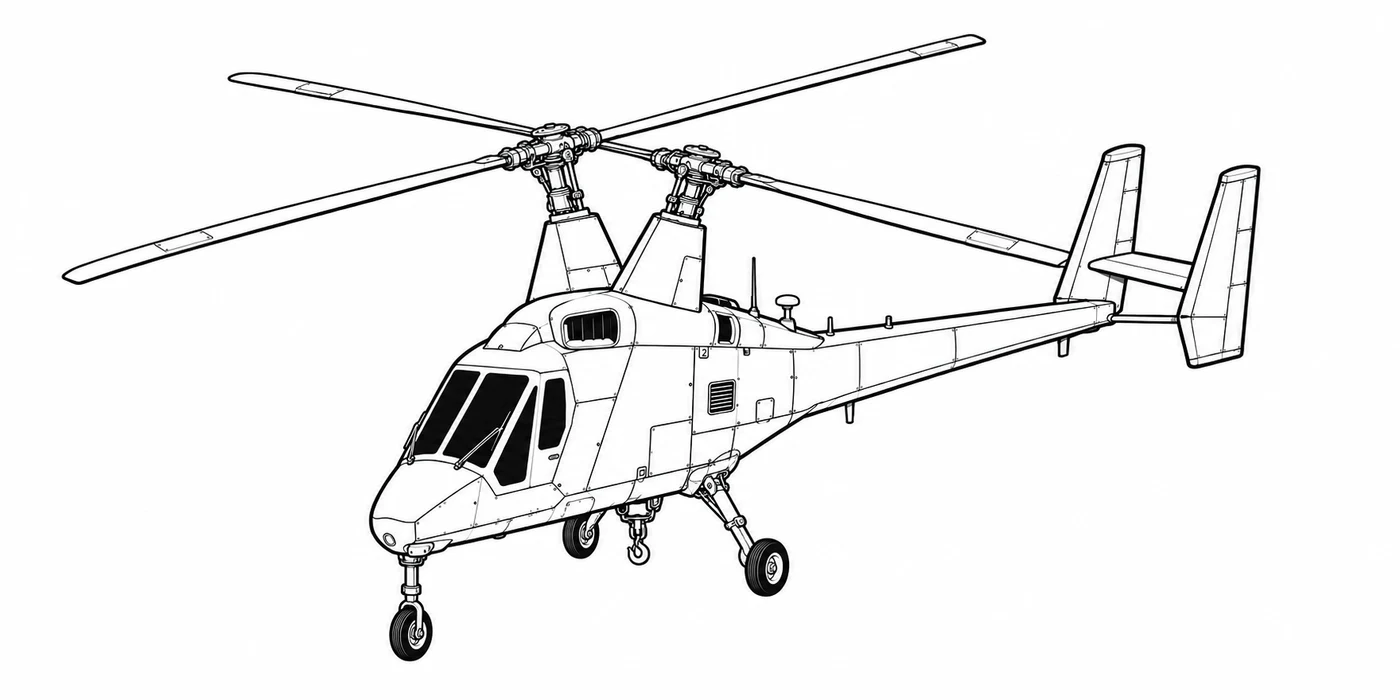
K-MAX overview
Last reviewed:
The unmanned K-MAX is an optionally piloted cargo-helicopter adaptation of Kaman's specialist external-lift aircraft. Kaman supplied the air vehicle while Lockheed Martin integrated mission-management, control and autonomy systems for the military resupply effort. The aircraft is recognizable by its two intermeshing main rotors and absence of a conventional tail rotor. This profile focuses on the uncrewed and optionally piloted logistics configurations, not on treating every civilian K-MAX used for logging or firefighting as an autonomous military drone.
Intermeshing, counter-rotating rotors provide lift and cancel torque without a separate tail rotor. The narrow fuselage and retained single-seat cockpit reflect an aircraft optimized for lifting loads suspended beneath it rather than carrying troops in a cabin. Optionally piloted operation allowed a pilot to fly when required while supporting missions without a person aboard. The supplied illustration is an artistic study, not a configuration-controlled drawing; features visible in it cannot authenticate landing-gear geometry, rotor clearance or the exact equipment installed on deployed aircraft.
Lockheed Martin's historical UAS brochure gives an external cargo-hook capacity of 6,000 lb, approximately 2,722 kg, at sea level. The same document shows reduced lifting capacity with altitude and atmospheric conditions. It distinguishes 12,000 lb maximum gross weight with an external load from 7,000 lb aircraft takeoff weight, so these numbers should not be collapsed into a single contradictory mass limit. Cargo-hook capacity, useful load and the payload remaining after fuel are also different quantities, particularly on a long flight or at a hot, elevated landing site.
The brochure lists maximum speed around 100 knots without an external load and 80 knots with one, approximately 185 and 148 km/h respectively. Its internal-fuel endurance is 2 hours 41 minutes, with illustrative ranges around 494 km unloaded and 396 km carrying an external load. The document also includes extended-endurance concepts exceeding 12 hours, but those are not the normal internal-fuel cargo configuration. This profile therefore does not advertise a fully laden helicopter flying for the longest duration and range mentioned anywhere in the literature.
Military deployment made K-MAX more than a laboratory logistics concept. The Navy and Marine Corps selected it for Afghanistan in 2011 following an assessment of its ability to meet a daily cargo-delivery requirement. Lockheed's July 24, 2014 return announcement reports more than 4.5 million lb of cargo delivered during the nearly three-year deployment. That is cumulative program throughput across missions, not the payload of one flight. Uncrewed resupply could reduce exposure of road convoys and aircrews, while ground teams still had to prepare, receive and manage loads.
Kaman announced the first flight of its K-MAX TITAN commercial unmanned system on April 21, 2021 and described related Marine Corps autonomy-upgrade work. These developments were separate from the original Afghanistan configuration and included different autonomy and sensing efforts. In January 2023, the company announced closure of K-MAX production, as reported by Janes. Ending production is not the same as grounding every existing aircraft or ending all parts support. Equally, the separate KARGO UAV program should not be renamed K-MAX or assigned its heavy-lift figures.
At the November 21, 2026 editorial review, the established record supports the Afghanistan deployment, the later TITAN announcement and the production-closure decision, but not a verified new 2026 mass-production restart or a renewed frontline U.S. Marine K-MAX fleet. Readers comparing logistical uses with CAMCOPTER S-100 or larger operational drone programs should account for the very different payload classes and support requirements. K-MAX's place in unmanned aviation is its documented external-lift experience and demonstration of resupply without an onboard pilot, not an assumed present-day procurement expansion.
Armament
Unarmed cargo-resupply configuration
Development and operational timeline
- Historical Lockheed Martin brochure documents the optionally piloted K-MAX UAS configuration and external-lift performance
- Navy and Marine Corps deployment selection announced following a cargo-UAS assessment
- Unmanned K-MAX begins Marine Corps cargo deliveries in Afghanistan, according to the later deployment retrospective
- Lockheed announces return from Afghanistan after more than 4.5 million lb of cumulative cargo deliveries
- Kaman announces first flight of K-MAX TITAN and related Marine Corps autonomy-upgrade activity
- Kaman announces the K-MAX production-closure decision; not a blanket grounding of existing aircraft
- Editorial status review: historical resupply, later autonomy work and production closure distinguished; no 2026 production restart verified