Air system · Maritime Patrol MALE UAV
TEKEVER AR6
Maritime Surveillance / EEZ Patrol / ISR
Also known as: AR6 / TEKEVER AR6 / Portuguese maritime patrol drone / AR6 MALE UAS
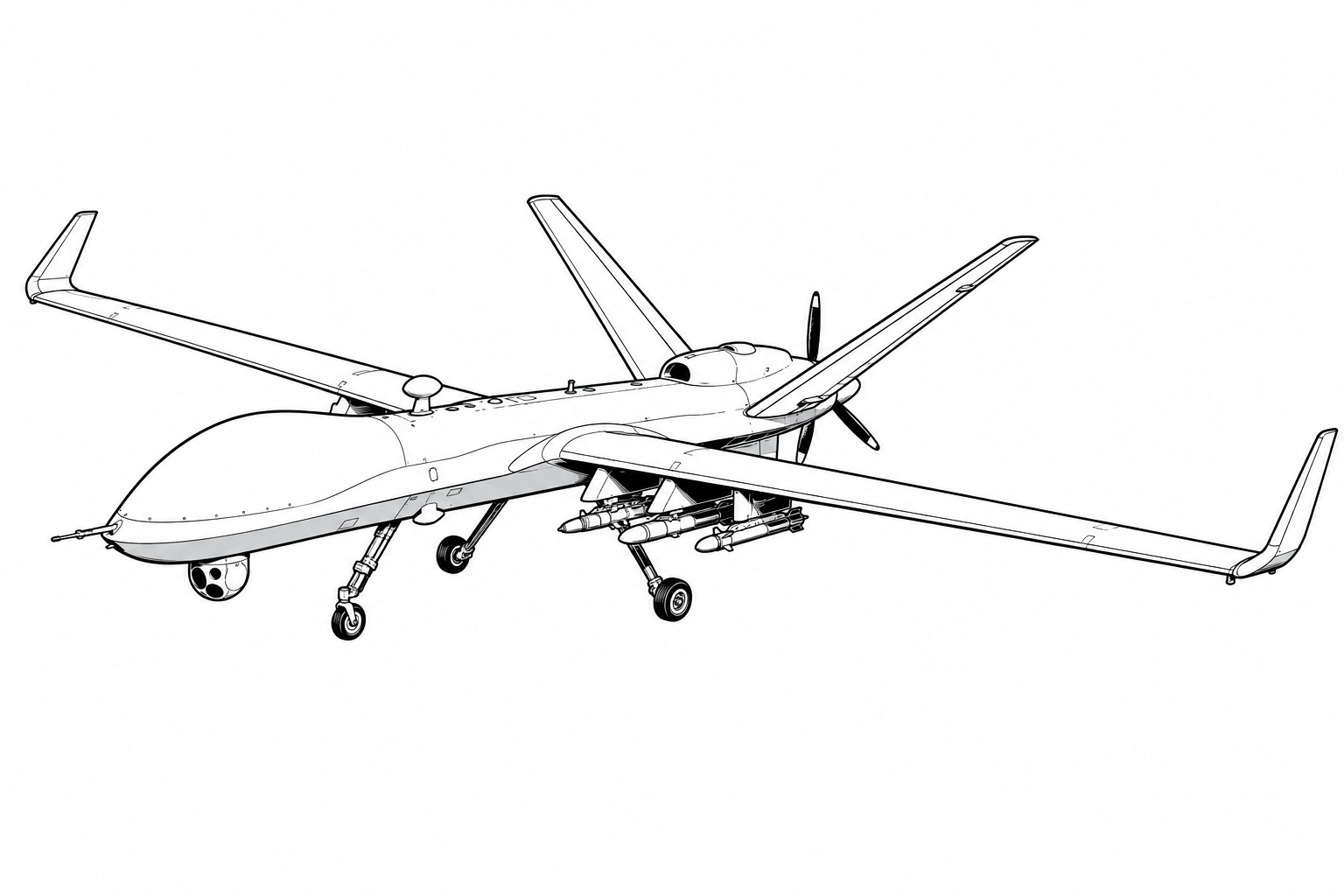
TEKEVER AR6 overview
The TEKEVER AR6 is the latest and most capable unmanned aerial vehicle in Portuguese defense technology firm TEKEVER's AR series, representing a significant step beyond the battle-proven AR5 that has established TEKEVER as one of Europe's leading sovereign MALE drone providers. TEKEVER built its reputation on the AR5's operational service with the UK Maritime and Coastguard Agency — where the platform has accumulated thousands of operational hours conducting maritime surveillance over the English Channel, Celtic Sea, and North Atlantic — and on NATO exercises in which the AR5 demonstrated interoperability with allied maritime patrol assets. The AR6 preserves the operational philosophy that made the AR5 commercially and militarily successful: a mid-size twin-boom pusher design optimized for maritime surveillance, long endurance at operational altitudes above weather, and a sensor suite specifically engineered for the maritime detection problem of finding small vessels and submarine periscopes against the complex radar background of an open-ocean surface. Where the AR5 achieves approximately 16 hours of endurance, the AR6 extends this to over 24 hours through a more fuel-efficient turboprop engine installation, an aerodynamically refined airframe that reduces drag at operational cruise altitudes, and an enlarged fuel capacity made possible by a slightly scaled-up fuselage. Maximum payload has also been increased to accommodate the next generation of maritime surveillance radar, an enhanced electro-optical/infrared turret with higher-resolution thermal imaging, and an automatic identification system receiver — enabling the AR6 to build a complete maritime common operating picture integrating radar tracks, AIS vessel identities, and optical confirmations without human operator input.
The AR6's significance in the European defense context goes beyond its technical specifications. TEKEVER represents a rare case of a small NATO member nation developing sovereign indigenous UAS capability at the MALE tier rather than purchasing systems from the U.S., Israel, or Turkey — a strategic choice driven by Portugal's maritime geography (nearly 1.7 million square kilometers of exclusive economic zone to monitor), the political sensitivity of relying on non-European systems for national security surveillance, and TEKEVER's ambition to position Portugal as a European hub for sovereign autonomous systems development. The company's Hybrid Intelligence approach — combining AI-driven autonomous mission execution with human operator oversight at key decision points — has been adopted as a reference architecture by several European defense programs seeking to demonstrate legal and ethical compliance with EU autonomous systems standards. The AR6's certification pathway targets EASA standard scenarios rather than purely military airworthiness standards, enabling it to operate in non-segregated airspace alongside commercial traffic — a critical practical capability for a maritime patrol platform that must transition between military restricted airspace and civil aviation environments during long patrol sorties.
By 2025–2026, TEKEVER has secured or advanced procurement discussions for the AR6 with multiple European and African maritime operators. The UK Maritime and Coastguard Agency has evaluated the AR6 as a successor to its AR5 fleet, with the 24-hour endurance enabling full channel coverage without gap periods during aircraft transitions. Portugal's Air Force has formally adopted the AR6 as its primary maritime patrol UAS, integrating it into national EEZ surveillance operations coordinated with the Armada Portuguesa. NATO's Maritime Command has incorporated AR6 flight data into its Atlantic surveillance architecture, and TEKEVER is pursuing certification of AR6 for Frontex (European Border and Coast Guard Agency) maritime surveillance operations across the Mediterranean and Atlantic. An armed variant with wing hardpoints for light strike munitions has been offered to African and Middle Eastern operators seeking a cost-effective sovereign maritime patrol and limited strike capability without the political complications associated with U.S. or Israeli-sourced armed drones.
Armament
Unarmed surveillance baseline; armed variant with wing hardpoints for light strike munitions
Development and operational timeline
- TEKEVER AR5 enters operational service with UK Maritime and Coastguard Agency; AR6 development roadmap initiated
- AR6 concept design completed; 24-hour endurance target, enlarged payload, and turboprop upgrade specified
- AR6 prototype completes first flight from TEKEVER's Évora test facility in Portugal
- EASA certification pathway for AR6 in non-segregated airspace submitted; Hybrid Intelligence autonomy architecture passes initial review
- Portuguese Air Force formally adopts AR6 for national EEZ maritime patrol; Atlantic deployment operations begin
- NATO Maritime Command integrates AR6 surveillance data into Atlantic maritime picture; interoperability with P-8 Poseidon demonstrated
- UK MCA evaluates AR6 as AR5 successor; 24-hour endurance enabling gap-free English Channel coverage validated in trial
- TEKEVER advances Frontex Mediterranean surveillance contract discussions with AR6; armed variant offered to African and Middle Eastern operators
- AR6 selected by a second European maritime nation; EASA non-segregated airspace certification achieved for coastal surveillance profile
- TEKEVER announces production facility expansion in Portugal to meet AR6 orders; platform in service with three national operators