Naval system · USV
Seagull
Multi-Mission Naval
Also known as: Elbit Seagull / Seagull USV
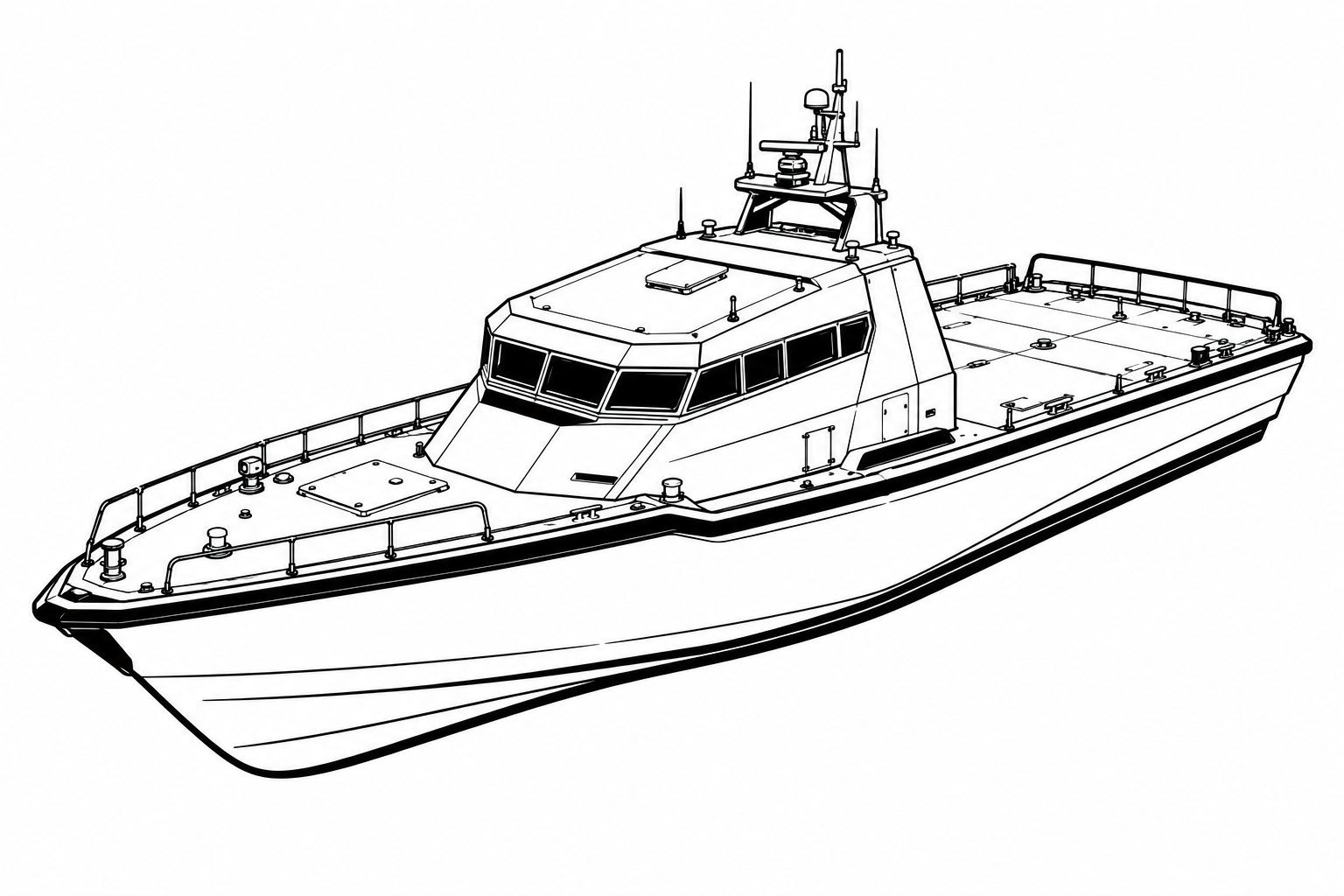
Seagull overview
Last reviewed:
Seagull is Elbit Systems' Israeli multi-mission unmanned surface-vessel system. Its principal public roles include mine countermeasures, anti-submarine warfare, maritime security, and surveying. Unlike a one-way explosive attack boat, it is designed as a reusable platform carrying mission equipment that can be changed for different tasks. The intended benefit is to move some dangerous or repetitive work away from a crewed ship while keeping people in the command-and-control chain.
Elbit describes a 12 m vessel deployable from a port or a supporting ship, with endurance up to four days and transportability in a 40-foot container. The system can include one or two vessels coordinated through a mission-control station. Published performance depends on the selected sensors, towing load, sea state, and mission. A four-day endurance claim does not mean that every payload can be operated at maximum speed continuously for four days.
For mine countermeasures, the unmanned surface platform can support sonar search and the deployment of expendable mine-disposal equipment. The aim is to help detect, classify, and neutralize mines while reducing exposure of personnel and larger ships. The search-and-disposal sequence still depends on the particular sonar and mission equipment selected. A modular system is not automatically carrying every possible mine-hunting, survey, and combat sensor at the same time.
In the anti-submarine role, Seagull can carry or tow sonar and has demonstrated torpedo-launch functions. Elbit's public descriptions include a 12.7 mm remote weapon station and other mission options. A torpedo-launch trial demonstrates an integration step; it does not prove an independent kill chain against a submarine in operational conditions. Detecting a submarine, maintaining a track, identifying it, and authorizing an engagement remain distinct and demanding tasks.
Since its 2016 introduction, the company has described additional sonar integrations, trials, and improved situational-awareness equipment. Its product material identifies modular options such as KATFISH and TRAPS sonar arrangements. Manufacturer announcements are useful for tracking the development of the system, but not every demonstration establishes a new customer fleet or an operational naval deployment. Publicly disclosed order quantities and customer configurations remain more limited than the broad capability list.
Through October 2026, Seagull remains a publicly marketed multi-mission unmanned maritime system with documented engineering demonstrations. Its relevance is strongest where sustained sensor work can be distributed among smaller uncrewed vessels rather than concentrated on a crewed ship. The trade-offs include communications, maintenance, launch and recovery, and safe navigation around other traffic. This profile distinguishes demonstrated integrations from guaranteed operational outcomes and avoids treating an undated marketing page as a new 2026 delivery announcement.
Armament
Optional 12.7 mm remote weapon station and torpedo-launch equipment (manufacturer)
Development and operational timeline
- Elbit introduces Seagull as a reusable multi-mission unmanned surface system
- Elbit announces trial torpedo launches from Seagull
- Manufacturer demonstrations develop mine-countermeasure, sonar, and maritime-security roles
- Product material describes modular sonar options and improved observation and navigation support
- Status review: Seagull remains a current Elbit product; customer configurations and deliveries require separate evidence