Naval system · Towed Synthetic Aperture Sonar System
KATFISH
Mine Countermeasures / Seabed Mapping / Naval Intelligence
Also known as: Kraken KATFISH / synthetic aperture sonar / mine hunting sonar drone
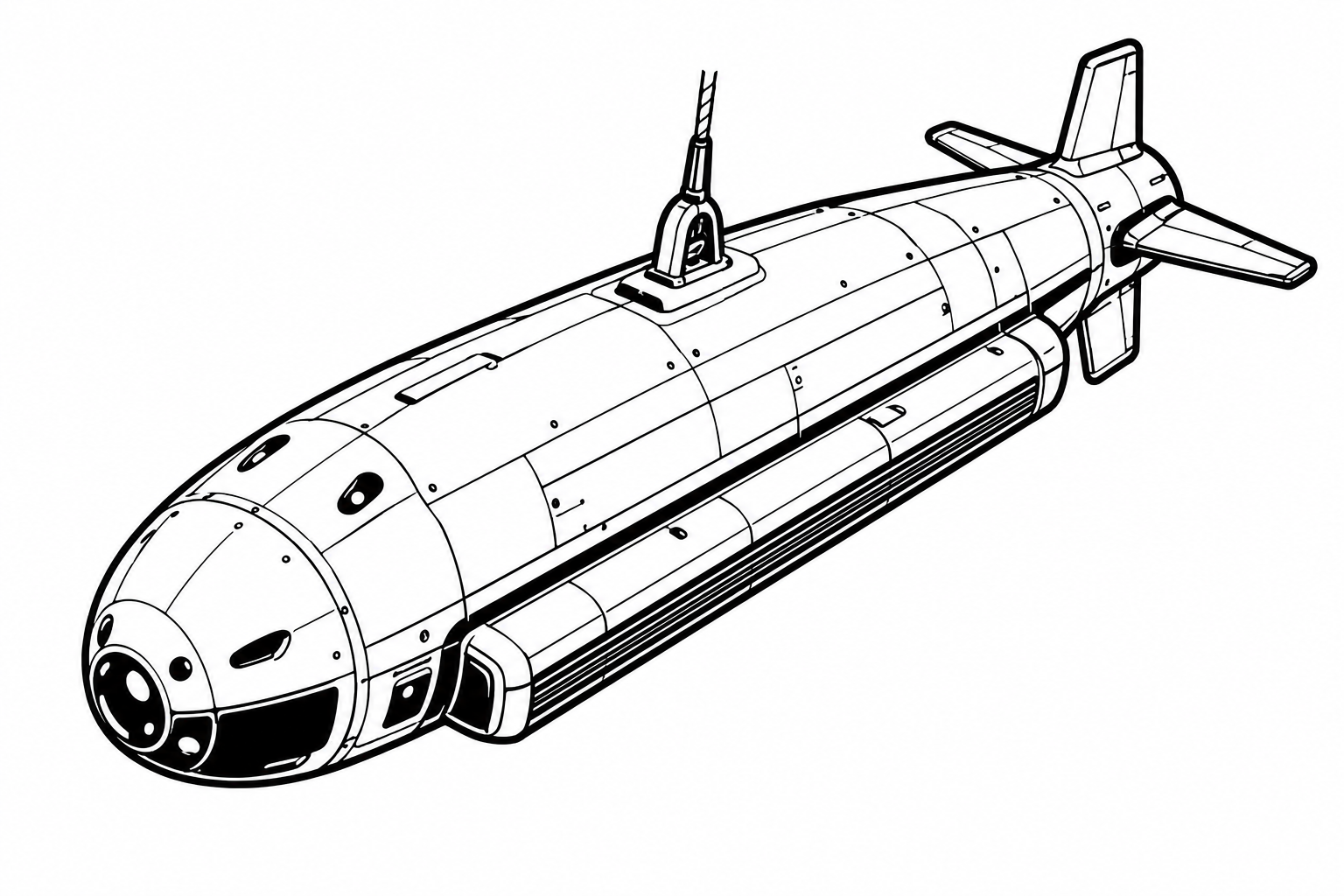
KATFISH overview
The KATFISH is Kraken Robotics' towed synthetic aperture sonar system, representing a generation-step improvement in the ability to detect and image naval mines on the ocean floor. Conventional side-scan sonar — the standard mine-hunting tool for decades — produces images of seafloor objects that resemble blurry shadows, requiring significant operator expertise to distinguish mines from the rocks, debris, and biological features that produce similar signatures. Synthetic aperture sonar processing, borrowed conceptually from synthetic aperture radar techniques developed for airborne reconnaissance, uses the motion of the towed body through the water to synthesize a much larger effective antenna, producing seafloor images with sufficient detail to visually identify specific mine types from their shape and dimensions.
This image quality difference translates directly into operational effectiveness. With conventional side-scan sonar, mine identification typically requires follow-on investigation by a mine disposal diver or remotely-operated vehicle — a slow, sequential process that can take hours per contact in a field with many objects. With KATFISH's photographic-quality imagery, trained operators can classify many contacts as mines or non-mines from the sonar image alone, dramatically accelerating the survey pace and reducing the number of follow-on investigation dives required. In a high-threat scenario where rapid mine clearance of a port or shipping lane is operationally critical, this speed advantage can be decisive.
NATO navies accelerated KATFISH procurement through 2025-2026 following the extensive mine-laying that both Russia and Ukraine conducted in the Black Sea — which created a documented maritime hazard that mine-hunting vessels from multiple nations were tasked to address — and in anticipation that any future conflict with Russia could involve similarly extensive mining of Baltic Sea approaches, Norwegian fjords, and North Sea shipping lanes. The KATFISH's ability to be deployed from autonomous surface vessels means mine hunting can be conducted without exposing mine-warfare vessel crews to the threat of mines or hostile fire, a significant force protection improvement over conventional manned mine-hunting operations.
Armament
None (detection/survey system)
Development and operational timeline
- Kraken Robotics begins KATFISH development; synthetic aperture sonar algorithm and tow body design initiated
- KATFISH first sea trials; SAS imagery quality validated against conventional side-scan sonar
- Danish Navy evaluation; KATFISH mine detection performance validated against buried and proud mines
- Portugal Navy contract; KATFISH deployed on Portuguese mine countermeasures vessels
- Autonomous surface vessel integration; KATFISH towed by unmanned USV for first time
- Canada Defence Research contract; KATFISH SAS data used in mine classification AI development
- NATO Baltic mine threat assessment drives expanded KATFISH procurement discussions
- Black Sea mine threat documented; allied navies accelerate mine countermeasures capability investment
- U.S. Navy evaluation; KATFISH assessed for integration with Navy mine countermeasures vessel
- AI classification software integrated; KATFISH system automatically classifies mine contacts from SAS imagery
- NATO mine-hunting exercise uses KATFISH on USV platform; crew-not-required mine survey validated
- Multiple NATO nation contracts awarded; production ramp for KATFISH deliveries through 2027