Naval system · UUV
Proteus
Multi-Mission Undersea
Also known as: Proteus / Huntington Ingalls Proteus / dual-mode UUV/USV / HII Proteus
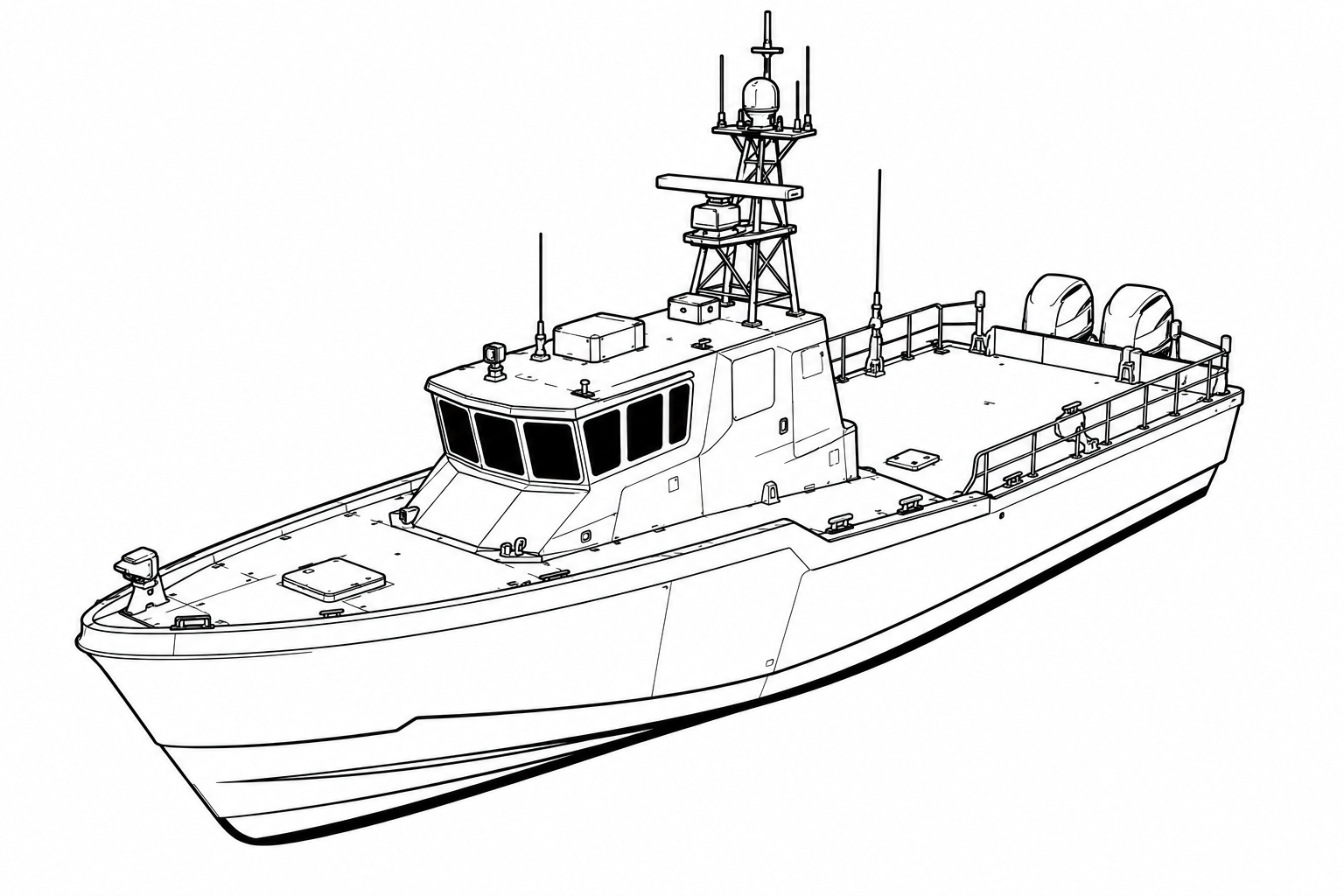
Proteus overview
The Proteus is a large unmanned undersea vehicle developed by Huntington Ingalls Industries (HII) Unmanned Systems, a division of the world's largest military shipbuilder. Publicly unveiled in February 2018, the Proteus stands out among underwater unmanned systems for its patented dual-mode capability — the ability to function as both a semi-submersible surface vessel and a fully submerged underwater vehicle within the same mission. This innovative design allows the Proteus to transit rapidly to its operating area at surface speeds using diesel power, then submerge seamlessly for stealthy underwater operations without returning to port for mechanical reconfiguration. No other large UUV in the Western inventory combines both operating modes in a single, field-switchable platform.
The Proteus measures approximately 12.8 meters (42 feet) in length and displaces around 9.5 tons. Its hybrid propulsion system combines diesel engines for surface transit — where the vehicle can achieve speeds of up to 8 knots — with battery-electric propulsion for submerged silent operations. A large, reconfigurable payload bay in the center section can accommodate mission modules totaling up to 2,000 pounds in weight, supporting diverse payloads including hull-mounted sonar arrays, towed acoustic systems, mine detection and neutralization equipment, electronic warfare packages, and smaller unmanned systems for launch and recovery operations. The payload bay's open architecture allows mission packages to be swapped at the pier in a matter of hours rather than days, a critical logistical advantage for naval squadrons operating on dynamic deployment cycles.
One of Proteus's most strategically significant roles is as an unmanned undersea mothership — a vehicle capable of deploying and recovering smaller unmanned systems, both aerial and underwater, while submerged or operating at the surface. This capability positions Proteus as a force multiplier for submarine squadrons and surface task forces, enabling forward deployment of additional sensor and effector nodes into contested waters while keeping the manned submarine at a safe standoff distance. HII has demonstrated payload deployment capabilities multiple times since initial sea trials in the Gulf of Mexico in 2019, where the vehicle successfully validated its transition between surface and submerged operating modes and confirmed the performance of its propulsion, navigation, and control systems.
The U.S. Navy has engaged with HII regarding potential acquisition of the Proteus across several mission sets, including integration with the Navy's Unmanned Undersea Vehicle Squadron (UUVRON) programs that are expanding under the service's broader unmanned systems strategy. The Navy's force structure plans call for a significant increase in large UUVs alongside the traditional nuclear attack submarine fleet, and the Proteus has been evaluated as a candidate for the Large Displacement Unmanned Undersea Vehicle (LDUUV) program and related requirements. HII has simultaneously marketed the Proteus internationally to allied navies interested in mine countermeasures, anti-submarine warfare, and ISR applications, with several NATO-aligned customers expressing interest in its dual-mode capability.
As of 2025–2026, HII continues to refine the Proteus design and advance its autonomy software stack, incorporating advances in machine learning-based navigation and AI-assisted mission planning. The platform is positioned as a leading candidate for fleet-wide adoption as the U.S. Navy works to expand its unmanned undersea squadrons. HII's status as the builder of Virginia-class and Columbia-class submarines gives Proteus a unique industrial credibility — it is designed and supported by the same organization that builds the manned submarines it would operate alongside, ensuring deep integration with naval subsurface doctrine, logistics, and maintenance infrastructure.
Armament
Modular payload bay (mine neutralization, ISR sensors)
Development and operational timeline
- Huntington Ingalls Industries unveils Proteus dual-mode UUV at Surface Navy Symposium
- Proteus completes initial sea trials in Gulf of Mexico, validates surface-to-submerged transition
- Proteus demonstrates payload deployment and recovery in submerged mode
- HII presents Proteus to NAVSEA as Large Displacement UUV candidate
- U.S. Navy formally evaluates Proteus for UUVRON unmanned undersea squadron missions
- Proteus mothership role demonstrated, deploying smaller UUV from payload bay
- HII advances Proteus autonomy software for AI-assisted mission planning
- International interest reported from NATO-allied navies for MCM and ASW applications
- HII confirms Proteus remains active candidate for Navy large UUV acquisition