Naval system · UUV
Manta Ray
Long-Duration Undersea Operations
Also known as: Manta Ray / DARPA Manta Ray / Northrop Grumman Manta Ray
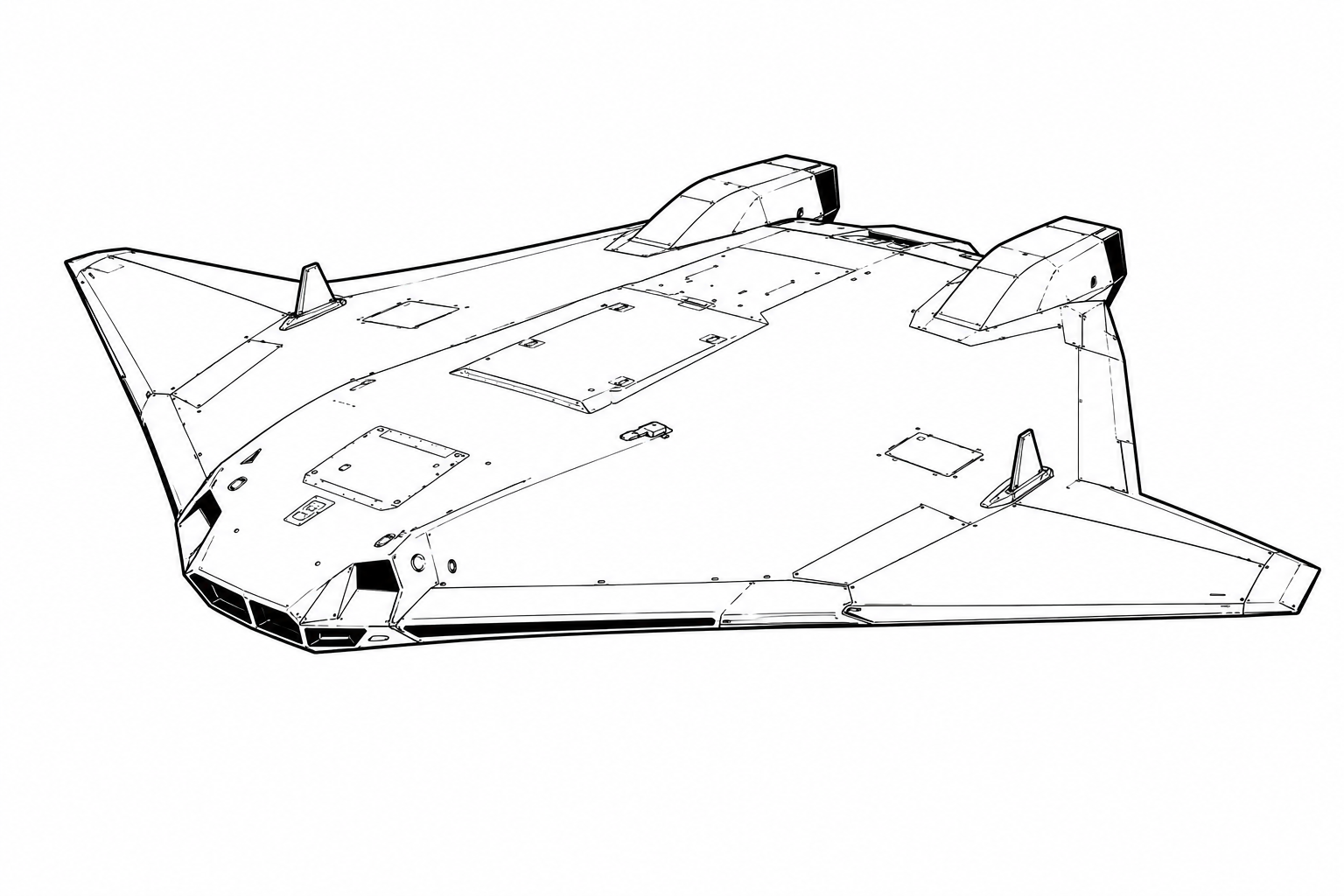
Manta Ray overview
The Manta Ray is a large unmanned underwater vehicle developed by Northrop Grumman under a DARPA program of the same name, representing one of the most ambitious concepts in the history of undersea robotics — a vehicle intended to explore whether a UUV could transit and survey, remain dormant on the ocean floor for extended periods, awaken on command to execute a mission, and then submerge back into passive concealment without requiring ship or submarine support. The program's core insight is that the most expensive and scarce resource in undersea warfare is access: getting a manned submarine or even a conventional UUV to a specific location in contested waters requires a transit that itself creates detection risk, takes days or weeks, and consumes the finite inventory of available underwater platforms. If instead a large UUV could be deployed in peacetime, allowed to settle on the seabed, and then activated remotely weeks or months later when a crisis emerges, the strategic calculus changes entirely.
The Manta Ray is designed to be transported and assembled in the field from modular sections — a critical feature that allows the vehicle to be broken down to shipping container dimensions for transport by conventional cargo aircraft or ship, then assembled at a forward port or pier without specialized facilities. The vehicle uses a buoyancy-driven propulsion concept that harvests energy from the temperature differential between warm surface water and cold deep water, dramatically extending endurance beyond what battery-powered propulsion could achieve. When the vehicle needs to be positioned or repositioned quickly, a conventional propeller drive system provides controlled thrust. The combination of buoyancy gliding and battery propulsion gives the Manta Ray an endurance measured in months rather than hours.
Public reporting records Northrop Grumman's full-scale in-water testing of a Manta Ray prototype, including demonstrations relevant to long-duration underwater operation. The public DARPA record does not establish that a production vehicle has performed routine seabed operations or wake-up-on-command missions, and no Navy acquisition of operational Manta Ray vehicles has been announced. Its proposed ability to be pre-positioned during peacetime could provide a strategic deterrent and immediate-response capability, but that remains a program objective rather than an established inventory capability.
DARPA's public program description is more measured than those transition claims: it characterizes Manta Ray as a multi-phase effort to demonstrate long-duration, long-range, payload-capable UUV technologies and explicitly discusses an at-sea demonstration rather than a fielded Navy system. Northrop Grumman's publicly reported full-scale in-water demonstration is therefore a verified technology milestone, while a Navy program-of-record decision, routine seabed deployment, and an operational strike role remain unannounced. Through 2026, the defensible status is an advanced experimental UUV with transition potential, not a confirmed operational fleet.
Armament
Modular payload bay (classified)
Development and operational timeline
- DARPA awards Manta Ray Phase 2 contract to Northrop Grumman
- Manta Ray sub-scale prototype completes pool testing
- Full-scale Manta Ray completes in-water demonstration
- Public reporting describes Manta Ray prototype testing relevant to seabed station-keeping and energy management; the full operational claim remains unverified
- DARPA's public program record continues to describe Manta Ray as a technology demonstration; a Navy program-of-record transition is not publicly confirmed
- DARPA continues to list Manta Ray as a technology-demonstration program; no public Navy production or operational-fielding decision is confirmed