Land system · Robotic Perimeter Patrol Vehicle
G-NIUS Guardium
Surveillance / Supervised Patrol / Remote Response
Also known as: Guardium / Guardium Mk I / G NIUS Guardium / Guardium UGV
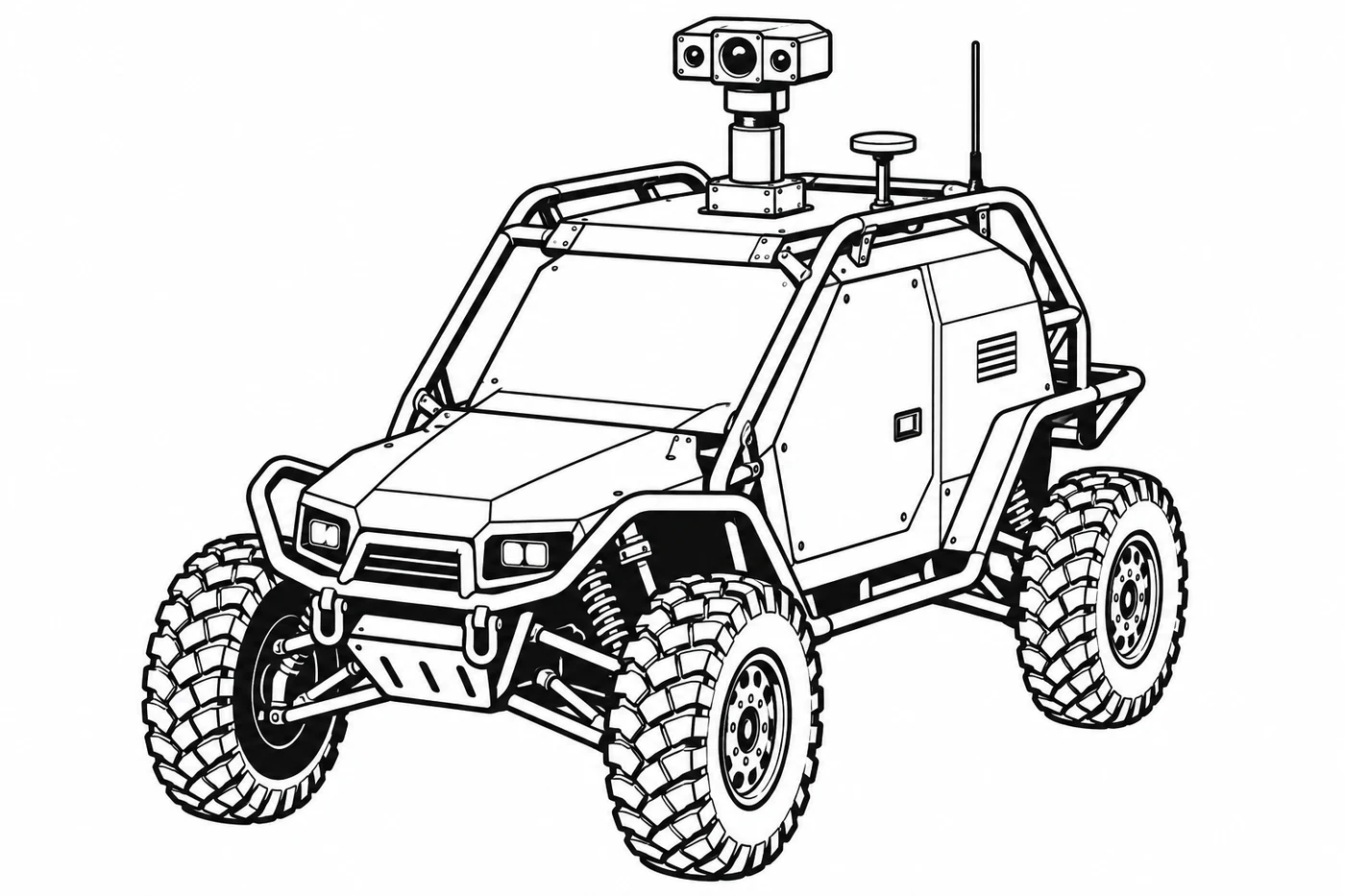
G-NIUS Guardium overview
Last reviewed:
G-NIUS Guardium is an Israeli unmanned ground vehicle developed for perimeter surveillance and routine patrol duties. The original vehicle combined a Tomcar-derived chassis with remote-control equipment, sensors and supervised autonomous navigation. It became an early example of a ground robot performing recurring security tasks rather than appearing only in a demonstration. This profile focuses on the original patrol buggy and its documented history, not on every later Israeli robotic truck or vehicle that adopted similar border-security missions.
G-NIUS was a joint venture between Israel Aerospace Industries and Elbit Systems. Contemporary Defense Update reporting describes successful evaluation in 2005, an initial batch received by the Israel Defense Forces by May 2008 and plans for wider operational use later that year. A September 2012 report independently places the initiative's gradual introduction into daily service from 2008. The catalog's introduction year marks that early deployment period; it is not a claim that all proposed payloads were fielded together or that every patrol vehicle remained unchanged thereafter.
Historical technical reporting gives maximum speed up to 80 km/h and payload up to 300 kg, including mission equipment and protective fittings. Secondary references describe dimensions around 2.95 m long, 1.8 m wide and 2.2 m high, with a mass in the 1.4-tonne class. These figures concern an early configuration and should not be applied to later Guardium-branded platforms or larger converted vehicles. Carrying capacity also does not establish the exact sensor package, armor protection or weapons fit of a particular deployed machine.
The control concept combined preplanned routes, automatic responses to navigation obstacles and the ability for personnel to take remote control. Visible and thermal cameras, microphones and communications equipment could extend the coverage of a security team. Such navigation assistance is not the same as independent authority to engage a person. Historical material described optional lethal and less-lethal payloads, but the existence of an option is not evidence that every Guardium carried it or that a computer, rather than a human operator, made the final decision to use force.
One often repeated endurance claim needs special care. The September 2012 account quotes an officer describing 103 consecutive hours of surveillance during a specific security incident. That is an attributed duration for a supported surveillance operation, not proof of 103 hours of uninterrupted driving at 80 km/h on one fuel load. Patrol tempo, stationary observation, refueling, maintenance and operator handover are different elements of endurance. This profile therefore retains the episode as operational context without turning it into an unsupported universal specification.
The industrial story changed in 2016. Globes reported on May 4 that the joint venture had closed, with staff and accumulated expertise returning to the parent companies. Closure of a developer is not the same as a verified date on which every vehicle stopped operating. Conversely, an old account of operational patrols cannot establish the number or availability of original Guardium vehicles in November 2026. Later Israeli platforms should be researched individually rather than used as evidence that the original buggy remains in new production.
The November 21, 2026 review therefore treats Guardium as an important early operational patrol system with a clearly bounded public record. RoBattle and REX MK II provide useful links to other Israeli unmanned ground programs, but they differ in configuration, mission and development history. Vision 60 Q-UGV illustrates a different approach to robotic observation. Those comparisons are most useful when they distinguish supervised patrol autonomy, terrain access, sensor coverage and human oversight instead of assuming every unmanned vehicle performs the same kind of security work.
Armament
Optional remotely controlled lethal or less-lethal payloads described; actual installations vary
Development and operational timeline
- Contemporary reporting describes successful evaluation leading to Israeli military selection
- Defense Update records receipt of an initial Guardium batch ahead of planned wider patrol service
- Technical report details Tomcar origins, control arrangements and early performance claims
- Operational account describes recurring patrol use and an attributed 103-hour surveillance episode
- Globes reports closure of the joint venture; this is not a verified fleet-wide retirement date
- Editorial status review: historical patrol record retained without asserting current original-vehicle fleet numbers