Land system · UGV
Uran-9
Fire Support / Reconnaissance
Also known as: Uran-9 / URAN-9 UCGV / Russian combat robot
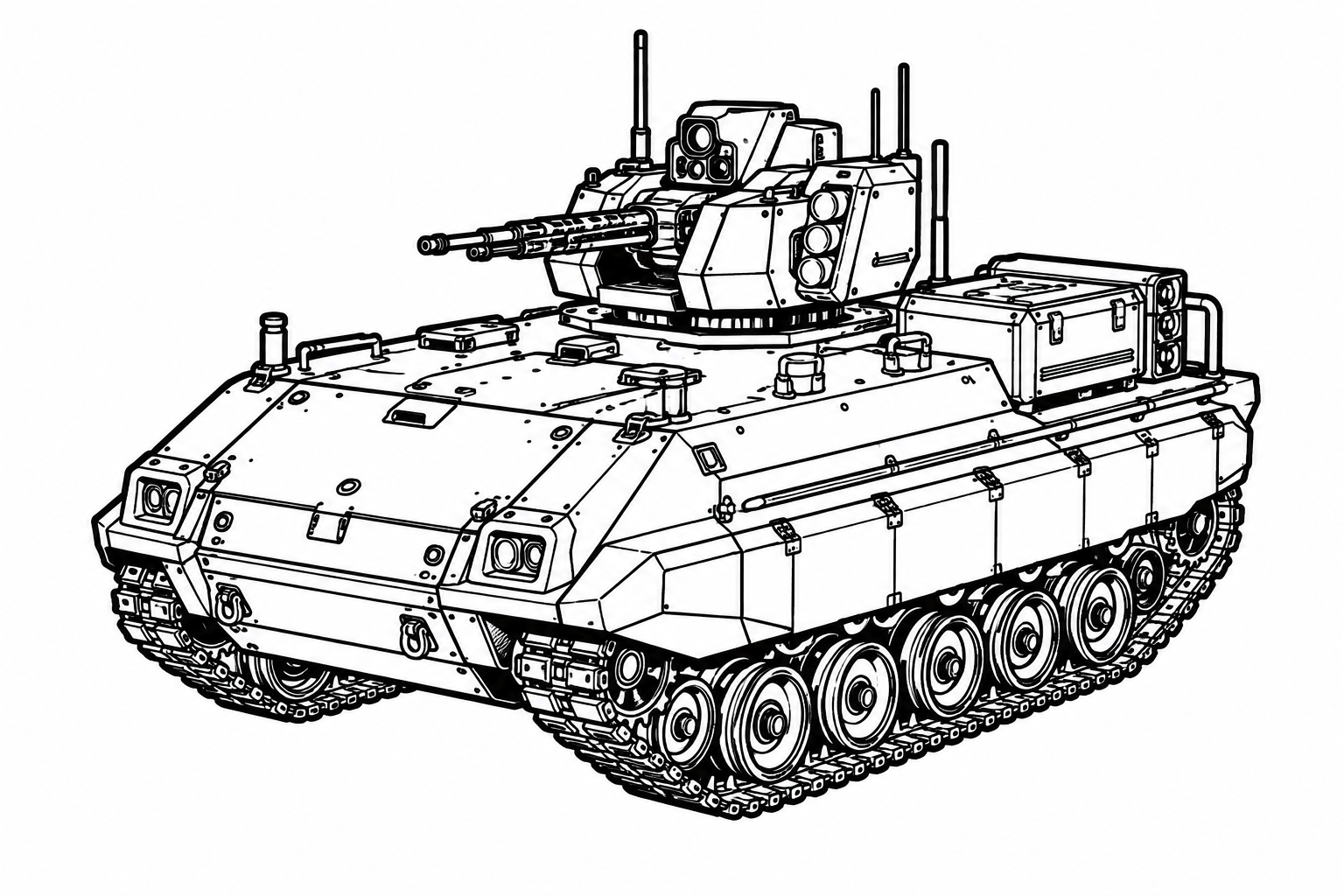
Uran-9 overview
The Uran-9 is an unmanned combat ground vehicle developed by the Russian company Kalashnikov Concern (766th Production and Technological Enterprise). The tracked vehicle weighs approximately 12 tonnes and is equipped with a formidable armament including a 30mm 2A72 autocannon, 7.62mm machine gun, Ataka anti-tank guided missiles, and Shmel-M thermobaric rockets. The Uran-9 is designed for reconnaissance, fire support, and anti-armor operations in urban and open terrain.
The Uran-9 saw its combat debut in Syria around 2018, where it was tested under operational conditions. The deployment revealed significant issues with the control link, losing communication with operators at ranges beyond 300-500 meters in urban environments. As of 2025, the Russian military has continued to develop the Uran-9 with improved communications and autonomy, and several dozen units have been delivered. Despite its initial combat shortcomings, the platform has been fielded in limited numbers. Its significance lies in being one of the first heavily armed UGVs to see actual combat, with the lessons learned in Syria informing Russian and global UGV development regarding the critical importance of reliable communications and autonomous capabilities.
Armament
2A72 30mm autocannon, 9M120 Ataka ATGMs, 7.62mm MG, RPO-A Shmel
Development and operational timeline
- Uran-9 unveiled at RAE-2016 exhibition in Russia
- Uran-9 deployed to Syria for combat testing
- Russian MoD reports control link failures in Syrian deployment
- Improved Uran-9 with upgraded communications delivered
- Uran-9 production continues with enhanced autonomous features