Land system · UGV
Gladiator TUGV
Tactical Unmanned Ground Combat
Also known as: Gladiator / TUGV / Tactical Unmanned Ground Vehicle
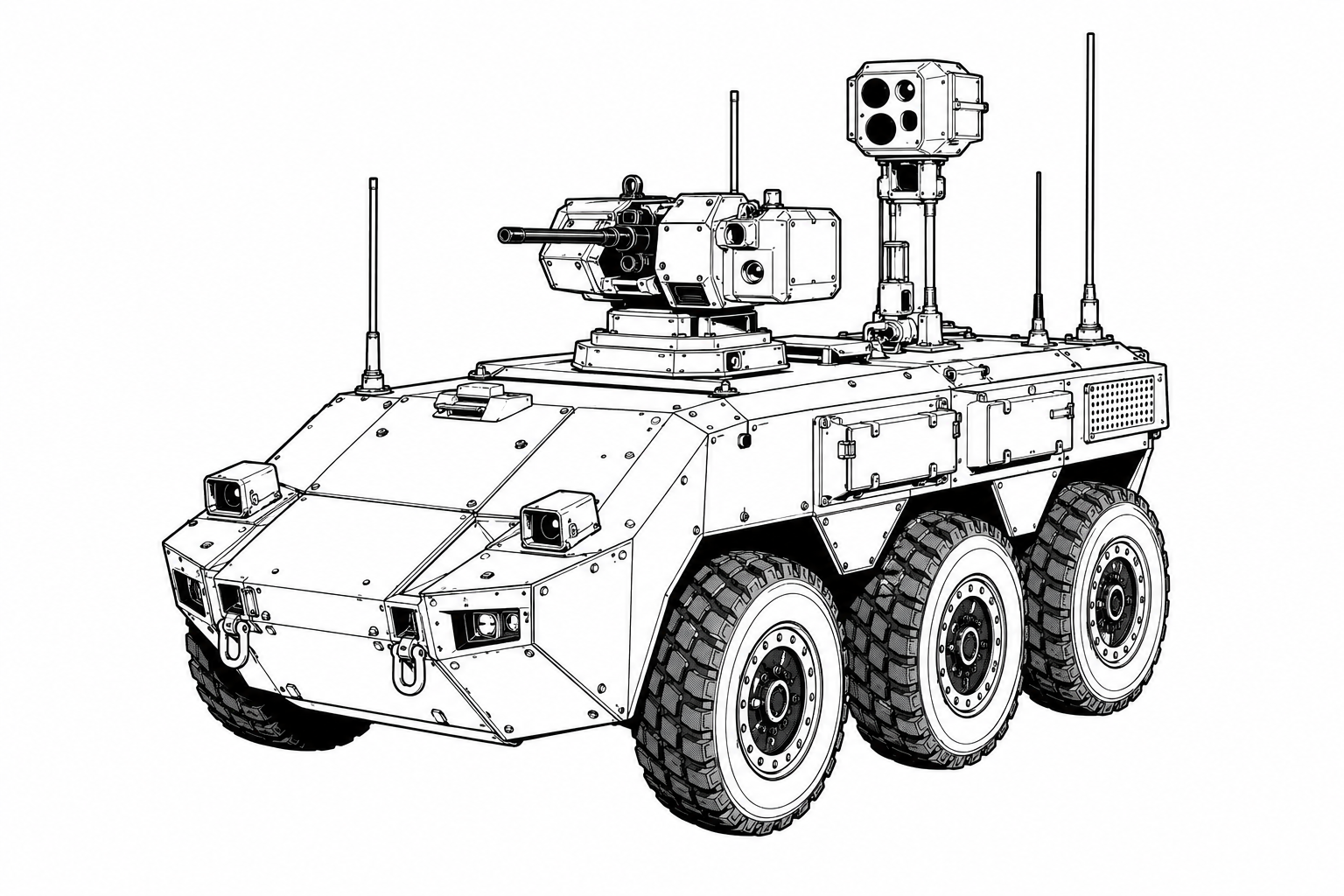
Gladiator TUGV overview
The Gladiator Tactical Unmanned Ground Vehicle (TUGV) was the U.S. Marine Corps' most ambitious pre-2010 ground robotics program, developed through a joint venture between United Defense (subsequently acquired by BAE Systems) and Carnegie Mellon University's National Robotics Engineering Center. The program's origin lay in a USMC requirement for an unmanned platform that could accompany Marine infantry into the most dangerous phases of combat — the initial breach of a defended position, close-range scouting of an enemy perimeter, and chemical or biological reconnaissance of areas that might be contaminated. These missions shared a common characteristic: they required putting Marines in extreme danger, and a robot could in principle absorb that risk instead. The diesel-powered tracked vehicle weighed approximately 726 kilograms, giving it mobility sufficient for cross-country operations alongside dismounted infantry, and was designed to mount either an M249 5.56mm squad automatic weapon or the Anti-Personnel Obstacle Breaching System (APOBS) — a line charge that could blast a path through minefields and wire obstacles.
The Gladiator's development traced a familiar arc in military robotics programs: promising laboratory results, growing complexity in field trials, and ultimately insufficient performance in the operationally realistic conditions that ground combat demands. Autonomous navigation in structured test environments translated poorly to the unpredictable terrain, vegetation, debris, and narrow urban passages of actual Marine operational environments. Communications reliability dropped in areas with dense foliage or urban canyons, and the teleoperation interface required operators who were concentrating on the robot control screen to remove their attention from the surrounding battlefield — a situational awareness tradeoff that infantry leaders found unacceptable. Multiple program reviews examined whether a redesign could address these shortcomings, but the cost and schedule implications of a fundamental redesign exceeded what the program could support.
The Marine Corps formally restructured the program in 2012, transitioning away from full-scale production and toward using the prototypes built as risk-reduction vehicles for future requirements. As of 2025–2026, the Gladiator's legacy is primarily institutional and doctrinal: it forced the USMC to work through — in detail, in field exercises, and at significant expense — questions about how unmanned ground vehicles integrate with dismounted infantry, what communications architecture is required, what autonomy level is operationally acceptable, and what the human factors implications are for operators who must manage both a robot and their personal combat awareness simultaneously. These lessons are directly embedded in the USMC's current Ground Unmanned Support Surrogate and Robotic Combat Vehicle requirements.
Armament
M240G 7.62mm MG, M249 SAW, anti-tank rockets, smoke grenades
Development and operational timeline
- USMC awards Gladiator TUGV development contract to United Defense/CMU joint team
- Gladiator TUGV concept demonstrators undergo initial field evaluation at Quantico
- First production-representative Gladiator prototype completes mobility trials
- Gladiator evaluated with APOBS breaching system and M249 weapon station
- Improved Gladiator prototype demonstrates autonomous navigation in structured environment
- Field trials in operationally realistic terrain reveal significant autonomous navigation limitations
- USMC restructures program; full-scale production cancelled, prototypes retained for R&D
- Gladiator lessons formally documented in USMC RCV and GUSS requirements development