Land system · UGV
Ripsaw M5
Robotic Combat Vehicle
Also known as: Ripsaw M5 / M5 Ripsaw / Textron Ripsaw
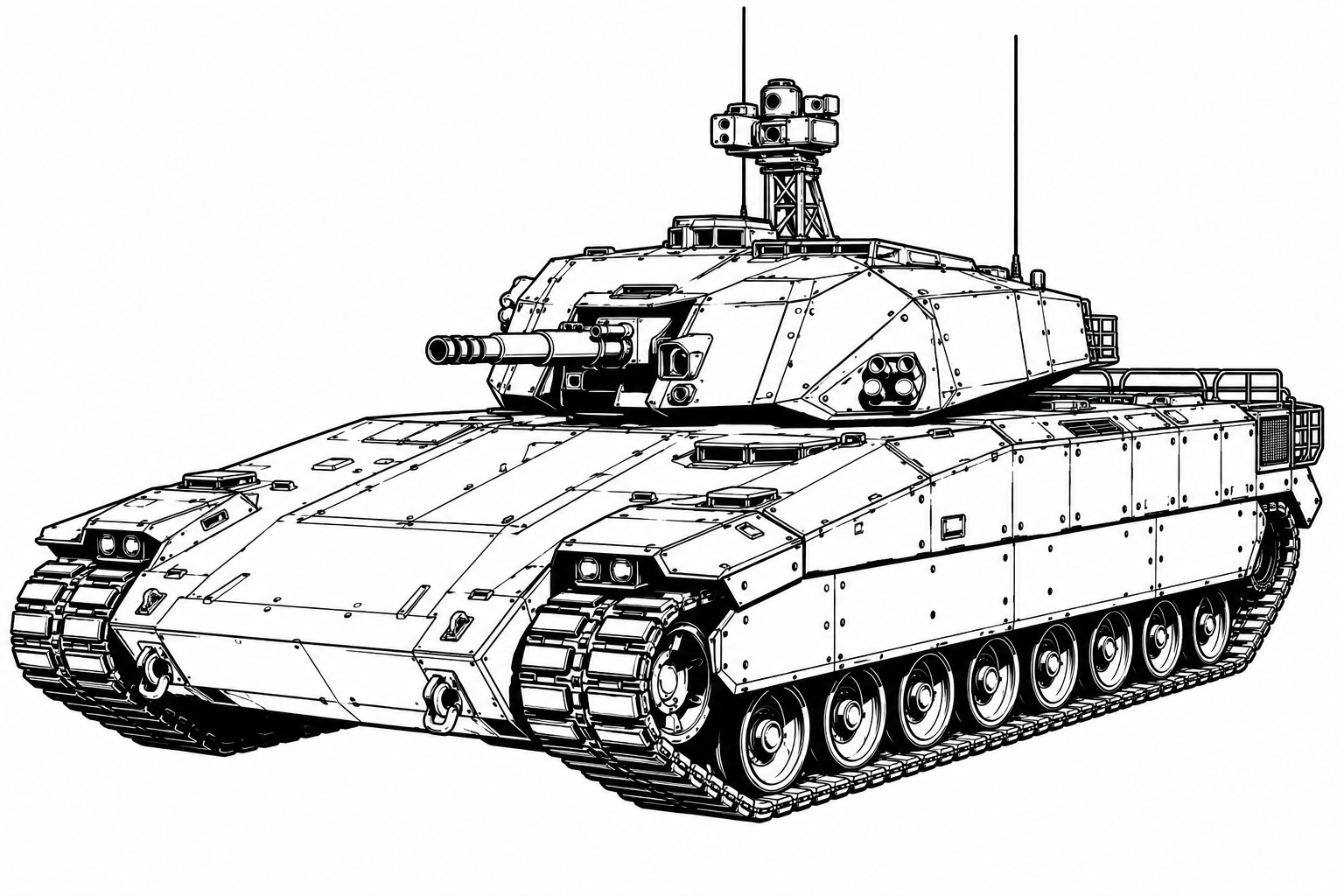
Ripsaw M5 overview
The Ripsaw M5 is a robotic combat vehicle developed by Textron Systems for the U.S. Army's Robotic Combat Vehicle-Medium (RCV-M) program, tracing its lineage to the extraordinary Howe & Howe Technologies Ripsaw, a high-speed tracked vehicle originally built for recreational use that caught military attention for its combination of extreme agility and mechanical robustness. Textron acquired the Ripsaw design and platform rights, then engineered the M5 variant specifically to meet Army combat requirements — transforming what started as a civilian fun vehicle into a serious contender for the most consequential ground combat vehicle program of the 2020s. The tracked vehicle weighs approximately 10 metric tons at combat weight, a size that places it between the M113 armored personnel carrier and the Bradley Infantry Fighting Vehicle, and is powered by a diesel-electric hybrid drivetrain that allows the vehicle to operate in silent electric mode during approach and surveillance missions and switch to diesel for high-speed maneuver.
The M5's weapons architecture is built around the Kongsberg Protector Medium Caliber Weapon Station, which can accept a range of armaments from a 30mm Mk44 Bushmaster autocannon to anti-tank guided missiles, electronic warfare jamming pods, and sensor packages. The unmanned turret provides 360-degree coverage and can engage targets while the vehicle maneuvers, a capability that eliminates the crew protection requirement that constrains the size and weight of manned vehicle weapon stations. The Army's concept of employment for RCV-M vehicles like the Ripsaw M5 is integrated with manned formations — a single crewed Abrams or Bradley serves as the controller for two or three Ripsaw M5s operating in the lead, scouting routes, drawing fire, and engaging targets before the manned vehicles advance. This concept reduces crew casualties during the most dangerous phase of armored operations, the initial close-in engagement where most losses historically occur.
The Army has conducted rigorous soldier experiments with the Ripsaw M5 and competing platforms at Fort Hood, Fort Wainwright, and the National Training Center, using the experiments to develop doctrine, training requirements, and tactics rather than purely evaluating hardware. The experiments revealed both significant promise and notable challenges: soldiers adapted quickly to the basic tele-operation concept but struggled with the cognitive demand of simultaneously managing a robot and maintaining personal situational awareness in complex environments. As of 2025–2026, the Army's RCV-M program continues, with Textron's Ripsaw M5 competing against General Dynamics' Ripsaw-derived variants and other platforms. A production decision is expected in the late 2020s, with initial fielding to armored brigade combat teams to follow.
Armament
30mm autocannon, Javelin ATGMs, remote weapon station
Development and operational timeline
- Textron Systems acquires Howe & Howe Technologies and Ripsaw platform rights
- Textron unveils Ripsaw M5 with combat weapon station for Army RCV-Medium competition
- Ripsaw M5 completes initial automotive and mobility testing at Yuma Proving Ground
- Army receives Ripsaw M5 for soldier touchpoint and operational concept evaluation
- Army conducts company-level RCV experiments with Ripsaw and competitors; doctrine development begins
- Ripsaw M5 demonstrates autonomous maneuver in multi-vehicle force-on-force test at Fort Wainwright
- Army's RCV-M down-select narrows field; Textron advances Ripsaw M5 to next evaluation phase
- RCV-M program continues toward source selection decision; production award expected late 2020s