Air system · MALE
TAI Anka-S
Satellite-Linked ISR / Precision Strike
Also known as: TAI ANKA-S / TUSAŞ ANKA-S / Anka S / ANKA-THS (Malaysian configuration)
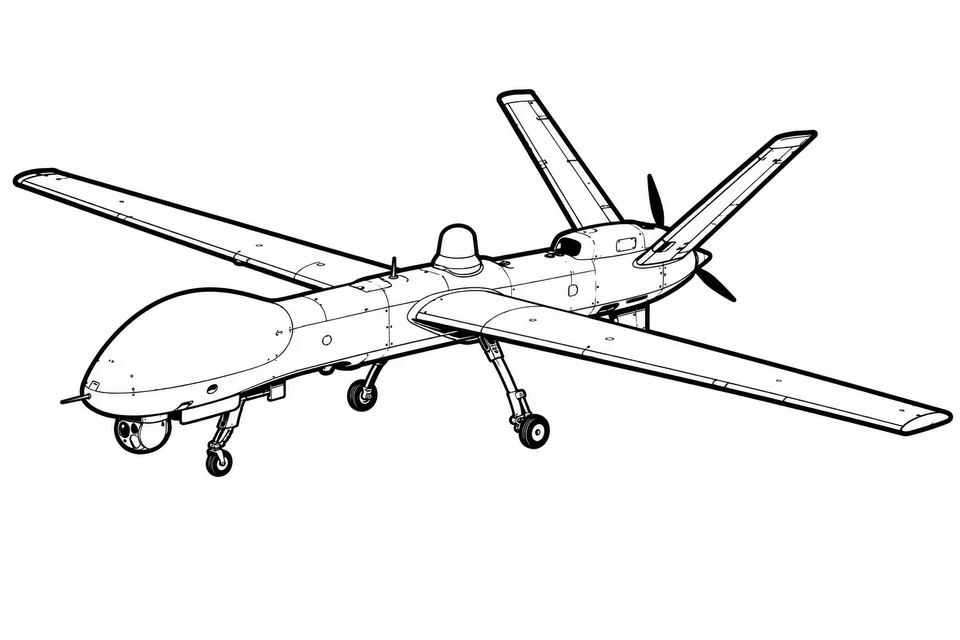
TAI Anka-S overview
Last reviewed:
TAI ANKA-S is the satellite-communication-equipped member of Turkish Aerospace's ANKA medium-altitude, long-endurance unmanned aircraft family. It supports intelligence, surveillance, target acquisition and, in suitably equipped configurations, precision attack. The satellite link is the defining distinction from earlier line-of-sight-focused arrangements: it extends the ability to control and exchange mission information beyond the immediate ground station's radio horizon. ANKA-S should not be confused with the twin-engine AKSUNGUR or the jet-powered flying-wing ANKA III, both separate aircraft with different specifications and development histories.
The broader ANKA aircraft first flew on December 30, 2010. Turkish Aerospace records an October 2013 serial-production contract for ten aircraft under the ANKA-S program, while subsequent reporting dates initial ANKA-S deliveries to 2018. Separating those events avoids presenting the original family's first flight, a procurement decision and a variant's service introduction as one milestone. The system has continued to evolve through mission equipment, communication and propulsion changes, so a figure quoted for an early configuration should not automatically be treated as the latest ANKA-family maximum.
The manufacturer's current ANKA page lists a 17.5-meter wingspan, 8.6-meter length, 3.25-meter height, 1,700 kg maximum takeoff weight, payload capacity above 350 kg and endurance up to 30 hours. These are current ANKA-family product figures, not a retrospective guarantee for every early ANKA-S airframe or customer package. The same page lists a 30,000-foot service ceiling, line-of-sight data-link distance above 250 km and satellite-link reach above 2,500 km. Data-link coverage is not the same measurement as fuel-limited flight range.
Typical missions combine electro-optical and infrared observation with additional sensors selected for the operator's needs. Precision weapons can add a strike role, but a fleet equipped mainly for maritime surveillance need not have every advertised munition integrated. Turkish naval deliveries provide a concrete example of service adoption: in March 2022, the Turkish Ministry of Defence announced two ANKA-S aircraft delivered alongside a separate AKSUNGUR. This is stronger evidence than an undated claim that every member of the family serves every possible mission.
In April 2026, the Royal Malaysian Air Force flight-tested its ANKA-based ANKA-THS at Labuan. The air force chief's account, carried by New Straits Times and Malaysia Aerospace Industry Association, describes a successful April 3 test at 15,000 feet and further evaluations before operational status. That is a customer test milestone, not proof that every Malaysian readiness requirement was already complete. Through the November review, the profile therefore separates established Turkish service, contemporary manufacturer family specifications and customer-specific acceptance activity rather than overstating a single universal ANKA-S configuration.
Armament
Configuration-dependent guided air-to-ground munitions; sensor-only fits also exist
Development and operational timeline
- Original ANKA aircraft makes its maiden flight; this is the family milestone, not ANKA-S service entry
- Turkish Aerospace records a serial-production contract for ten ANKA-S aircraft
- Initial ANKA-S deliveries are reported; this is distinct from the 2010 family first flight
- Turkish Ministry of Defence announces delivery of two ANKA-S and one separate AKSUNGUR to naval aviation
- Malaysia's ANKA-THS performs its first reported local flight test at Labuan; further evaluation precedes operational status
- Editorial status review: latest ANKA-family brochure figures labeled by scope; satellite-link coverage not presented as aircraft flight range
Sources & further reading
- Turkish Aerospace: ANKA history and current family specifications
- Naval News: Turkish naval ANKA-S deliveries, March 2022
- Malaysia Aerospace Industry Association / New Straits Times: April 2026 local flight test
- Janes: Malaysian ANKA-S/ANKA-THS flight-test report
- Aviation Week: first ANKA-S delivery, February 5, 2018