Naval system · Armed USV
SeaShark 600
Harbor Protection / Coastal Patrol / Anti-Swarm Defense
Also known as: SeaShark 600 / SeaShark 800 / SeaShark USV / armed unmanned surface vessel
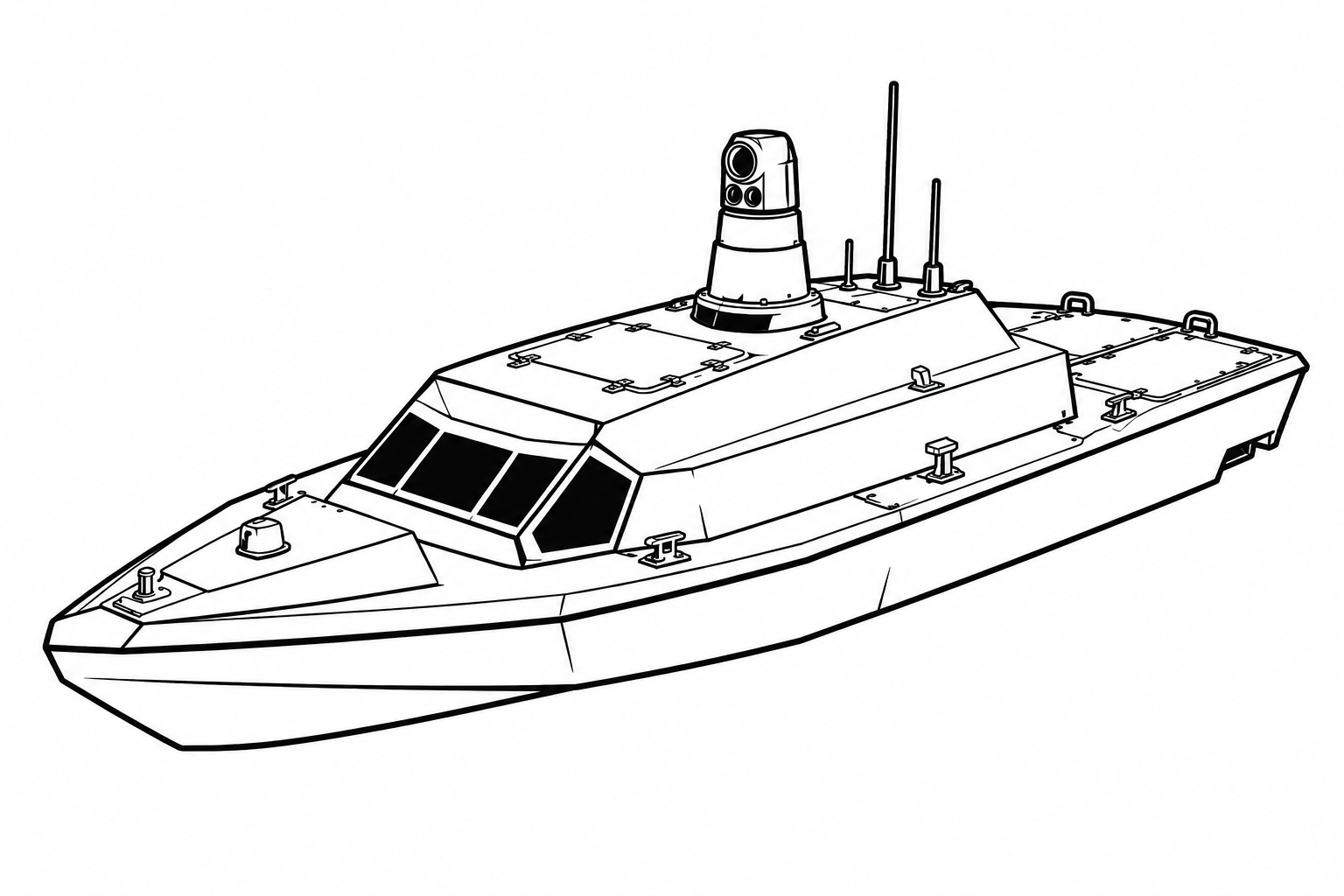
SeaShark 600 overview
The SeaShark family — comprising the SeaShark 600 and SeaShark 800 variants — represents a class of high-speed armed unmanned surface vessels developed for maritime patrol, anti-surface warfare, and force protection missions in littoral and blue-water environments. Developed by a consortium drawing on established fast-patrol-boat engineering traditions, the SeaShark platforms are designed around the premise that the most dangerous operating environments for naval personnel — strait transits, harbor approaches, and shallow coastal waters where mines, suicide boats, and anti-ship missiles pose concentrated threats — are precisely the environments where removing humans from the decision loop provides the greatest operational and humanitarian benefit. The SeaShark 600 (referring to its 6-meter hull length) is the smaller and more agile of the two variants, optimized for harbor protection, escort, and coastal surveillance with a top speed exceeding 45 knots and a 12-hour endurance powered by twin waterjet-drive marine diesels. It mounts a stabilized 12.7 mm remote weapon station with electro-optical and thermal sighting, enabling engagement of small boat threats at ranges up to 1,500 meters without an onboard crew. The SeaShark 800 extends the hull to 8 meters and the endurance to over 24 hours, adding a larger payload bay accommodating a 40 mm automatic grenade launcher, a containerized mine countermeasures sonar, or a command-and-control module enabling it to serve as a mothership for smaller unmanned surface or subsurface vehicles in a heterogeneous unmanned fleet architecture.
Both SeaShark variants share a common autonomy architecture built on a maritime-specific mission management system that handles route planning, obstacle avoidance, collision regulations (COLREGS) compliance, and threat response in an environment vastly more complex than an aerial drone's operating space. Unlike airspace, maritime surface navigation involves rapidly changing currents, wave-induced position uncertainty, dense commercial shipping traffic, floating debris, and the legal requirement to comply with international maritime collision regulations — a set of constraints that forced the SeaShark's developers to invest significantly more in situational awareness and rules-of-engagement management software than a comparable aerial system requires. The platform uses a multi-sensor perception system combining marine radar, electro-optical cameras, AIS transponder reception, and lidar to build a real-time maritime picture that the autonomy system can act on. Human operators can monitor and override the vehicle through a satellite communications uplink or line-of-sight radio link, with fail-safe behaviors activated automatically if communications are lost for more than a defined interval.
As of 2025–2026, the SeaShark family has attracted procurement interest from multiple naval operators seeking to expand their unmanned surface vessel fleets without the cost and crew requirements of additional crewed patrol boats. Middle Eastern naval forces have evaluated the SeaShark 600 for critical infrastructure protection around offshore oil platforms and key port facilities. Baltic and Nordic navies have assessed the SeaShark 800's mine countermeasures variant as a candidate for replacing aging manned minehunters. The platform has also been demonstrated to NATO allies in the context of the alliance's evolving maritime autonomous systems doctrine, with a 2025 Baltic Sea exercise in which three SeaShark 800s operated as a coordinated surveillance network covering a 150-kilometer coastline sector, demonstrating the multi-vessel coordination capabilities that make autonomous USVs operationally relevant at a scale beyond single-platform demonstrations.
Armament
12.7 mm stabilized remote weapon station (600 variant); 40 mm grenade launcher option (800 variant)
Development and operational timeline
- SeaShark USV concept design initiated; 600 and 800 variants specified for coastal and blue-water maritime patrol roles
- SeaShark 600 prototype completes sea trials; 45-knot top speed and 12-hour endurance validated
- COLREGS-compliant autonomy system certified for SeaShark in mixed commercial shipping environments
- SeaShark 800 prototype completes extended sea trials; 24-hour endurance and mine countermeasures sonar integration validated
- Middle Eastern naval evaluation of SeaShark 600 for offshore infrastructure protection; positive assessment reported
- Baltic and Nordic navy assessment of SeaShark 800 mine countermeasures variant as manned minehunter replacement
- NATO Maritime Centre for Security of Critical Underwater Infrastructure evaluates SeaShark for alliance maritime autonomous systems doctrine
- Baltic Sea exercise: three SeaShark 800s operate coordinated 150 km coastline surveillance network; multi-vessel coordination validated
- Procurement negotiations advanced with two naval operators; SeaShark 600 and 800 offered for Foreign Military Sale to qualified NATO partners