Naval system · Unmanned Surface Vessel (ISR)
Saildrone Voyager
Maritime Domain Awareness / Oceanographic Survey / Naval Intelligence
Also known as: Saildrone Voyager USV / autonomous sailing drone / Navy maritime awareness USV
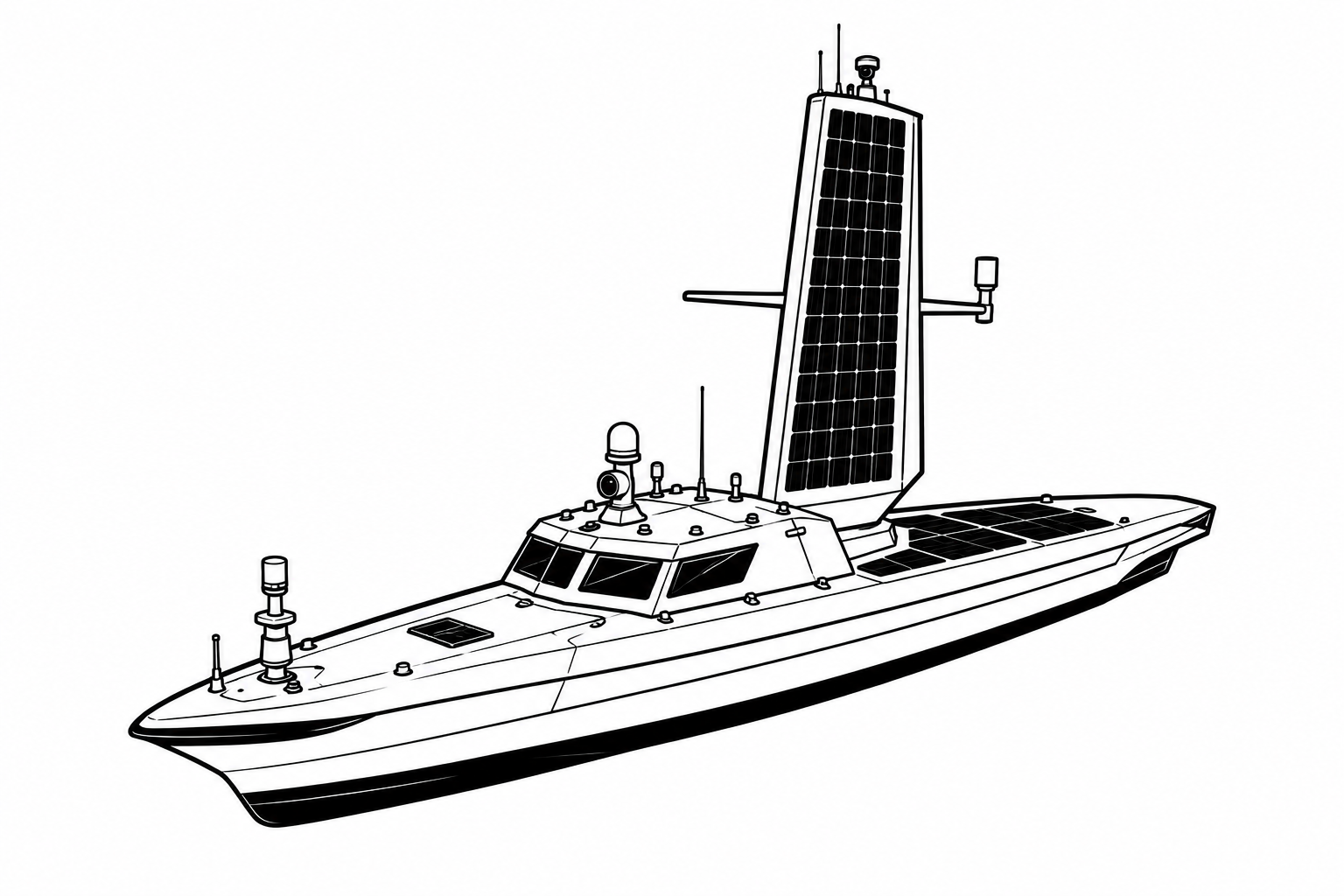
Saildrone Voyager overview
The Saildrone Voyager is a wind- and solar-powered autonomous surface vessel that redefines what persistent maritime surveillance can look like. Conventional maritime patrol requires either crewed vessels that need crew rotations, fuel, and maintenance, or dedicated patrol aircraft that burn expensive aviation fuel and require airfield infrastructure. The Voyager needs neither: its rigid wing sail harvests wind energy for propulsion, solar panels power its electronics and sensors, and its architecture is designed for months-long autonomous operation without any human intervention beyond remote mission management from a shore-based control center.
For the U.S. Navy's maritime domain awareness mission — maintaining knowledge of what is happening at sea across vast ocean areas — the Voyager offers a cost structure that fundamentally changes what is achievable within a given budget. Deploying one Voyager to patrol a stretch of ocean for six months costs a fraction of the flight hours required to cover the same area with crewed P-8 patrol aircraft. Multiple Voyagers can maintain a persistent picket line across a strait, monitor the approaches to a naval base, or trail a vessel of interest for months — missions that would exhaust crewed assets and their personnel. The naval intelligence value of this persistence compounds over time: weeks of data reveal patterns that a single-day observation cannot.
Saildrone's Navy partnership expanded significantly through 2025-2026 as the service sought cost-effective ways to expand maritime domain awareness coverage in the Pacific and Arctic without proportionally increasing the personnel and infrastructure costs of the surveillance mission. Voyager deployments in the Western Pacific began contributing to the operational maritime picture that feeds into 7th Fleet decision-making, while Arctic deployments supported monitoring of Russian naval activity in the Barents and Bering Seas. The Voyager's low electromagnetic signature and apparently benign sailing vessel appearance allows it to approach areas of interest without triggering the defensive responses that an obvious military platform would provoke.
Armament
None (ISR); multi-spectral cameras, radar, AIS, acoustic sensors, weather instrumentation
Development and operational timeline
- Saildrone Voyager development begins; wind-solar propulsion and 12-month endurance target specified
- Voyager prototype sea trials; autonomous navigation and sensor payload integration validated
- First long-duration deployment; Voyager completes 60-day autonomous Pacific ocean circuit
- U.S. Navy contract for maritime domain awareness; Voyager deployed to Pacific patrol area
- Arctic deployment; Voyager operates above 70°N latitude in Barents Sea monitoring region
- NOAA partnership; Voyager collects ocean weather data alongside Navy ISR mission
- Hurricane Ian data collection; Voyager operates inside Category 4 hurricane — first autonomous vessel to do so
- Strait of Hormuz deployment; Voyager monitors Iranian naval activity in Gulf of Oman
- Western Pacific expanded deployment; multiple Voyagers maintain persistent South China Sea coverage
- 7th Fleet integration; Voyager sensor data feeds into operational maritime picture in real time
- Expanded Navy contract; additional Voyager units ordered for Indo-Pacific maritime domain awareness
- Voyager fleet milestone: 20 vessels simultaneously deployed across Pacific, Arctic, and Atlantic regions