Naval system · Autonomous Surface Vessel Swarm
L30 USV Swarm
Autonomous Maritime Swarm / Strike / Area Denial / ISR
Also known as: L30 autonomous boat / Chinese naval drone swarm / PLA USV swarm
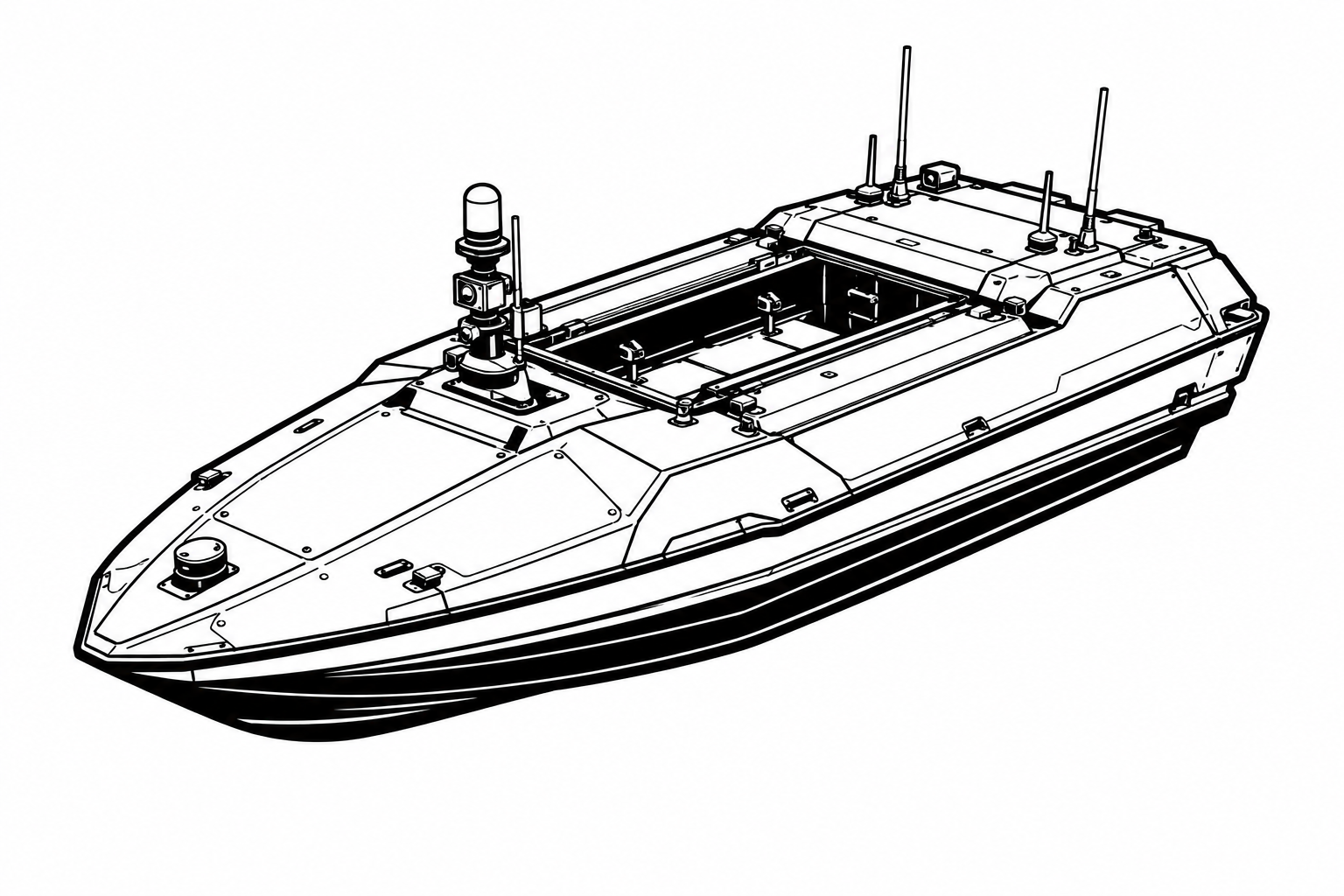
L30 USV Swarm overview
The L30 is a small autonomous surface vessel designed by Chinese defense industry for swarm operations — the naval equivalent of the FPV drone swarms that have transformed land warfare. At 3 meters in length and relatively lightweight, individual L30 vessels are inexpensive enough to be considered expendable in combat, yet capable of carrying a meaningful payload of reconnaissance sensors, electronic warfare equipment, or explosive charges. Their tactical value lies not in individual capability but in numbers: a coordinated swarm of L30 vessels can cover wide ocean areas, overwhelm point defense systems through simultaneous multi-vector attack approaches, and maintain persistent presence around high-value naval targets.
The autonomous coordination software governing L30 swarms uses distributed algorithms similar to those demonstrated in Chinese aerial drone swarms: individual vessels maintain awareness of swarm-mates' positions and roles, automatically deconflict movements, redistribute tasks when vessels are lost or damaged, and maintain coherent formation behavior without real-time human direction of each unit. A swarm commander provides mission objectives and authorization thresholds; the swarm executes autonomously within those parameters. Communications between vessels use a mesh radio network that maintains connectivity even if individual links to the command node are disrupted.
The major autonomous maritime swarm exercise conducted at Zhuhai in 2026 showed L30 vessels executing coordinated patrol patterns, tracking a simulated adversary surface vessel, and conducting a simulated attack run in a multi-vector profile designed to saturate close-in weapons systems. Chinese state media coverage of the exercise was notable for its explicit comparison of swarm capability to the cost of the defensive systems required to defeat it — a deliberate information operation aimed at demonstrating asymmetric cost advantage to potential adversaries in the Taiwan Strait and South China Sea scenarios where the PLA Navy would most likely employ such systems.
Armament
Modular: lightweight anti-ship munitions, reconnaissance sensor packages, or waterline-attack explosive charge
Development and operational timeline
- L30 USV development begins; China Naval Research Institute leads design of compact autonomous surface vessel for swarm operations
- L30 prototype first sea trials; autonomous navigation, collision avoidance, and mesh radio network validated
- Four-vessel coordinated patrol demonstration; L30 swarm maintains formation in 3-meter wave conditions
- Strike payload integration tested; L30 deploys waterline explosive charge against stationary target
- 16-vessel swarm exercise; coordinated area search and target tracking demonstrated
- EW payload integration; L30 variant carries electronic jamming transmitter for communications disruption
- 32-vessel swarm demonstrates saturation attack profile against simulated surface combatant
- Production ramp; CSSC-affiliated yards begin series manufacturing of L30 hulls
- Full-scale swarm exercise at Zhuhai with international observers; autonomous maritime swarm capability publicly demonstrated
- PLA Navy formally accepts L30 swarm into service; deployment to South China Sea and Taiwan Strait patrol units