Air system · Low-Observable UCAV Demonstrator
BAE Taranis
Autonomy / Combat-Air Technology Research
Also known as: Taranis / BAE Systems Taranis / Project Taranis
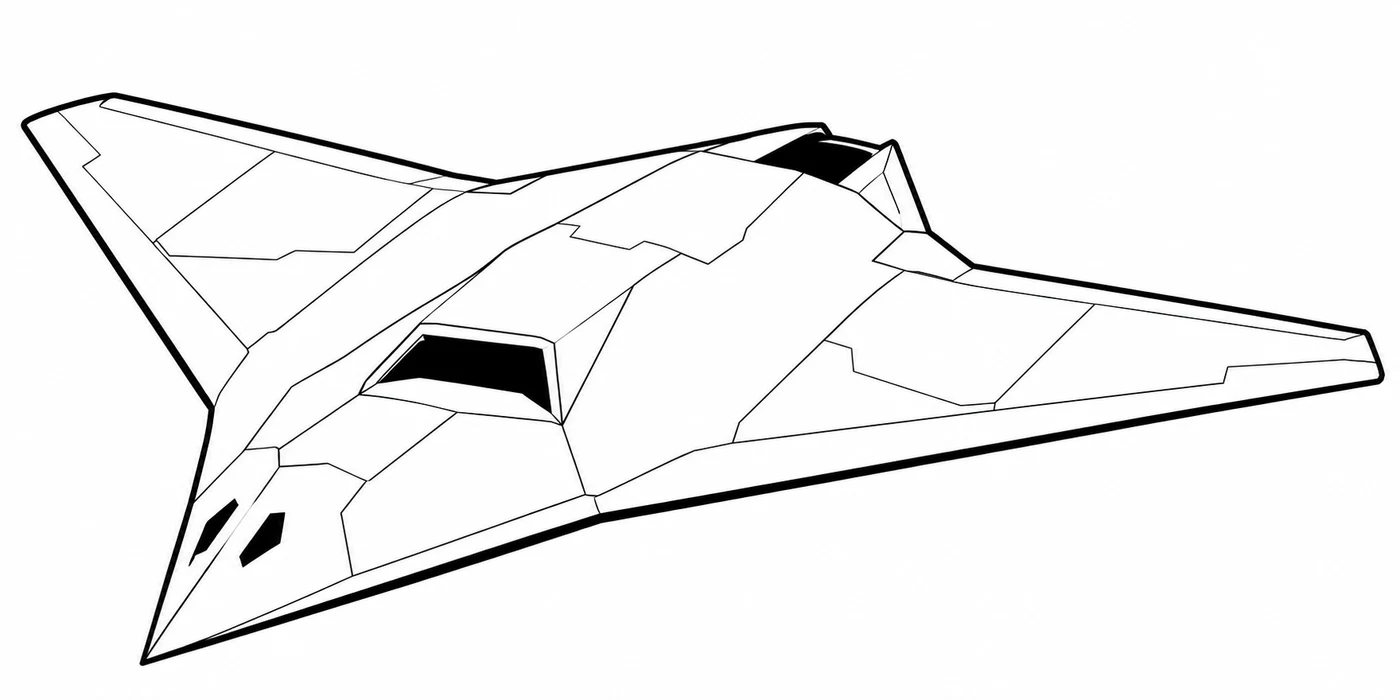
BAE Taranis overview
Last reviewed:
BAE Taranis is a British unmanned combat-aircraft technology demonstrator, not an operational Royal Air Force strike fleet. Led by BAE Systems with the Ministry of Defence and industry partners, it investigated low observability, autonomous flight, systems integration and the practical control of an uncrewed combat aircraft. Its tailless flying-wing shape makes it visually comparable to nEUROn and X-47B, but these are separate national and multinational programs with different airframes, test objectives and procurement histories. Similar appearance does not make their capabilities interchangeable.
The aircraft is approximately the size of a Hawk trainer. Public secondary references commonly describe a length near 12.5 m and wingspan around 10 m, while detailed performance and signature data remain restricted. Taranis uses jet propulsion and was intended to explore long-range combat-aircraft technologies; that intent is not evidence of a measured intercontinental combat radius. The Ministry of Defence's first-flight announcement describes trials at different speeds and altitudes without publishing a complete certified operating envelope, weapon load or production-aircraft endurance.
The project began under a development contract announced in December 2006. That original £124 million contract and the later £185 million demonstrator cost reported by BAE and the Ministry of Defence describe different stages of program expenditure, not competing estimates of an aircraft's unit purchase price. Rolls-Royce, GE Aviation's systems business and QinetiQ contributed alongside BAE and government specialists. The work included control systems, electrical and fuel-management functions, low-observable design and integration of the ground infrastructure needed to supervise a complex uncrewed aircraft.
Taranis was publicly unveiled in July 2010, followed by ground integration and power-up work. Taxi trials at Warton in April 2013 preceded shipment to the flight-test location and additional checks. The first flight took place on August 10, 2013 and lasted about 15 minutes; the achievement was publicly announced on February 5, 2014. Distinguishing those dates matters because an announcement can appear months after the event it describes. Other flights in the initial campaign lasted up to an hour, which is a test duration rather than a declaration of maximum endurance.
Autonomy in this context concerns how the aircraft executes a planned mission, maintains flight and interacts with its control system under human authority. Official descriptions explicitly retain a human operator. They do not justify claims that Taranis was authorized to choose targets and employ weapons without human oversight. Likewise, developing a low-observable airframe does not prove invisibility to every radar, at every frequency or viewing angle. Publicly unavailable signature measurements should remain unavailable rather than being replaced with unsupported numerical radar-cross-section estimates.
The demonstrator's value extends beyond whether the same airframe becomes a production weapon. Flight-control methods, test procedures, mission management and low-observable engineering can inform later combat-air studies. However, technological relevance to future British aviation does not mean Taranis itself has entered GCAP service, been exported or become a deployed loyal wingman. XQ-58 Valkyrie illustrates a different route to collaborative-aircraft experimentation, while RQ-170 Sentinel provides reconnaissance context; neither comparison establishes shared equipment, an operational partnership or identical autonomy.
At the November 21, 2026 editorial review, BAE's public product description continues to identify Taranis as an advanced technology demonstrator. The reviewed official record supports the 2013 flight campaign and its engineering objectives, but not a newly delivered RAF operational squadron, confirmed combat use or a disclosed production weapons inventory in 2026. This profile therefore carries the timeline through a current status review without manufacturing a recent test event. Readers should distinguish the proven existence of flight-tested technology from the largely undisclosed details of follow-on capability development.
Armament
Combat-technology demonstrator; operational weapons inventory not established
Development and operational timeline
- UK Parliament announces the initial £124 million Taranis demonstrator development contract
- Taranis publicly unveiled; subsequent ground power-up and integration work described by BAE and MOD
- Taxi trials conducted at Warton before shipment and further flight-test preparation
- Taranis makes its approximately 15-minute maiden flight; further initial trials include flights up to one hour
- MOD publicly announces the 2013 flight achievements; announcement and event dates are distinct
- Editorial status review: advanced demonstrator classification retained; no 2026 RAF squadron, export delivery or combat deployment established